

You want to ground in your sleep. It’s the best time to maximize your connectivity and time spent grounding. You keep switching between tabs, trying to pick the right product. But you can’t decide between a pillowcase and a sheet. Is there even any difference?
Grounding is gaining popularity. The theory is simple: the body receives free electrons from the Earth's natural electrical charge, which may help neutralize free radicals associated with oxidative stress and inflammation. Grounding products let you do this without walking barefoot outdoors.
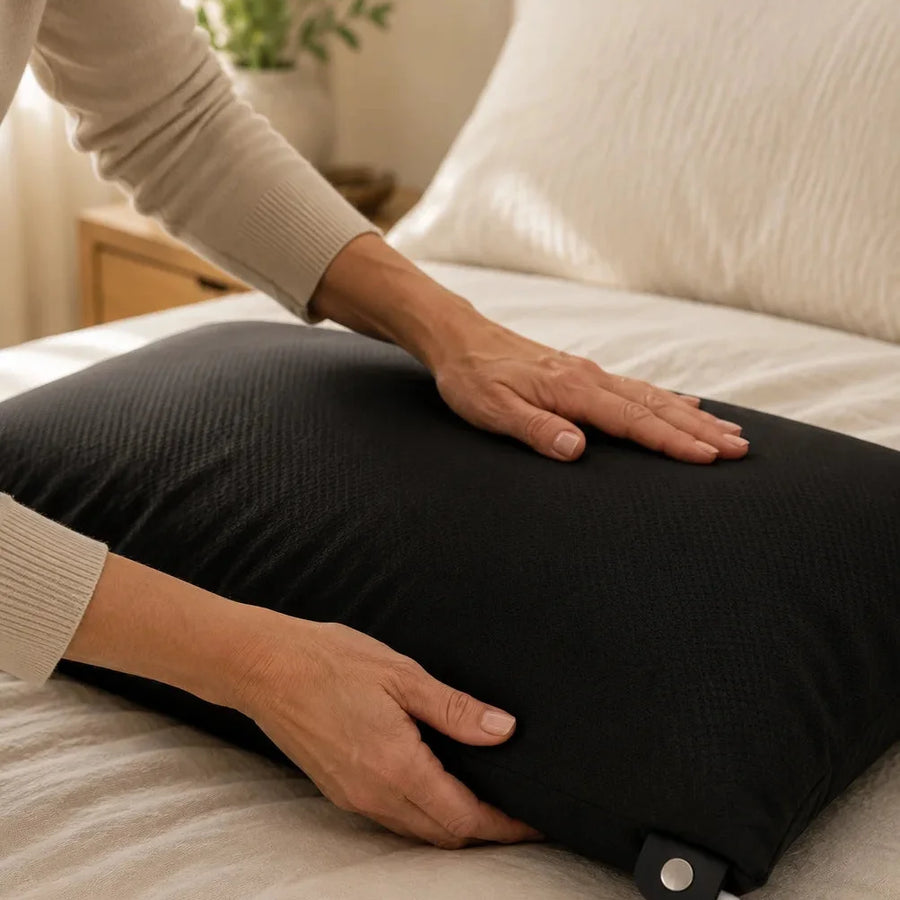
That brings us to grounding sleep products. Pillowcases provide localized contact around the head and neck, while grounding sheets are designed for broader full-body contact during sleep. That much is obvious. But does this matter? Find out below.
How Grounding Pillowcases and Sheets Differ
Coverage: Full-Body Grounding vs Targeted Grounding
The main difference between pillowcases and sheets is coverage. Pillowcases provide targeted coverage of the head and neck; sheets tackle the rest of the body.
While it’s not yet proven, anecdotally, some users report benefits from targeted grounding around the head and neck, particularly for things like tension, headaches, or general discomfort. Sheets, on the other hand, are designed for broader, full-body coverage.
You might wonder if pajamas make a difference. If you’re covered neck to toe, does a sheet even help? Well, as long as you’ve got bare arms or feet in contact, you may still notice an effect.
Price and Long-Term Value
Grounding pillowcases are the cheapest way to get started, usually around $30–$60, while grounding sheets are more of a step up at roughly $80–$150+, depending on size and material. That’s why pillowcases are often used as a low-cost entry point — in some cases, they’re about half the price of a sheet.
The trade-off is coverage: pillowcases are cheaper, but sheets give you full-body contact and a more consistent overnight setup.
Materials, Durability, and Maintenance
Both pillowcases and sheets are similar in terms of durability. They’re often made of cotton with conductive silver fibers and are washed a similar number of times. You can expect either product to last 1–3 years. Just follow sensible washing instructions — not too hard, no bleach, no fabric softener, and no tumble drying.
That said, pillowcases usually wear down faster as face oils and hair products oxidize the silver faster.
Portability, Travel, and Bed-Partner Scenarios
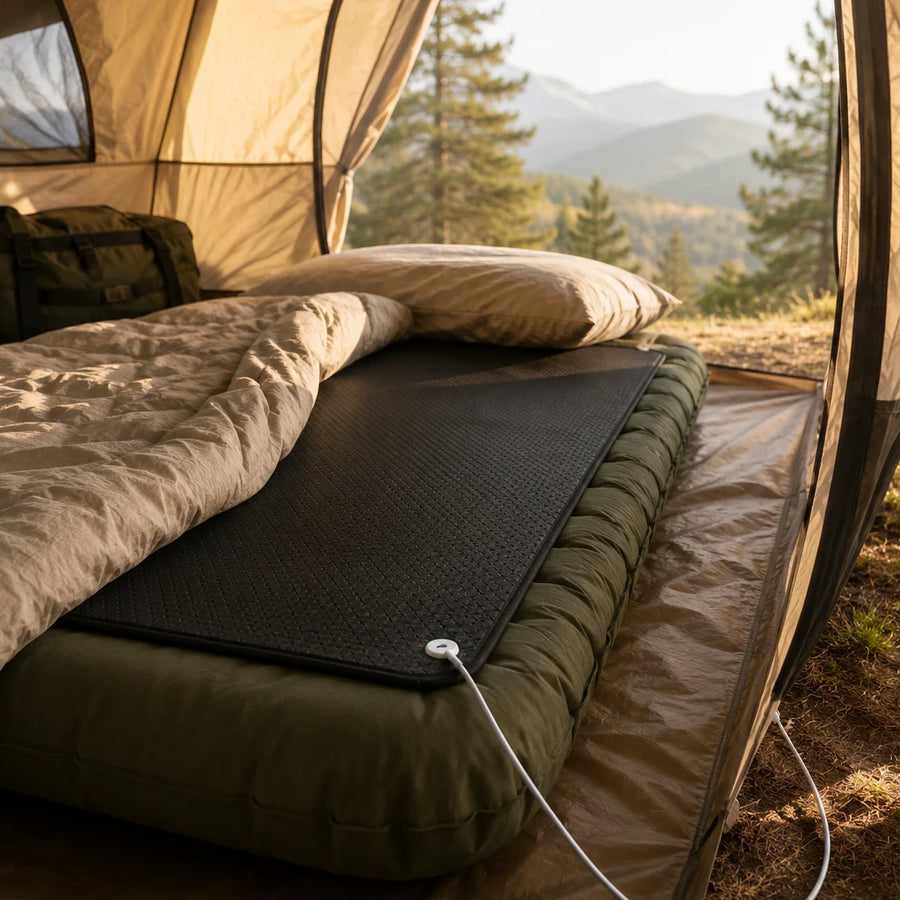
Pillowcases are great for grounding as you travel. Most people don’t take a fitted sheet with them on holiday. It’s just not practical. But you can slip a pillowcase in your bag, getting it set up in under a minute.
Whether you’re in a hotel, RV sleeper, or a college dorm, pillowcases let you stay grounded wherever you are.
They’re also useful if you share a bed, as you can ground without needing to change the entire setup. And if you’re just trying grounding for the first time, a pillowcase is a low-commitment way to see if it works for you.
Benefits: Grounding Pillowcases vs Sheets
Grounding Pillowcase Benefits
Small yet mighty — pillowcases are one of the most overlooked grounding products. Yet, if you’re struggling with a head-specific problem, they’re a fantastic solution.
- A really easy way to get started. You’re not committing to changing your whole bed setup, and the cost is much lower than a full sheet or cover.
- You can take it anywhere. Whether you’re traveling, staying in a hotel, or just not sleeping in your own bed, it takes seconds to set up.
- It focuses on your head and neck. That’s enough for some people, especially if you’re mainly interested in sleep and relaxation rather than full-body coverage.
Price is also a big factor. As mentioned, if you’re new to grounding, a pillowcase lets you dip your toe in the water. You can then invest in a more expensive grounding product as you start to experience the benefits.
Grounding Sheet Benefits
Grounding sheets are often seen as the most complete option. They offer full-body contact, hours of grounding time, and they’re relatively affordable. There’s no pretending they’re not most people’s go-to option.
- You get full-body contact while you sleep, which may make the grounding feel more consistent through the night.
- You’re lying directly on the conductive fabric, so there’s no barrier between you and the sheet. That’s why people often describe it as a more noticeable grounding experience.
- It’s a more complete setup. Once it’s on your bed, you don’t have to think about it — just go to sleep as normal, and it does its thing.
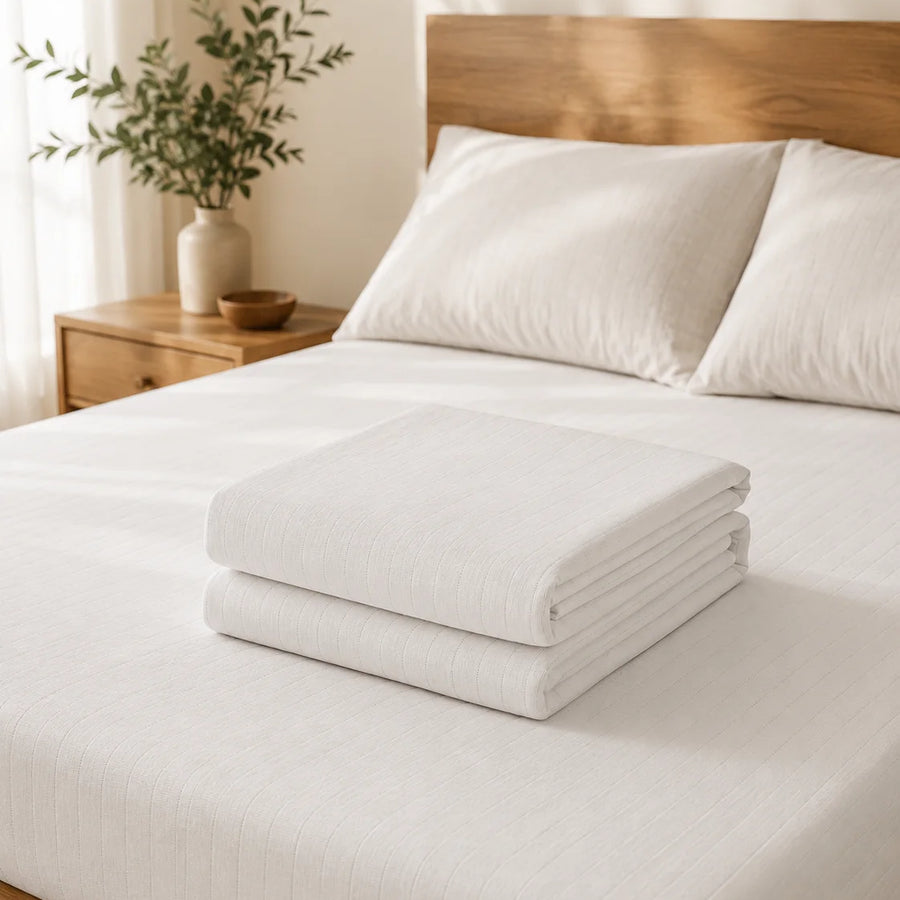
The only real downside of a sheet is that you don’t get to use your preferred sheets. That’s why Earthbound makes all its sheets from organic cotton. They’re available in white and gray, so they’re suitable for most bedroom décor.
Grounding Pillowcase vs Sheets: Quick Comparison Table
| Aspect | Grounding Pillowcase | Grounding Sheets |
| Coverage | Focused on the head and neck | Covers your whole body while you sleep |
| Contact Area | More limited, it depends on how you position your head | Much larger surface, so contact is more consistent |
| Primary Use | Best for targeted relaxation and an easy starting point | Better suited for full sleep support and recovery |
| Cost | Lower upfront cost, easier to try | Higher investment, but a more complete setup |
| Portability | Very easy to travel with and set up anywhere | Less practical to take with you regularly |
Which One Fits Your Sleep Setup?
Grounding during sleep is the best way to increase your time spent connected to the Earth. The only question is, how do you want to connect?
- Grounding pillowcases offer a targeted and affordable option that’s great for beginners or people dealing with head conditions, e.g., migraines or sinus problems.
- Grounding sheets provide a full-body grounding experience, with more comprehensive coverage. They’re the default option for most people’s sleep grounding setup.
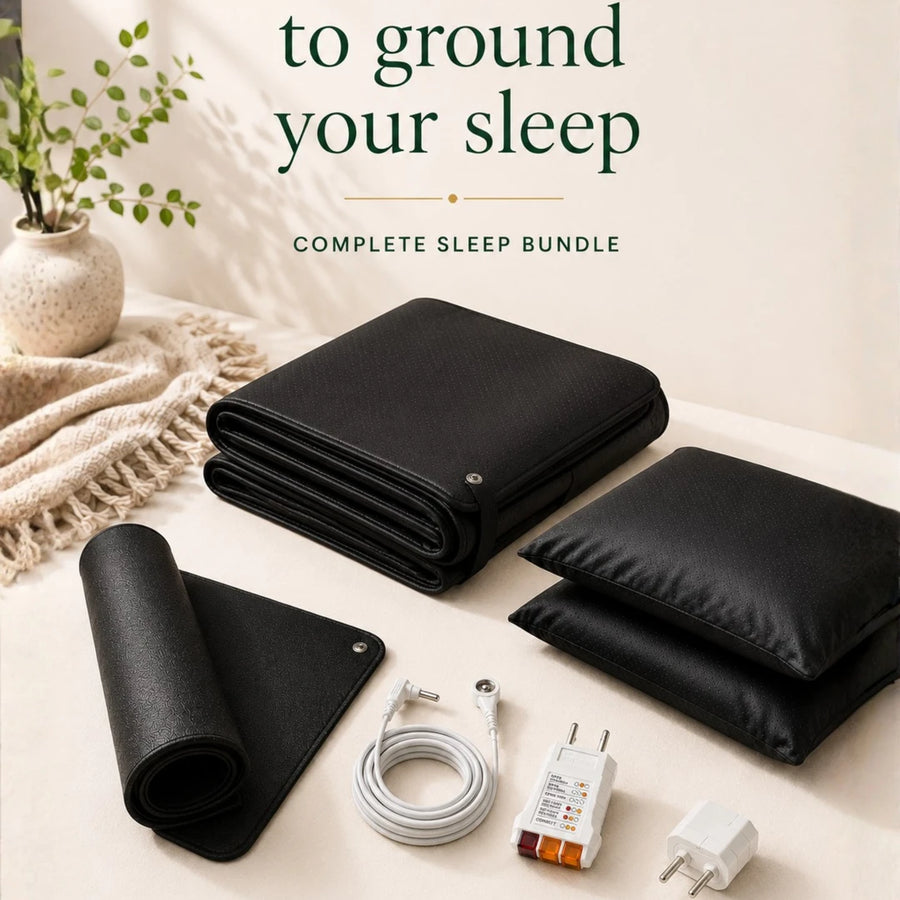
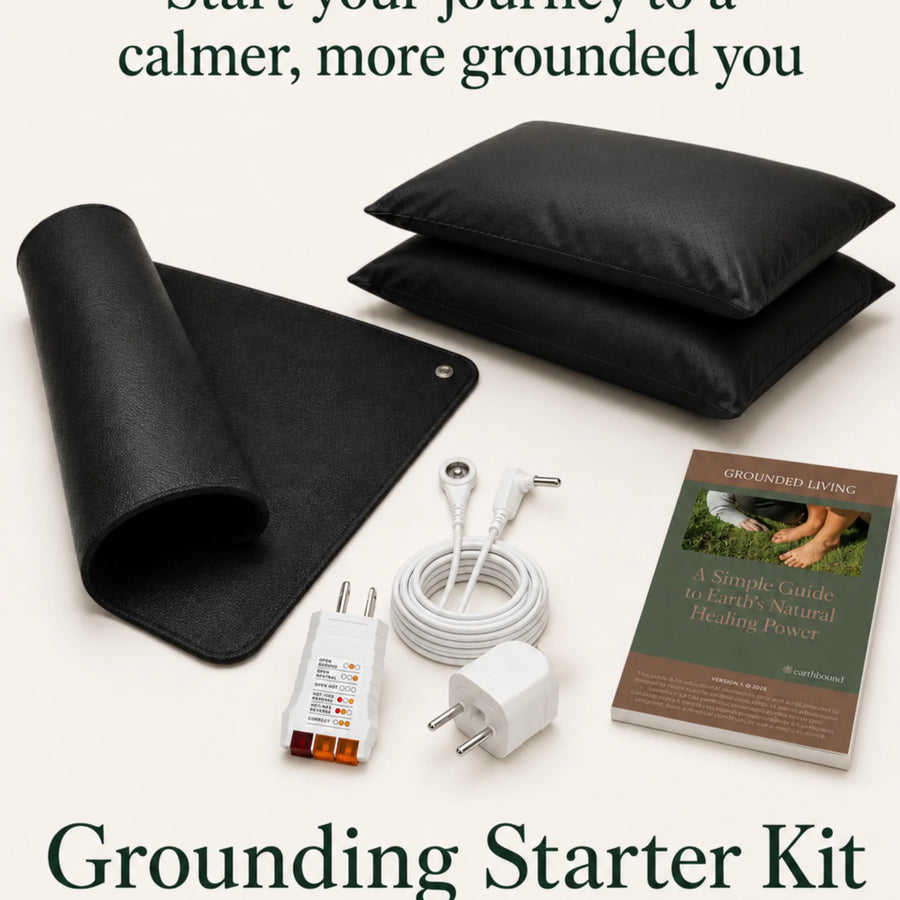
Of course, it's not an either-or. The grounding sleep kit lets you use both together to maximize the effects from head to toe. So, you’ll benefit from head to toe.
FAQs
Can grounding pillowcases improve energy levels?
Grounding pillowcases target the effects of grounding on the head; they might have some systemic effects. Anecdotally, people report improved energy levels and greater wakefulness due to deeper, more restorative sleep.
Do grounding sheets help reduce stress or anxiety?
According to some research, they can. Grounding may help reduce cortisol levels. In a 2004 study, subjects were grounded during sleep. After 8 weeks, they experienced lower cortisol levels, improved sleep, and less overall stress.
Do I need direct skin contact for grounding to work?
Not necessarily. Grounding works best when there’s direct contact between the skin and the product. However, even if there’s a thin barrier, grounding can still occur — so it’s likely to work through light pajamas.
Are grounding pillowcases worth it compared to sheets?
Yes — they’re often the best starting point for beginners and people with head-related issues. While they don’t offer the same full-body contact, you may still experience similar effects for some use cases.
Can I use grounding sheets with regular bed sheets?
No — if you’re using grounding sheets, it’s best not to put other sheets on. Any barrier between you and the sheet will diminish the grounding effect.