


We believe you deserve more than promises. Every claim Earthbound makes about grounding is backed by peer-reviewed research published in respected medical and scientific journals. Below we've compiled 20 key studies — grouped by health benefit — so you can read the evidence for yourself.
Sleep, Cortisol & Circadian Rhythm
Your body runs on a 24-hour hormonal clock. When that clock falls out of sync — as it often does in modern life — sleep suffers, stress accumulates, and inflammation rises. Multiple studies confirm that grounding helps reset this rhythm at its source.
Participants who slept grounded showed significantly reduced night-time cortisol and a resynchronised secretion pattern more aligned with the natural circadian rhythm. Subjective reporting confirmed improved sleep, reduced pain, and lower stress. Changes were most pronounced in female participants.
Grounding produced measurable changes in pulse rate, respiratory rate, blood oxygenation, and skin conductance. Findings supported previous evidence for stress reduction and improved sleep quality, and called for further research into grounding as a natural health maintenance strategy.
"Grounding the human body to earth during sleep reduces night-time levels of cortisol and resynchronizes hormone secretion more in alignment with the natural 24-hour circadian rhythm."
Inflammation & Immune Function
Chronic inflammation is now recognised as the underlying driver of most major diseases — from cardiovascular disease to autoimmune conditions. Grounding's most consistent finding across the literature is its effect on inflammatory markers.
One of the most cited grounding studies. Accumulating evidence points to grounding as a simple, natural strategy against chronic inflammation. The authors describe the body's living matrix as a primary antioxidant defence system — one that requires periodic recharging through conductive contact with the Earth.
Twenty clinical case studies using high-resolution medical infrared imaging demonstrated significant and immediate reductions in both acute and chronic inflammation following grounding treatments. Researchers described the findings as representing one of the most significant advances in the treatment of inflammatory conditions.
A landmark editorial proposing that thousands of named chronic diseases may share a single underlying cause — chronic inflammation — and that two consistently overlooked environmental factors may address it: sunlight and contact with the Earth. Grounding is positioned as an essential, accessible, and largely ignored health resource.
A comprehensive review confirming that direct contact with the Earth places the body into a measurable healing state. The Earth's DC energy, when conducted into the human body, may enhance function across the nervous, musculoskeletal, and cardiovascular systems — with far-reaching implications for disease prevention and treatment.
Cardiovascular Health & Blood Viscosity
Blood viscosity — how thick and sticky your blood is — is a significant but underappreciated risk factor for cardiovascular disease. Several studies show grounding has a direct and measurable effect on it.
Grounding was shown to significantly improve zeta potential — the electrical charge on red blood cells that keeps them from clumping together. Improved zeta potential reduces blood viscosity and the risk of dangerous clot formation. The authors note that grounding is virtually harmless and warrants serious clinical consideration.
Participants using grounded yoga mats showed lower blood viscosity at both ends of the cardiac cycle — despite mild exercise temporarily raising viscosity. Grounding demonstrated a clear ability to counteract exercise-induced blood thickening.
Grounding showed a positive trend in heart rate variability (HRV) across a 40-minute session, with continued improvement throughout. The authors recommend grounding as a realistic therapy for patients experiencing anxiety, stress, cardiac palpitations, and autonomic nervous system dysfunction — with positive effects visible within 20 to 40 minutes.
Even one hour of grounding restored blood flow regulation to the face — documented via Laser Speckle Contrast Imaging — in grounded subjects but not sham-grounded subjects. The finding has implications for skin tissue repair, vitality, and broader cardiovascular function.
"Could the most effective anti-inflammatory intervention be located right beneath our feet? Earthing research raises an intriguing possibility about the Earth's surface electrons as an untapped health resource."
Muscle Recovery & Physical Performance
Whether you're an athlete or simply someone whose body takes longer to recover than it used to, the evidence on grounding and muscle repair is compelling.
In 30 of 48 measured markers, grounded subjects consistently outperformed ungrounded subjects over a 3-day testing period. White blood cells, neutrophils, lymphocytes, creatine kinase, and both subjective and objective pain measurements all showed strong positive relationships with grounding. The authors describe grounding as the first intervention with demonstrated potential to reduce DOMS recovery time.
Grounded subjects showed significantly higher neutrophil and platelet counts following eccentric exercise, while the sham-grounded group experienced a significant rise in creatine kinase — a marker of muscle cell damage. Grounding reduced the loss of CK from injured muscle cells, indicating a direct healing effect.
Grounded sleeping resulted in faster recovery and less pronounced markers of muscle damage and inflammation. Detailed blood analysis confirmed that grounded sleeping modulates key events in the early stages of muscle regeneration at both cellular and molecular levels — a simple methodology to enhance acute and long-term athletic recovery.
Grounding helped therapists experiencing high stress cope more effectively by providing measurable additional energy. Those with higher pain levels became more relaxed, with reduced anxiety, depression, and improved sleep — building on prior evidence of improvements in inflammatory biomarkers, blood viscosity, and HRV.
Earthed subjects during cycling exercise showed lower blood urea concentrations than unearthed subjects — suggesting that grounding inhibits protein catabolism and supports a positive nitrogen balance. The authors note the fundamental implications for understanding human metabolic processes and athletic training programs.
Nervous System, Stress & Autonomic Balance
Modern life keeps the sympathetic nervous system in a state of near-constant activation. Grounding consistently shows the ability to shift the balance back toward the parasympathetic system, which governs rest, digestion, and recovery.
A landmark review proposing that the Earth's surface electrons may be a simple, natural, and profoundly effective strategy against chronic stress, ANS dysfunction, inflammation, pain, poor sleep, disturbed HRV, hypercoagulable blood, and many common health disorders. The authors describe the Earth itself as a potential "global treatment table."
Electrical grounding reduced skin voltage by approximately 95% and increased vagal tone by 67% in preterm infants — a remarkable finding given that low vagal tone is a marker of vulnerability to stress and serious neonatal complications. After grounding was removed, vagal tone returned to baseline, confirming a direct causal relationship.
Results indicated that the Earth's electromagnetohydrodynamic potential may play a fundamental role in regulating the bioelectrical and bioenergetic processes of the human organism — supporting the broader thesis that grounding is not a wellness trend but a biological necessity.
Laboratory testing confirmed that conductive grounding patches and conductive bed pads are both effective at significantly reducing mains-induced body voltage — the electrical interference generated by household wiring that surrounds us during sleep. This provides a direct, measurable mechanism for many of grounding's reported neurological and stress-related benefits.
When grounded to the electron-enriched earth, an improved balance of the sympathetic and parasympathetic nervous system occurs. Skin conductance and EEG/EMG recordings showed the most immediate and profound changes — some occurring in under 2 seconds of grounding contact. HRV continued improving throughout the full 40-minute session.
Twenty Studies. One Consistent Conclusion.
Multiple journals. Multiple independent research teams across multiple countries. The consistency of findings across such a wide range of health domains is what makes grounding genuinely compelling — not as an alternative to medical care, but as one of the most accessible and overlooked foundations of daily health.
The common thread across all of this research is simple: the human body was designed to be in contact with the Earth. Modern life — rubber-soled shoes, elevated beds, concrete floors, time spent indoors — has broken that contact. Grounding is the act of restoring it.
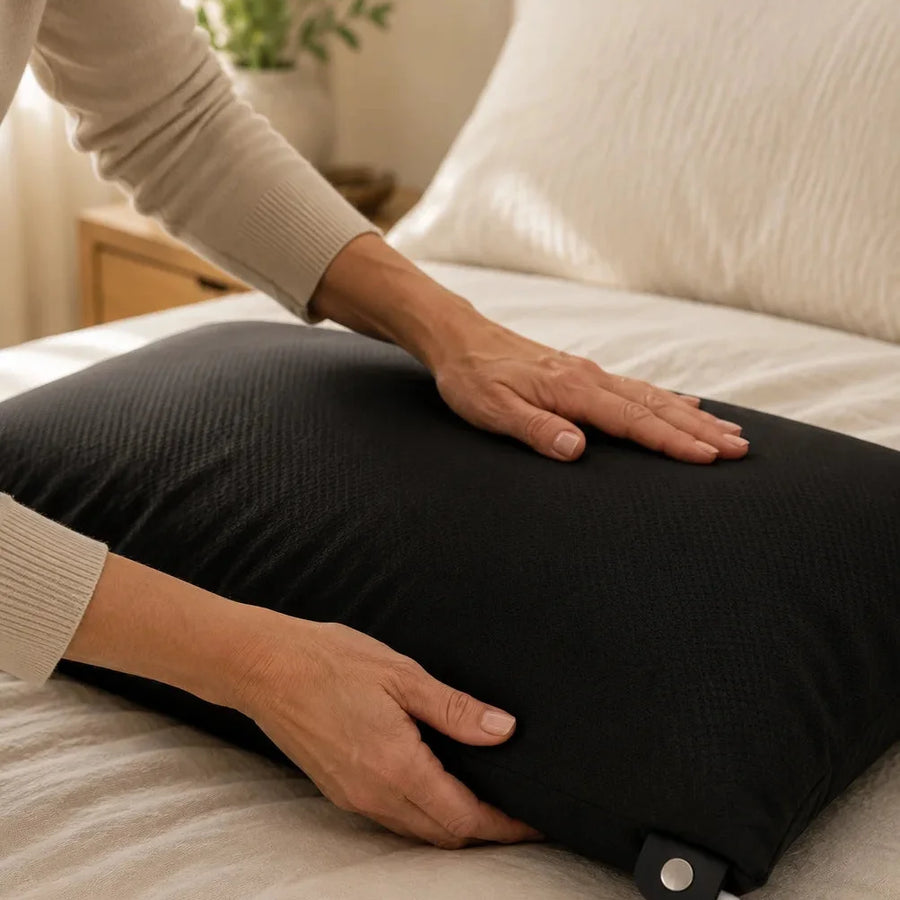
The most passive, consistent way to do it is while you sleep — 6 to 9 hours of uninterrupted earth connection, every night, without adding anything to your routine.
All studies referenced are peer-reviewed and publicly available. Earthbound products are not medical devices and are not intended to diagnose, treat, cure, or prevent any disease. This content is for general educational purposes only. Please consult a qualified healthcare provider for personal health guidance.