


Blackout curtains. Magnesium supplements. Sleep hygiene. You’ve tried everything to get a good night's sleep. And yet, like clockwork, you wake up at 3 AM feeling like your nervous system never switched off. For a single night, that’s annoying. Long-term, it can erode your ability to function.
But what if there were another solution? Maybe the missing piece is something as simple as reconnecting with the Earth while you sleep. Known as grounding (or earthing), this practice has some solid science behind it.
In fact, lots of people swear by grounding mats, sheets, and other grounding products during sleep. They claim it provides deeper, more restorative sleep. But what’s the science behind the claim? And how can you successfully ground during sleep? Find out below.
What Does Grounding While Sleeping Actually Mean?
The term grounding gets thrown around a lot. Little wonder people get confused. Often, it’s used to refer to psychological grounding techniques like box breathing or mindfulness. That’s not what we mean. Instead, grounding is the process of physically connecting with the Earth’s electric field.
Sounds a little pseudo-scientific? It’s not.
The Earth is known to hold a negative surface charge made up of free electrons. The body contains positively charged free radicals that drive oxidative stress. When you come into contact with the ground, the idea is that the free electrons flow into the body, neutralizing the free radicals.
The problem is that most people struggle to ground for long periods. Nighttime offers 7 to 9 hours of uninterrupted exposure versus a quick 20-minute barefoot walk. Indeed, historically, people slept on or close to the ground, receiving the full benefits of this process.
What the Science Says About Grounding and Sleep
Grounding is a relatively new area of research. That means there aren’t dozens of clinical trials investigating the benefits. However, what studies exist are generally positive.
One example is a 2025 trial of grounding during sleep. It took sixty participants and split them into two groups: one using a grounding mat, the other a non-grounding mat.
The results? By the end of 31 days, the experimental group showed significantly improved sleep scores, reduced stress, and lower daytime sleepiness compared to before use.
Another trial looked at nighttime grounding on cortisol levels (the stress hormone). It found that grounding with a mattress pad normalized participants’ cortisol levels, supporting better sleep and reduced pain and stress.
Other potential benefits include improvements to heart rate, nervous system function, and blood viscosity. That said, most of these studies are small-scale, and larger, more rigorous studies are needed to confirm the findings.
4 Techniques to Ground While Sleeping
Not everyone wants to buy grounding sheets or turn their bedroom into a science experiment. The good news is that grounding itself is actually quite simple.
It’s just about restoring the body’s connection with the Earth's surface. Some methods are more practical than others. But if you want to try grounding tonight, there’s a good chance you already can.
Technique 1 — Sleep Directly on Natural Ground (Outdoor Grounding)
This is grounding in its purest form. You can’t get much more direct than sleeping right on the ground. Traditionally, humans did just that — relying on grass, soil, sand, animal hides, or natural fibers. There were no memory foam mattresses.
To try it yourself, place a thin natural-fiber layer like cotton, wool, or jute over the ground. The thinner the barrier, the better the conductivity. Leave part of your skin exposed to the ground, if possible, e.g., feet, legs, or forearms.
Most soils conduct better than bone-dry ground, so slightly damp evenings are often ideal. Warm weather helps too (if only for the comfort factor).
While it’s highly effective, it’s probably the least practical. It’s hard to convince a person who’s spent their life sleeping on mattresses in warm rooms to suddenly try bare earth for a change.
Technique 2 — Pre-Sleep Barefoot Earthing Ritual
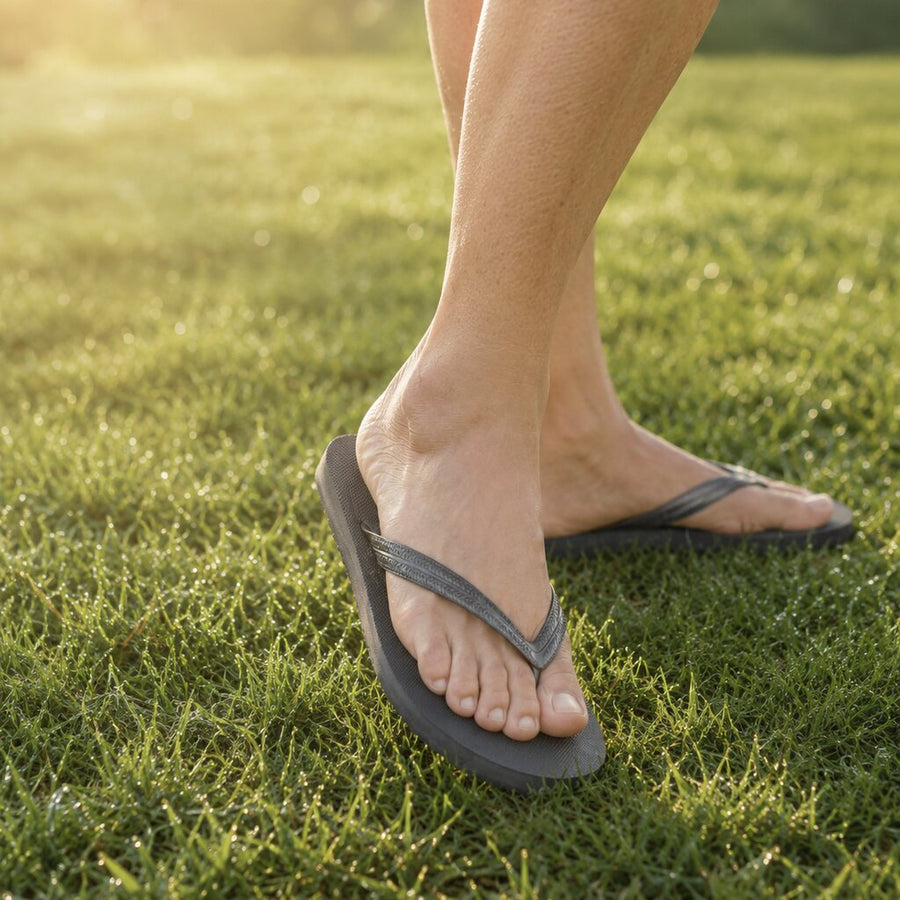
You probably don’t fancy sleeping on the ground. The next best thing is a quick walk barefoot outside before you sleep.
The idea is simple: spend 20 to 30 minutes barefoot on natural ground shortly before bed. Grass, soil, sand, and unsealed stone — all work well. What you want to avoid are insulating surfaces like asphalt, painted concrete, treated decking, or rubber flooring.
That timing matters.
Part of the theory behind grounding is that it shifts the nervous system from “fight-or-flight” mode toward a more parasympathetic, recovery-focused state. Doing it right before bed, therefore, gives you a lot of the same benefits.
Don’t overcomplicate the process. Just remove shoes or socks, stand or walk on moist grass, soil, sand, or unsealed stone, and enjoy 20-30 minutes. No phone or electric stimulation. Just quiet breathing. Think of it as the ultimate pre-sleep ritual.
Technique 3 — Natural Water Immersion Before Bed
“Grounding” makes you think immediately of soil and stone. The hard earth. But natural water carries many of the same properties. It’s highly conductive and remains electrically connected to the Earth.
That’s one reason people often describe swimming in the ocean as strangely calming or mentally resetting. Some of that may be psychological. Some may be physiological.
To try this, wade into a natural body of water in the evening before bed. The ocean is ideal because saltwater conducts extremely well, but lakes, rivers, and streams also work. Even sitting at the edge of a lake with your feet submerged can be enough to create direct conductive contact.
Bare skin matters most. Avoid neoprene or rubber wetsuits that block connectivity. You don’t need to spend hours in the water. Just 15 to 30 minutes within two hours before bed can make a difference. Evening is best. Morning or midday swimming may still feel good, but it won’t have the same pre-sleep effect.
Technique 4 — Conductive Floor Sleeping
Modern homes are built to keep the outside, outside. They’re about comfort and insulation. The problem is that it makes grounding next to impossible.
There is a solution: conductive flooring.
Sleeping on or very close to a natural conductive floor surface (e.g., bare concrete, stone tile, clay, or unsealed natural materials) can give you many of the benefits of grounding. Similar to sleeping on the ground, this technique works best when you stay as close to the surface as possible — for example, put a natural-fiber mat directly on the natural surface.
Most people will find this quite uncomfortable. But if you’re a traditional or minimalist sleeper (or you just want to experiment), it’s well worth a try.
Grounding Products for Sleep — What They Are and How They Work
Most people aren’t going to sleep outdoors or walk barefoot just before bed. They either don’t have access or don’t quite fancy the discomfort. That doesn’t mean grounding is off-limits.
Grounding sleep products offer a more comfortable, more convenient, and equally reliable option for everyone, from cozy sleepers to city-dwellers. Let’s take a closer look at the options:
Grounding Mats
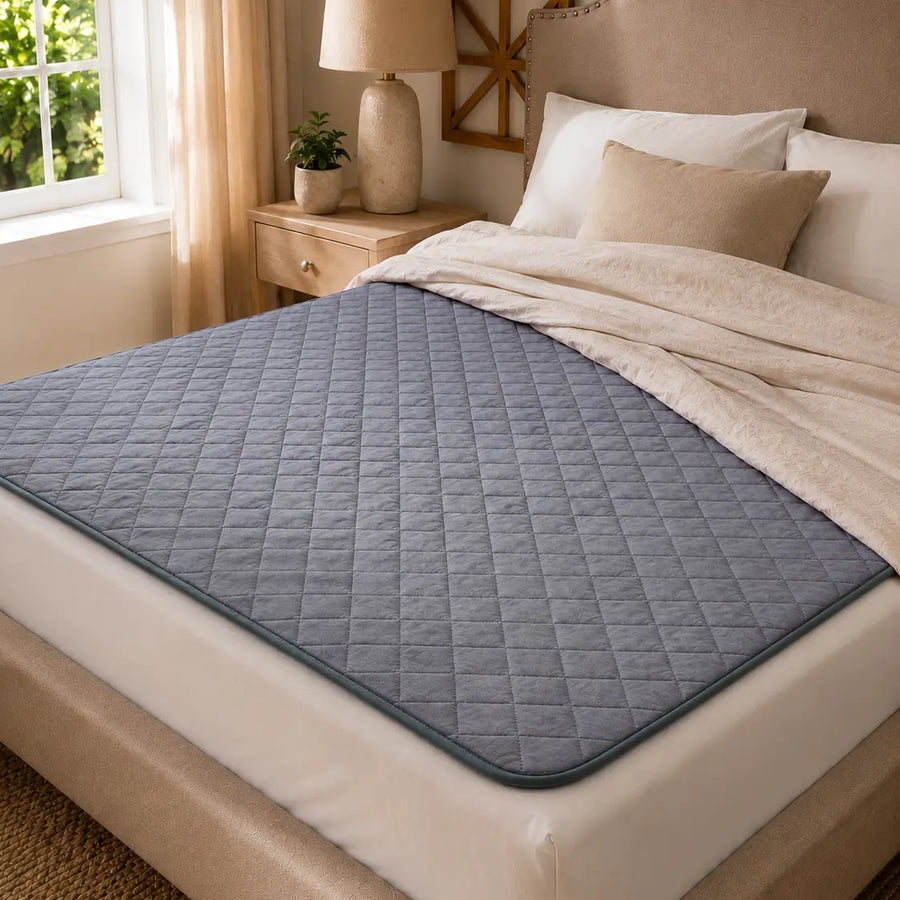
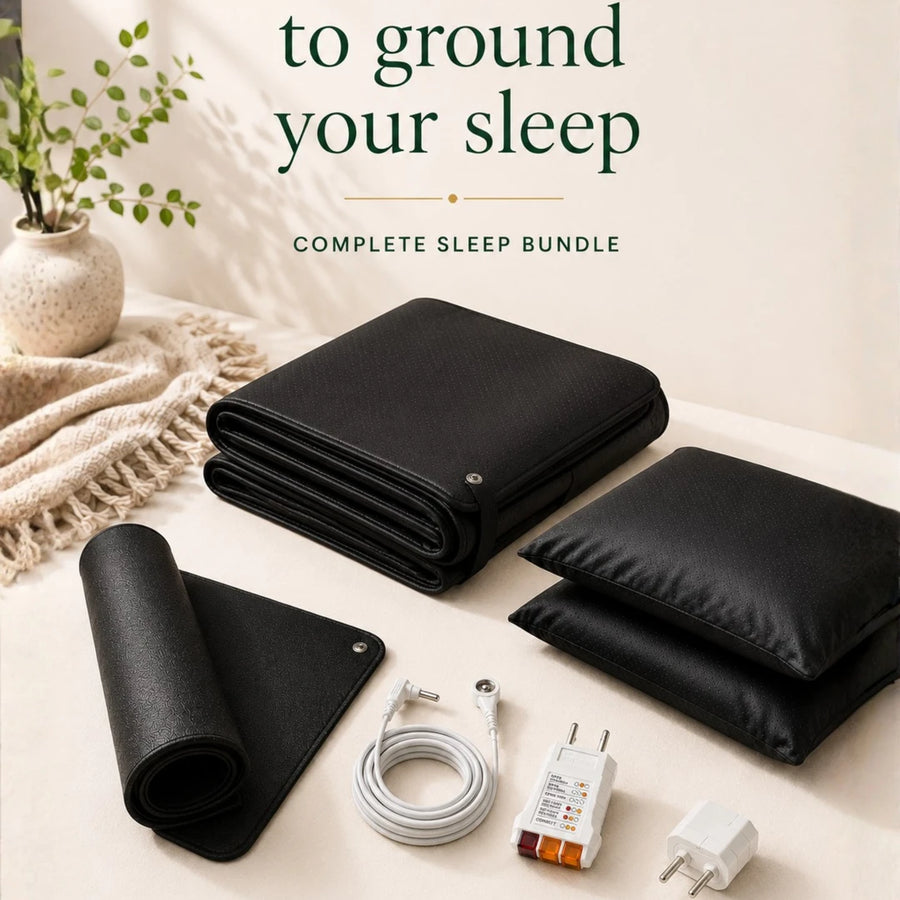
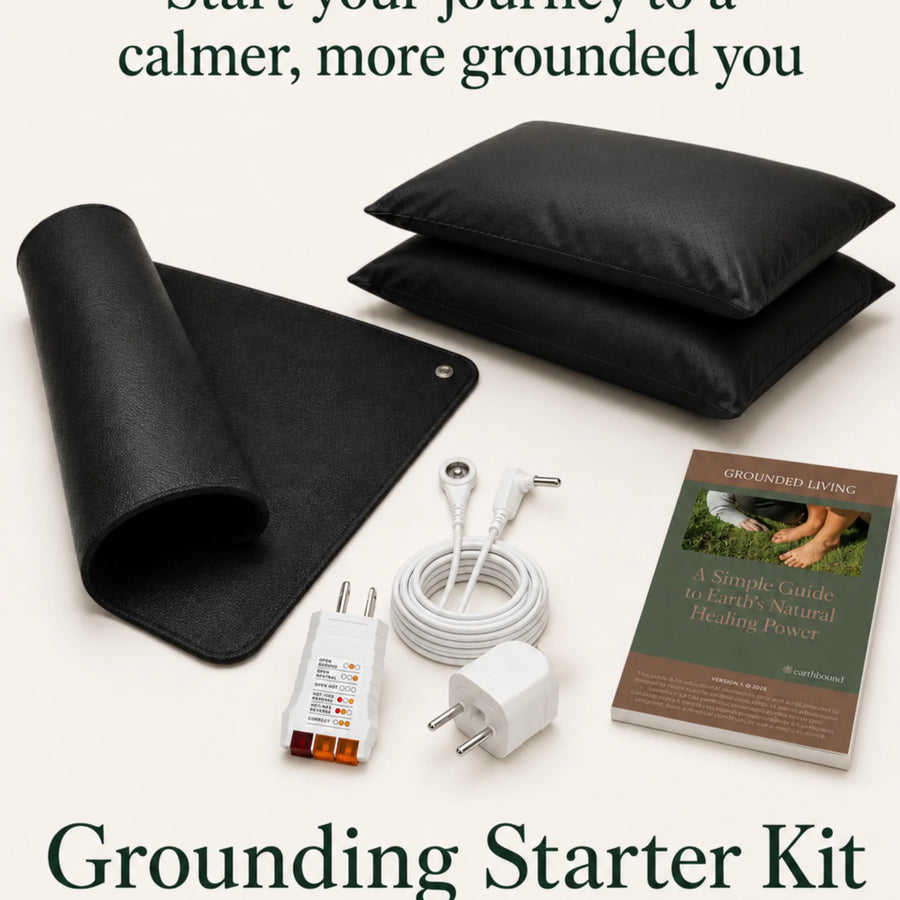
Grounding mats are conductive pads containing either carbon or silver. They’re placed at the foot of the bed or under the forearms while sleeping, connecting the body to the Earth via the grounding outlet of a socket.
They’re a great entry-level option for people new to grounding. Plus, the mat is versatile enough that you can use it during the day as well as at night.
- Best for: Beginners who want to test grounding without changing their whole bed setup
- How it connects: Snap cord connected to the outlet grounding port or an external grounding rod
- What to check: Built-in 100kΩ resistor, cord length, carbon vs silver-infused material
- Potential downside: Only grounds the area directly touching the mat
Grounding Sheets
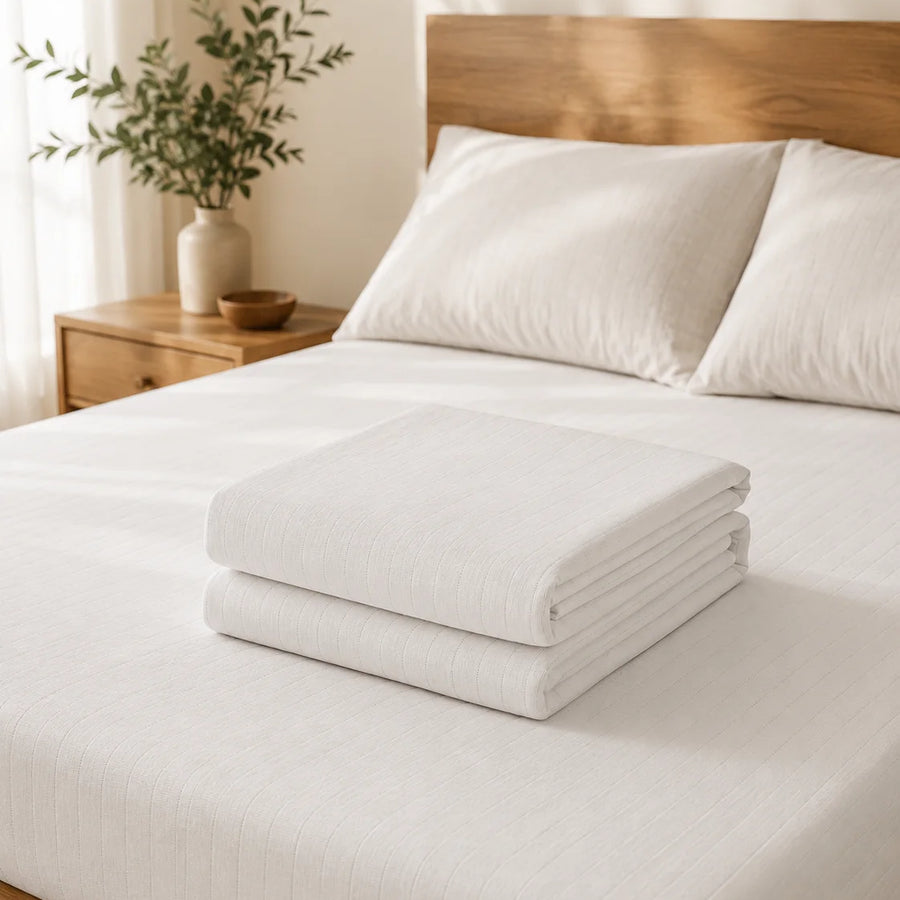
Grounding sheets are bed sheets where the conductive fibers are woven directly through the fabric. They’re one of the best ways to ground during sleep, offering direct body contact. The only problem is that because of their frequent use and weekly washing, they can wear down more quickly than other products.
- Best for: People who want overnight grounding without changing how they sleep
- How it connects: Conductive silver or carbon fibers woven through the sheet connect via a snap cord to a grounded outlet
- What to check: Silver fiber percentage, carbon vs silver durability, washing instructions
- Potential downside: Silver fibers gradually oxidize and require more careful maintenance
Grounding Mattress Pads and Covers
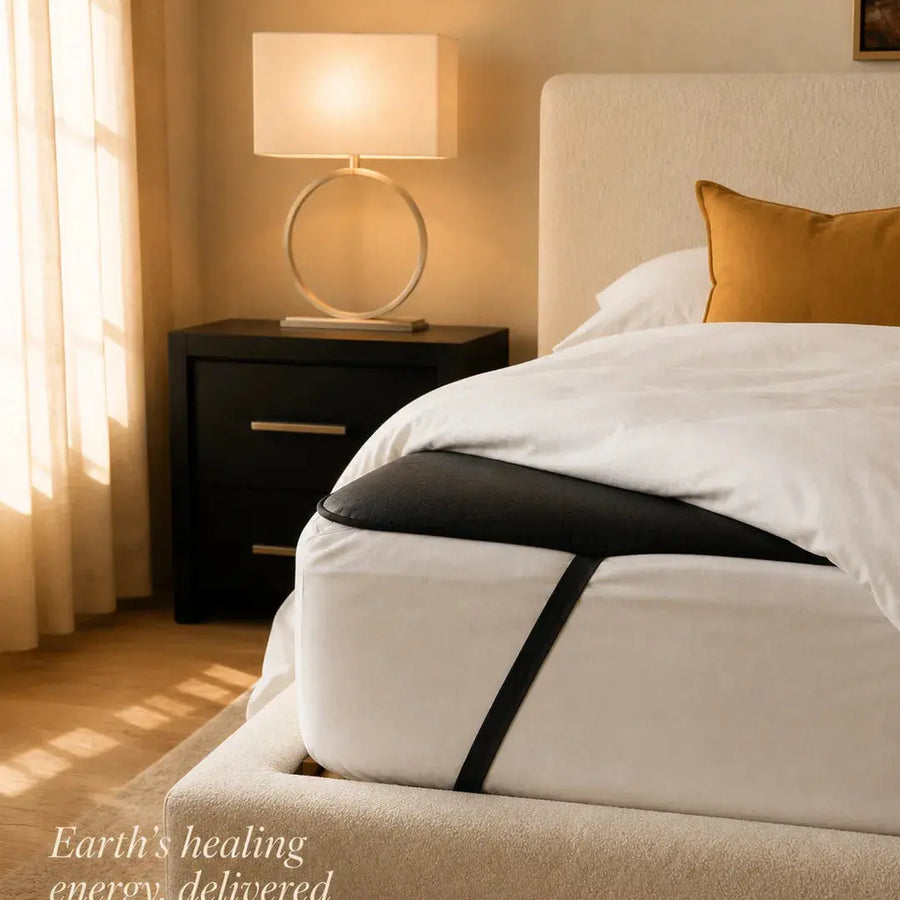
Grounding mattress pads and covers go underneath your normal bedding. While they’re not as direct as grounding sheets, they still offer a fantastic grounding experience during sleep. It’s close to full-body coverage. Plus, you can use your existing sheets, and mattress covers require less overall maintenance.
- Best for: Full-body overnight grounding with consistent skin contact throughout sleep
- How it connects: Large conductive pad placed beneath the fitted sheet and connected to a grounding port or rod
- What to check: Full vs half-pad coverage, cord placement, mattress pad conductivity through bedding layers
- Potential downside: More expensive than mats or sheets, and conductivity slightly decreases through thicker fabrics
Grounding Pillowcases
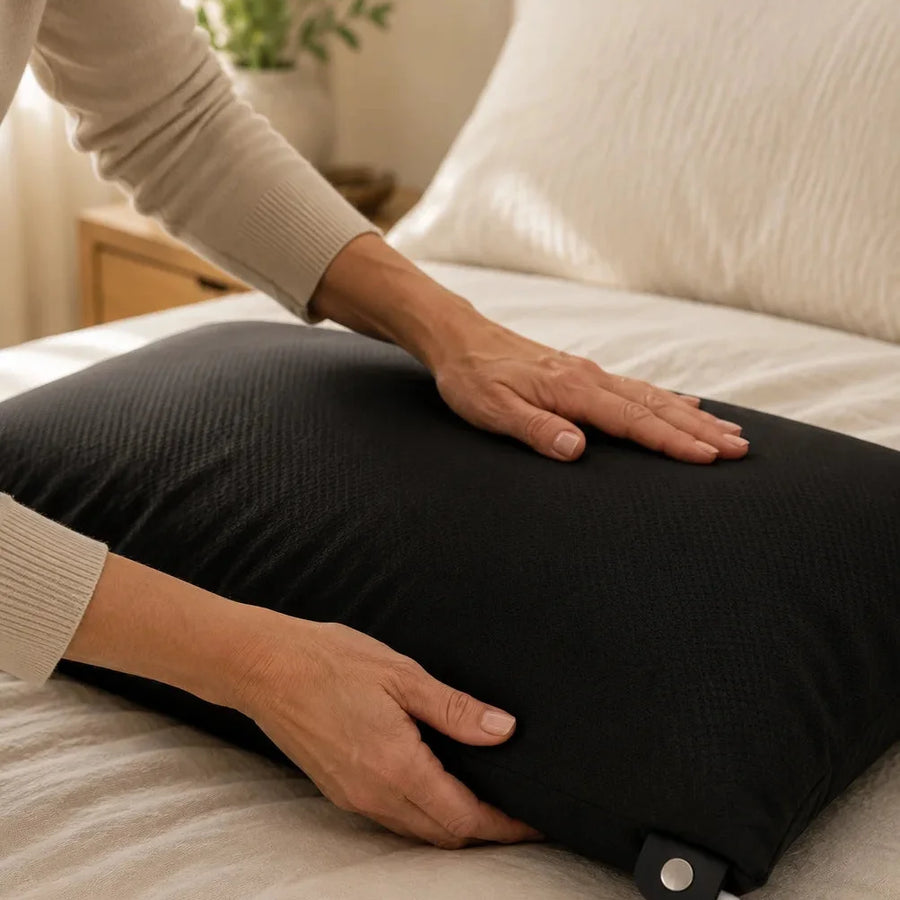
Grounding pillowcases work a lot like sheets. They focus their benefits on the head. Anecdotally, people say it helps them deal with headaches, brain fog, and other upper-body issues. The downside is obviously that the coverage is limited and that pillowcases wear out faster than other products.
- Best for: People specifically focused on sleep quality, relaxation, or nighttime nervous system regulation
- How it connects: Conductive fibers inside the pillowcase surface connect to a grounded outlet through a snap cord
- What to check: Silver fiber content, softness, breathability, and durability after repeated washing
- Potential downside: Research on grounding pillowcases specifically is still fairly limited
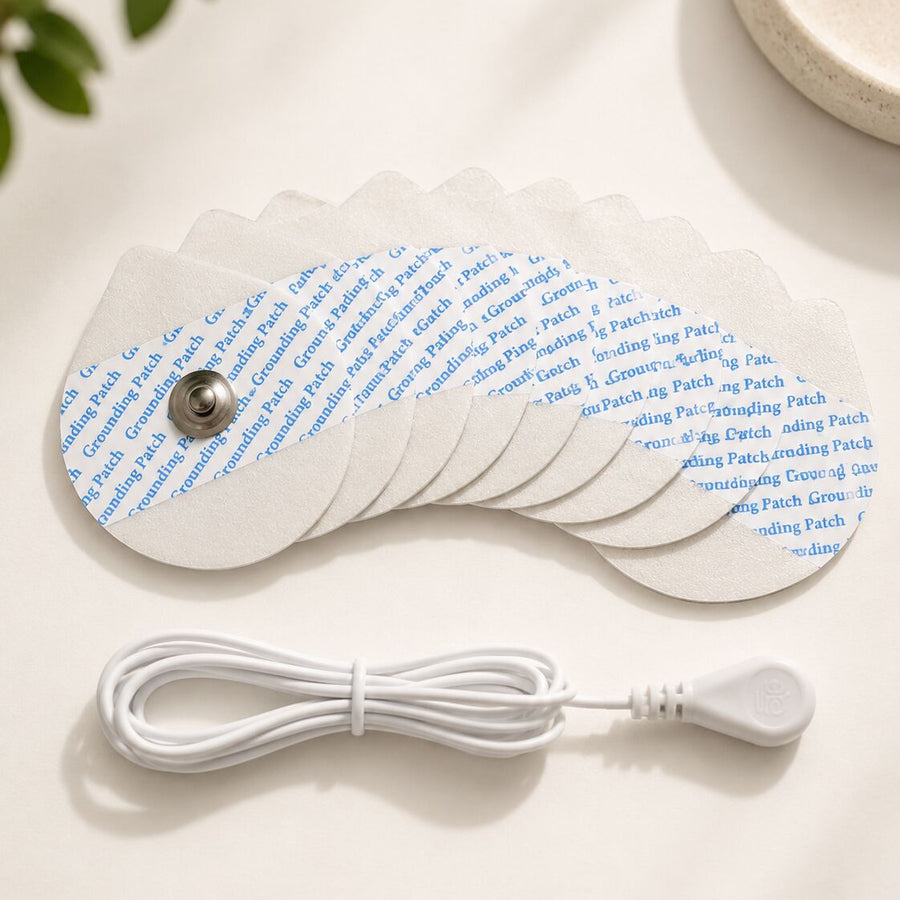
Wrist and Ankle Grounding Straps
Restless sleepers can find that they lose contact with the mats or the sheet. Rather than relying on hit-or-miss contact, grounding straps fit around the wrists or ankles, ensuring contact continues throughout the night. While they don’t offer full-body coverage, they’re a great option for people who wriggle in their sleep.
- Best for: Restless sleepers who move too much for mats or sheets to maintain contact
- How it connects: Adjustable conductive strap linked directly to a grounding cord and outlet or rod
- What to check: Cord flexibility, comfort, strap fit, ability to move naturally during sleep
- Potential downside: Some people find wrist straps uncomfortable or distracting overnight; ankle straps are usually better tolerated
How to Set Up Grounding Products Correctly (Step-by-Step)
Grounding is a relatively simple process. Even if you’re using a grounding product, it only takes a few minutes to get everything set up. However, if you don’t check your connection or connect correctly, you might not get any of the benefits of grounding.
Here’s what you need to do:
Step 1. Test Your Outlet
First, you need to ensure your outlet is grounded correctly. A “grounded” outlet means one of the ports carries current down into the Earth. You can use a three-light outlet tester to determine the condition of your socket.
If your outlet isn’t grounded, a grounding rod can be inserted directly into the ground. It offers the same basic grounding connection.
Step 2. Place the Product Correctly
Follow the product instructions. You’ll want to put it where you’ll get the most contact with your body. If you’re using a mattress cover or pad, it's best to use only thin bedding sheets. The thicker the sheets, the lower the conductivity.
Step 3. Connect the Cord to the Right Port
The grounding cord connects the product to the socket. It does not carry any live electrical current. Instead, it connects to the round (third) port. Never connect it to the two flat sockets that carry live current.
Most reliable grounding product cords have a built-in 100kΩ resistor as a safety measure against electrical surges. You can use a conductivity connector to determine if you’ve set the product up correctly.
Step 4. Maximize Skin Contact
The best result comes from bare skin contact with the product. That doesn’t have to be a specific part of the body, but often users opt for bare legs, arms, or feet.
If you’re going to wear pajamas, choose something thin — either bamboo or cotton. Polyester and thick fabrics reduce connectivity. Hydration also matters, as water improves your body’s electrical conductivity.
Step 5. Reduce Electric Interference Near Your Bed
It’s a good practice to move electrical devices away from your bed. Unplug devices within 6 feet of the bed and move charging phones and tablets into another room. You might also consider turning off the Wi-Fi router at night (or switching to hardwired ethernet) to eliminate EMF sources.
Benefits of Sleeping Grounded
The reason people keep using grounding products is not because of one dramatic overnight transformation. That’s just not how it works. Rather, it’s smaller changes that gradually accumulate over time. You fall asleep faster, wake up less during the night, and feel calmer throughout the day.
Improved Sleep Quality
This is the biggest reason people try grounding in the first place. Research has linked grounding to reduced insomnia severity, improved sleep quality, and fewer nighttime awakenings. A lot of people simply report deeper, more restorative sleep.
More Balanced Cortisol Levels
Poor sleepers often feel exhausted all day, then strangely alert at night. Some grounding studies suggest nighttime cortisol levels decrease and the circadian rhythm becomes more stable over time. That may explain why people wake up feeling rested rather than wired.
Reduced Inflammation and Oxidative Stress
One of the main theories behind grounding is that free electrons from the Earth neutralize positively charged free radicals linked to oxidative stress and chronic inflammation. While the science is still developing, inflammation reduction appears consistently throughout the existing evidence.
Less Pain After Sleep
Multiple trials reported reductions in back pain, joint pain, and general muscular discomfort. Improved circulation and lower inflammation during sleep are the likely explanations. Most people describe this as gradual rather than immediate.
Better Cardiovascular Recovery
Grounding may improve blood viscosity, allowing blood to flow more easily through the circulatory system. That could support cardiovascular recovery during sleep and reduce strain on the body overnight.
Faster Physical Recovery
Athletes and active individuals increasingly use grounding for recovery. Early findings suggest it may support HRV, reduce inflammation, and improve parasympathetic nervous system activity after physical stress.
A Calmer Nervous System
A lot of people describe grounding very simply: they just feel less stressed. Grounding appears to shift the body away from a constant low-level fight-or-flight state and toward a calmer, more recovery-focused baseline.
What to Expect in Your First Weeks of Sleeping Grounded
Grounding changes don’t happen overnight. While studies find benefits after just one hour of grounding, most people notice the changes over days to weeks. Here’s what you can expect:
- Nights 1 to 3. During the first few nights, you may notice mild tingling or a warm sensation. That’s normal on first contact. People often report vivid dreams or slightly disrupted sleep as they adjust to grounding. But most people don’t notice anything different.
- Week 1 to 2. After a week or more of grounding, sleep may become deeper, with fewer midnight wakeups. You may find yourself more rested when you wake. It’s a subtle change. It can help to keep a sleep log (bedtime, wake time, subjective quality score 1-5) to track changes throughout the adaptation period.
- Weeks 4 to 8. The grounding product has had time to work fully. Cortisol levels may become more balanced, inflammation-related pain may decrease, and heart rate may stabilize.
If you want to put grounding to the test, wearing sleep-tracking wearables can help provide genuine data. They often measure HRV, resting heart rate, and sleep stages.
How to Choose the Right Grounding Methods for Your Sleep Setup
There isn’t a perfect grounding method that suits everyone. Some people will want to try a pre-sleep barefoot walk or natural water immersion. A brave few might even sleep directly on the ground. However, for most, grounding begins with a grounding product.
We recommend beginners start with the classic grounding mat. It’s low-cost, easy to set up, and highly versatile. You can use it during sleep, as you relax, or while you work. The other benefit is that you can take it with you if you’re a frequent traveler. Then, once you’re confident that grounding can benefit you, you can graduate to grounding sheets or mattress covers.
Always check your socket first. You want to ensure it’s got a grounding port ready to go. If not, you can use a grounding rod to tap into the Earth’s electrical field directly. It might not feel as traditional and immersive as sleeping right on the ground, but the principle is similar.
If you’re ready to start grounding tonight, a grounding mattress cover is a great option. It’s comfy, hard-wearing, and offers excellent grounding potential. It comes with pre-verified grounding cords and a setup guide.
FAQs
Does sleeping grounded really work?
Yes. Several studies and hundreds of customers support grounding during sleep. Users claim grounding provides deeper, more restorative sleep and may even ease aches and pains.
How do you ground yourself while sleeping indoors without bare outdoor access?
You don’t need direct contact between your body and the ground. Grounding products connect to the Earth’s electrical field either through a grounding port in an electrical socket or a grounding rod. They’re a safe, accessible way to ground indoors.
What should you wear or not wear when sleeping grounded?
Ideally, you want as much body contact between you and the grounding product as possible. If you wear pajamas, opt for thin cotton or bamboo material. The thicker the fabric, the less effective the grounding is.
How long does it take for grounding to improve sleep?
That depends on the individual. Most people notice some benefits within 1-2 weeks. However, it can take 2 months or more to get the full benefits.
Is it safe to sleep on a grounding mat every night?
Yes. As long as the grounding mat is set up correctly, there’s minimal risk from grounding itself.