That familiar October chill may feel simple, but underneath it is a carefully regulated system involving blood vessels, blood flow, and the way red blood cells move through your circulation.
It starts quietly.
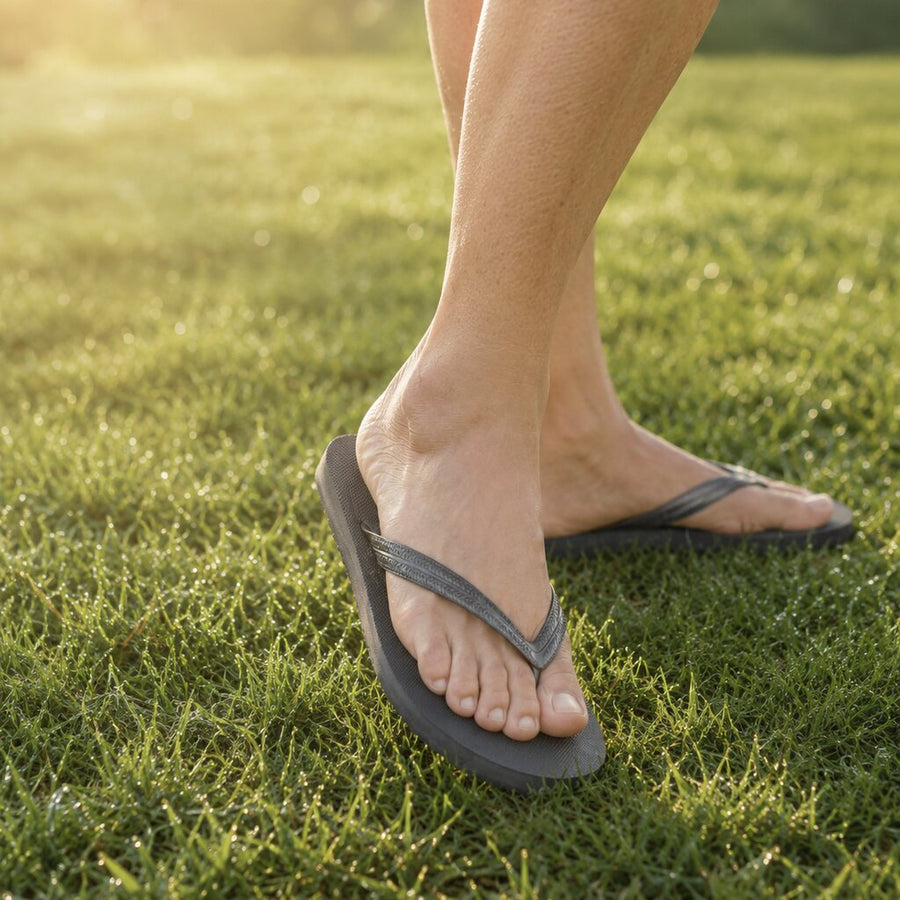
By three in the afternoon, you are sitting at your desk wondering why your feet feel colder than the rest of you.
By eleven, you are under the covers and they still have not quite warmed up.
So you put on thicker socks.
Sometimes that helps. Sometimes your feet still somehow feel cold inside them.
It is one of those small seasonal changes most of us barely think about. But temperature at the hands and feet is influenced in part by how the body regulates blood flow near the skin.
When the environment gets colder, the body can narrow blood vessels near the surface to help conserve heat closer to the core.
That does not mean every pair of cold feet signals a circulation problem. Cold feet are common and can have many explanations.
But it does make one part of grounding research particularly interesting: researchers have actually measured what happens to blood cells and patterns of blood flow while people are grounded.
FIRST, A LITTLE BLOOD SCIENCE
Red Blood Cells Are Not Supposed to Move Like a Pile of Coins
Your red blood cells are constantly moving through an enormous network of blood vessels.
Under normal conditions, their surfaces carry an electrical charge that helps neighboring red blood cells repel one another.
Think of two magnets pushing away from each other.
The stronger that repelling effect, the easier it is for the cells to remain separated rather than stacking and clustering together.
Researchers can measure this electrical behavior using something called zeta potential.
You do not need to remember the name.
The useful idea is simple:
Zeta potential is one way researchers describe how strongly red blood cells electrically repel one another.
When that repelling force is greater, the cells tend to remain more separated.
When it is reduced, red blood cells can be more prone to aggregation, or clustering.
That is what made a small grounding experiment published in 2013 so interesting.
THE TWO-HOUR EXPERIMENT
Researchers Grounded 10 Adults and Watched Their Blood Cells
In a study by Chevalier, Sinatra, Oschman and colleagues, researchers recruited 10 healthy adults.
Each participant was grounded for two hours using conductive patches placed on the soles of the feet and palms of the hands.
Before and after grounding, small blood samples were collected.
Researchers then examined the electrical behavior of the red blood cells and counted how frequently the cells appeared in clusters.
After two hours, the researchers reported that the absolute value of red blood cell zeta potential had increased in every participant.
On average, the increase was approximately 2.7-fold.
They also observed a significant reduction in red blood cell aggregation.
- Higher red blood cell zeta potential
- Greater electrical repulsion between red blood cells
- Reduced red blood cell aggregation
This is sometimes described in grounding literature as a change related to blood viscosity or "blood fluidity."
But there is an important distinction.
This was a tiny exploratory study. It involved only 10 people, did not include a sham-grounded control group, and it did not test whether grounding warmed cold feet, improved limb temperature, or treated a circulation disorder.
What it did provide was something more concrete than a feeling: a measurable change in the electrical behavior and aggregation of red blood cells during grounding.
Then Researchers Looked at Blood Flow Directly
A separate study published by Gaétan Chevalier in 2014 took a different approach.
Instead of examining individual blood cells under a microscope, researchers used laser imaging to continuously monitor blood flow in the face.
Forty adults participated.
Twenty-seven were grounded, while 13 received a sham-grounding setup that looked the same but did not actually connect them to ground.
Importantly, the study was designed to be double-blind: participants and the people conducting the sessions did not know whether a particular setup was truly grounded or sham-grounded.
Each person remained in the setup for approximately one hour while a Laser Speckle Contrast Imaging camera continuously monitored superficial facial blood flow.
The researchers reported a different pattern among grounded participants. After an initial relaxation period, grounded participants showed rhythmic fluctuations and, in some cases, increases in facial blood flow.
In the sham-grounded subjects highlighted in the report, facial blood flow generally remained low or decreased after relaxation.
The authors interpreted these findings as evidence that grounding may influence the regulation of superficial blood flow.
They also explicitly called for larger studies, longer observation periods, and additional measurement methods to confirm the findings.
ANOTHER PIECE OF THE PUZZLE
Other Researchers Have Reported Changes in Blood Chemistry
Polish researchers Karol and Pawel Sokal have also studied what happens physiologically when the body is electrically connected to the Earth.
Their published experiments examined blood and urine measures under grounded and ungrounded conditions.
Across several experiments, they reported statistically significant changes in a number of measured variables, including electrolytes, minerals, proteins, thyroid-related measures, glucose, and other blood chemistry markers.
These studies do not tell us that grounding improves circulation to cold feet.
But they are relevant because they suggest that grounding is not merely a subjective sensation. Researchers have reported measurable physiological changes while studying grounded versus ungrounded conditions.
So Does Grounding Warm Cold Feet?
We do not have a clinical trial showing that.
None of the studies above were designed to test cold feet, foot temperature, Raynaud's phenomenon, peripheral vascular disease, or any other specific cause of cold extremities.
So it would be a leap to say that grounding has been proven to warm your feet.
What the research does give us is a more interesting and more defensible question:
If grounding has been associated with measurable changes in red blood cell behavior and blood-flow regulation, what happens when that connection becomes part of your routine for hours every night?
That is where the research becomes relevant to everyday life.
Two Hours in a Laboratory Is One Thing
The red blood cell study grounded participants for two hours.
The facial blood-flow study observed people for approximately one hour.
But most people already have a window much longer than that built into every day.
Sleep.
Six, seven, or eight hours in the same place, every night.
That is one reason nighttime grounding has become such a practical way for people to incorporate grounding into daily life.
There is no need to stand barefoot outside when the ground is cold.
There is no extra 30-minute ritual to remember.
You are simply using time you were already going to spend in bed.
A SIMPLE WAY TO TRY IT
Turn the Hours You Already Spend Sleeping Into Grounding Time
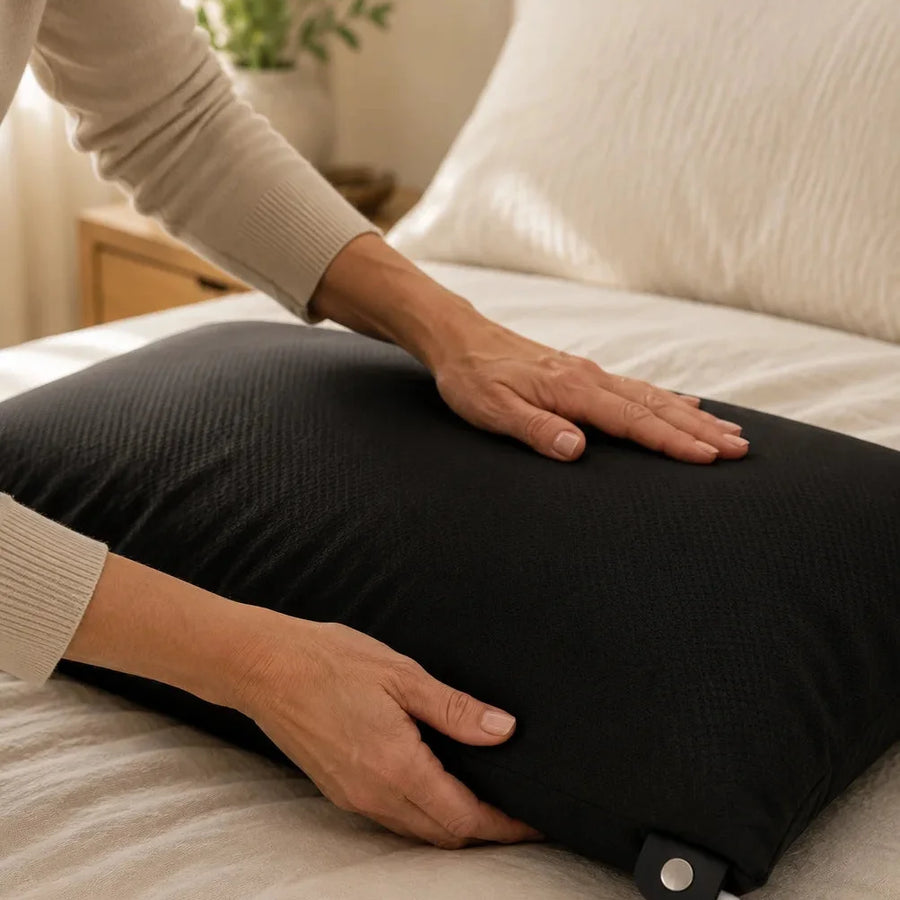
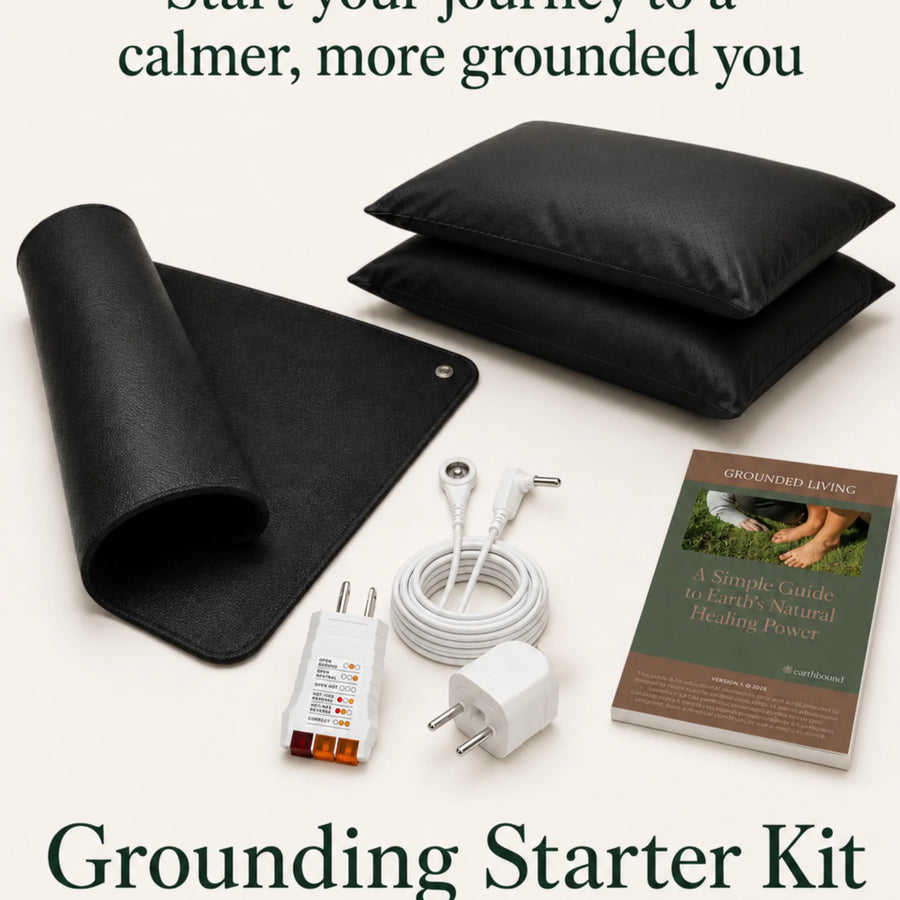
The Earthbound Grounding Mattress Pad was designed to make nighttime grounding simple.
The ultra-thin conductive pad sits beneath your fitted sheet and connects to ground, allowing grounding to become part of your normal bedtime routine.
No bare feet on cold grass.
No extra time carved out of your day.
Just go to bed the way you normally would.
And because individual experiences vary, Earthbound gives you 90 nights to decide what you think for yourself.
See What 90 Grounded Nights Feel Like
Research can tell us what happened in a laboratory. Your own routine tells you whether grounding belongs in your life.
Sleep grounded in your own bed, give yourself enough time to experience it consistently, and decide based on how you feel.
If Earthbound is not right for you, you are protected by our 90-night trial.
Nighttime grounding, without changing your nightly routine.
Research Referenced
- Chevalier G, Sinatra ST, Oschman JL, Delany RM. Earthing (grounding) the human body reduces blood viscosity: a major factor in cardiovascular disease. Journal of Alternative and Complementary Medicine. 2013;19(2):102-110. DOI: 10.1089/acm.2011.0820.
- Chevalier G. Grounding the Human Body Improves Facial Blood Flow Regulation: Results of a Randomized, Placebo Controlled Pilot Study. Journal of Cosmetics, Dermatological Sciences and Applications. 2014;4(5):293-308. DOI: 10.4236/jcdsa.2014.45039.
- Sokal K, Sokal P. Earthing the human body influences physiologic processes. Journal of Alternative and Complementary Medicine. 2011;17(4):301-308. DOI: 10.1089/acm.2010.0687.
- Sokal K, Sokal P. Earthing the human organism influences bioelectrical processes. Journal of Alternative and Complementary Medicine. 2012;18(3):229-234. DOI: 10.1089/acm.2010.0683.
Grounding research remains preliminary. The studies discussed above do not establish that grounding treats poor circulation, cold feet, vascular disease, or any other medical condition, and individual experiences may vary. Persistent, painful, discolored, numb, or unusually cold feet should be discussed with a qualified healthcare professional. Earthbound products are wellness products and are not intended to diagnose, treat, cure, or prevent disease.