


Grounding for Dogs and Cats: An Honest Guide
Last updated: July 15, 2026
Disclosure: this guide is published by Earthbound, which makes grounding products people share with their pets. We'll be more careful with claims here than most of what you'll read on this topic — your pet can't tell you what's working, which raises the bar for honesty, not lowers it.
The short version: the physics of grounding doesn't care about species — a conductive surface connected to the Earth grounds whatever body touches it, paw or foot. What's different for pets is the evidence (largely anecdotal, and we'll say so), the products (fur changes the contact math), and the safety details (cords and chewers). Here's all three, without the miracle stories.
What's actually known vs what's reported
Being straight about the evidence: the controlled grounding research — including the 2025 randomized placebo-controlled sleep trial — was done on humans. There are no equivalent trials in dogs or cats. What exists for pets is a large body of consistent owner observation, and one pattern in it is genuinely interesting: put a grounded surface in a home and pets tend to find it and stay on it. Our own reviews echo it — one customer put it simply: "Love it, sleeping better, pet sleeping on bed sleeps better." Animals sleeping where they're comfortable is real information; it just isn't a clinical endpoint. The mechanism, meanwhile, is identical to human grounding and measurable the same way: a conductive surface, a ground connection, and contact. If grounding's anti-inflammatory findings in humans eventually replicate in animals, indoor pets — who touch actual earth about as rarely as their owners — would be the natural beneficiaries. Until then: same mechanism, thinner evidence, honest guide.
The contact question: fur
Grounding needs conductive contact, and fur is an insulator — which sounds like a dealbreaker but mostly isn't. Dogs and cats make skin-adjacent contact through paw pads, noses, bellies (where coats are thinnest), and anywhere they press weight for long periods; lying on a surface for hours, the way pets do, compensates for imperfect contact in a way a human's brief touch wouldn't. Practical implication: bigger surface and longer lounging beat perfect placement. Pick the spot your pet already sleeps.
What to use
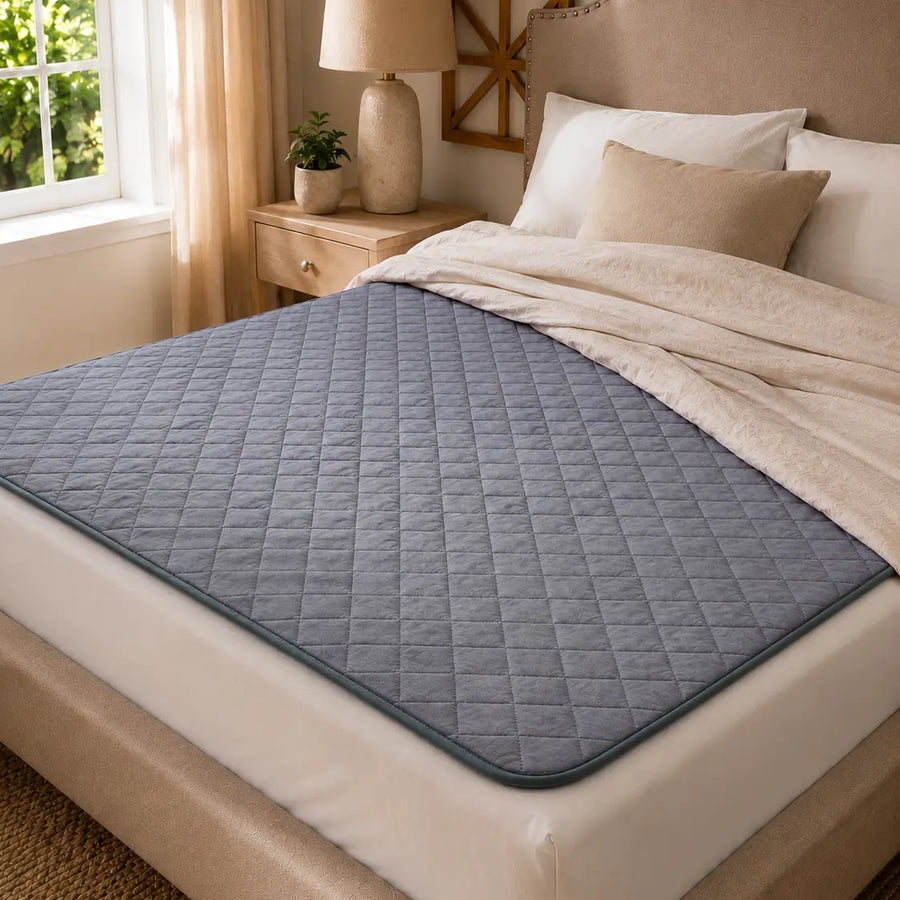
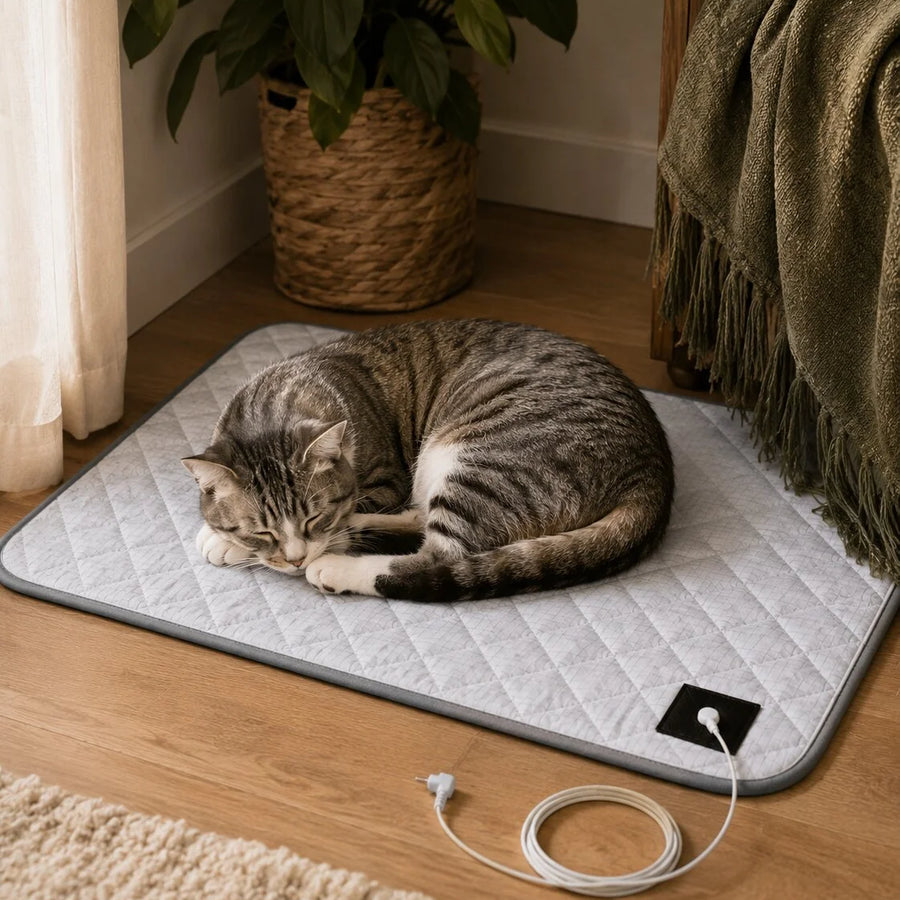
For a dedicated pet spot: the Earthbound Quilted Grounding Pad (from $149.99) is built for exactly this double duty — its cushioned quilting over conductive carbon works, in our own product's words, as a topper for humans or a standalone earthing pad for pets. Lay it where they already nap, connect it, done. Carbon construction means a pet's claws and weight aren't slowly destroying silver threads, and it wipes clean.
For the budget version: the Grounding Mat ($35) on the floor beside a desk grounds you at work and gives the dog a grounded spot next to you — the most common two-species setup we see.
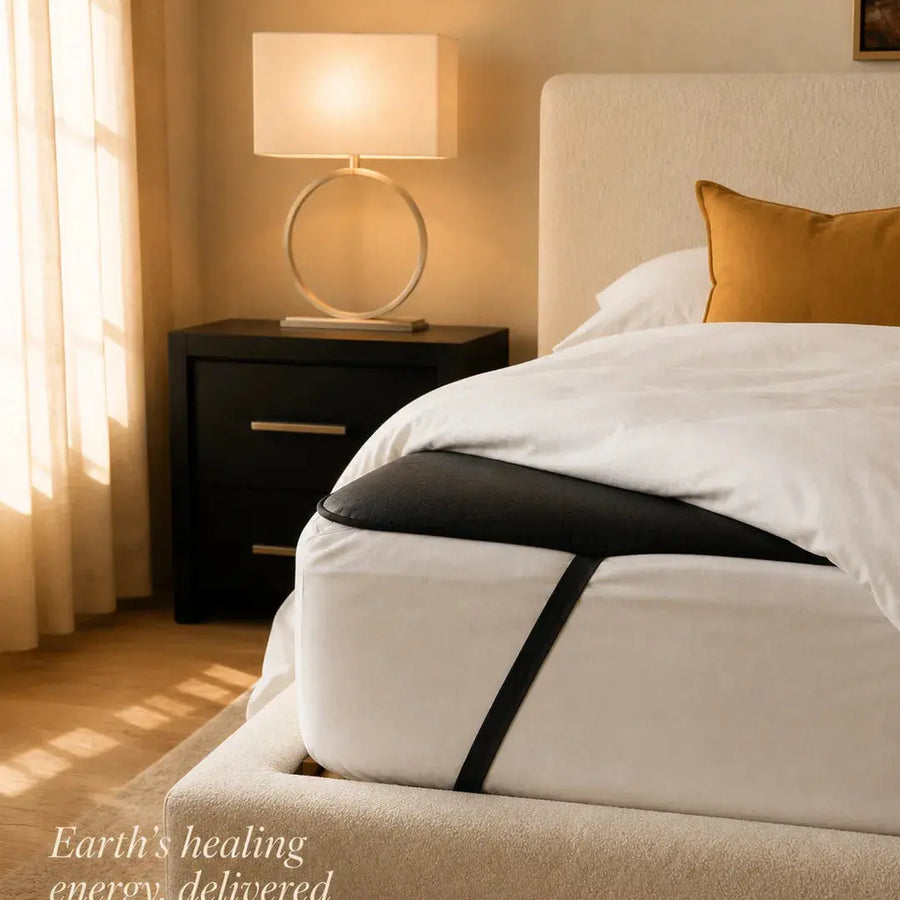
The setup you already own: if there's an Earthbound mattress pad on your bed and your pet sleeps on the bed, the through-sheet grounding field is the same one your pet is lying on. Many customers discover their pet's preference for the grounded bed before they've decided what to think themselves.
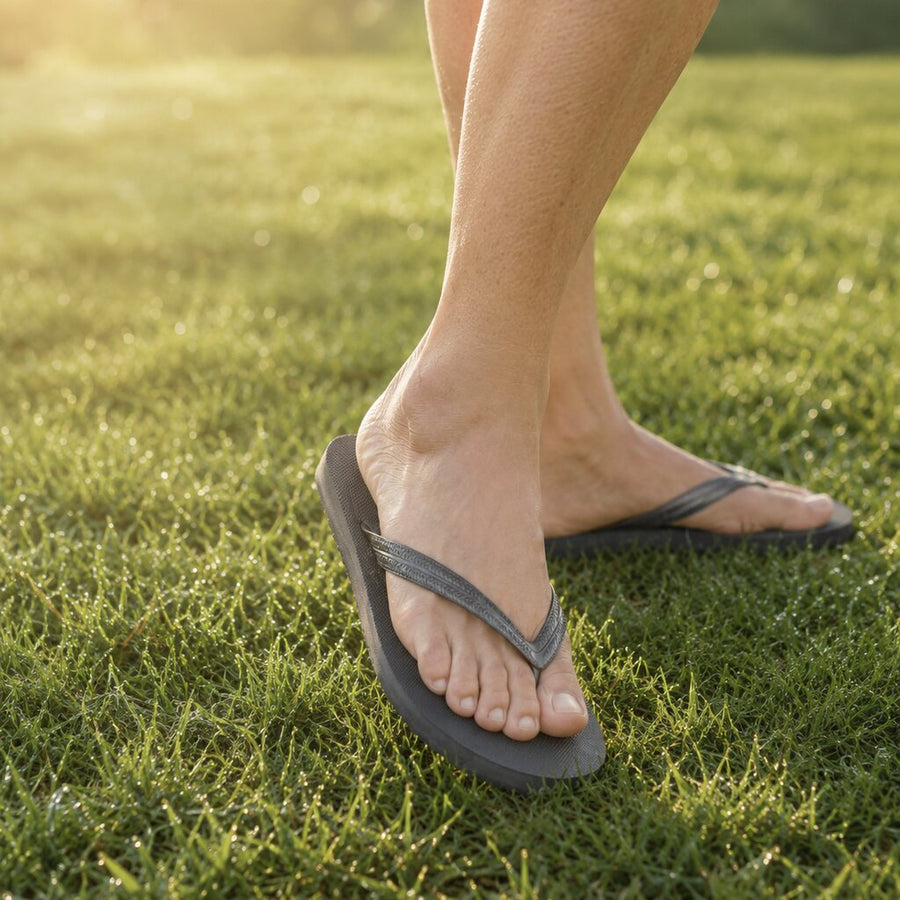
Outdoors, obviously: a yard, grass, and dirt ground your pet for free — dogs with regular outdoor time need none of this. This is an indoor-pet solution, same as it is for indoor humans.
Safety: the section that actually matters
Three rules. First, chewers and cords. A grounding cord carries no live electricity — it connects only to the outlet's ground port — so this isn't a shock hazard like a lamp cord, but a chewed-through cord is a dead product and a swallowed-fragment risk. Route cords behind furniture, use a cord protector for known chewers, and supervise early on. Second, verify the outlet. An ungrounded outlet grounds nobody, human or husky — the outlet tester ($9.99) settles it in seconds, and every Earthbound cord carries a 100k ohm safety resistor regardless. Third, keep it clean. Pet products collect oils and dander; a wipe-down keeps a carbon surface conductive, which is a genuine advantage over washing-sensitive silver fabric in a pet context. And the standing rule: grounding is a comfort layer, not veterinary care — a limping, anxious, or unwell animal needs a vet, not a mat.
FAQ
Do grounding mats work for dogs and cats? The conductive mechanism is identical to human grounding and works on any body in contact with the surface. Direct research in pets doesn't exist yet; what's well-documented is that pets reliably choose grounded surfaces to rest on, which owners reasonably read as a comfort signal.
Is grounding safe for pets? Yes, with cord sense — no live current flows through grounding products, and Earthbound cords include a 100k ohm resistor. Manage cords around chewers and confirm your outlet's ground line with a tester.
Does fur block grounding? It reduces contact rather than eliminating it — paw pads, bellies, and hours of lying weight provide the conductive contact. Larger surfaces in favorite sleeping spots work best.
What's the best grounding product for a pet? A dedicated spot: the quilted pad. Sharing your setup: the floor mat beside your desk, or the mattress pad already on the bed they sleep on. All carry the 90-night trial and lifetime warranty — and your pet's verdict tends to arrive faster than 90 nights.
Earthbound pricing current as of July 15, 2026 at the linked pages. Grounding products are not veterinary devices; nothing here is intended to diagnose, treat, cure, or prevent any disease in animals or humans. Consult a veterinarian for any health concern.