

Reviewed for accuracy: July 2026. This article discusses general wellness research and is not medical advice. If you have an implanted medical device or a chronic condition, talk with your physician before beginning any grounding practice.
Most people who search for a grounding mat for their bed have already read the enthusiastic version of this story. What's harder to find is a measured one: what these products actually are, what the research does and doesn't show, how to size one correctly for your mattress, and how to verify — with an instrument, not a feeling — that the one you bought works. That's this guide.
What a bed grounding mat is, in plain terms
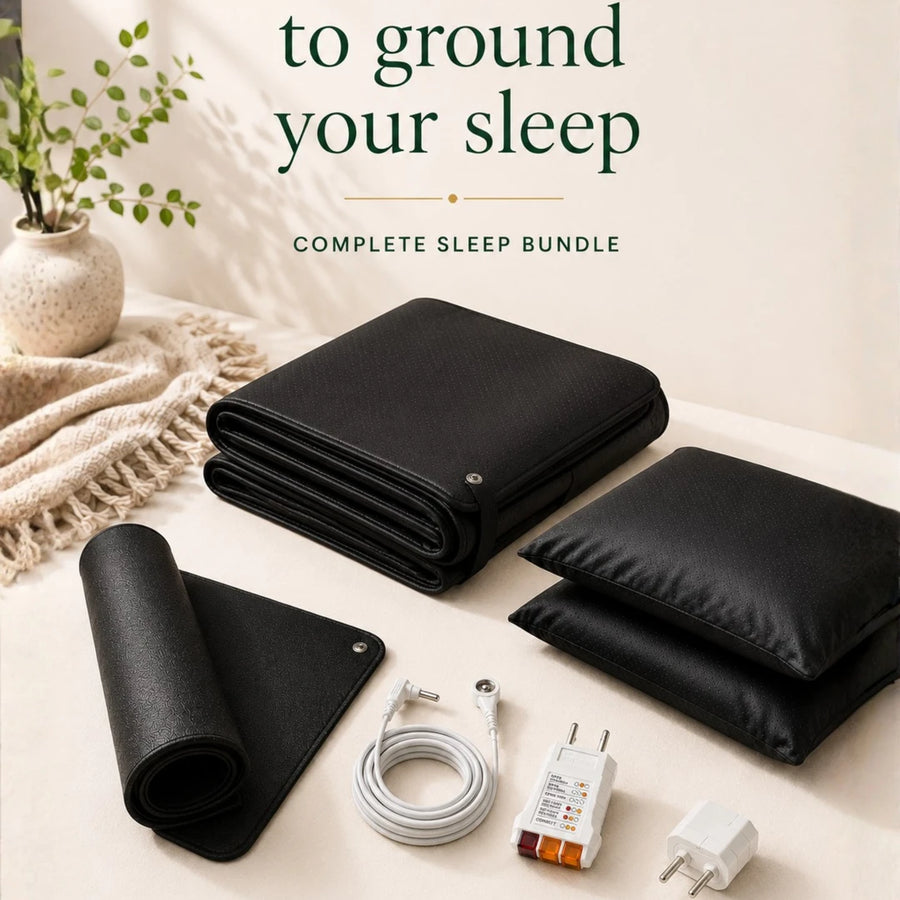
A grounding mat (also sold as a grounding pad or mattress cover) is a conductive surface that lies on your mattress and connects, via a cord, to the ground port of a standard electrical outlet. The ground port is the round third hole — it carries no electricity to you. It is a low-resistance path to the earth itself, the same connection your home's electrical system uses for safety. When your body is in contact with the conductive surface, it equalizes with the earth's electrical potential — the same state you'd be in standing barefoot on damp grass.
Two things a bed grounding mat is not: it is not electrified (nothing plugs into the live slots of the outlet), and it is not a medical device. The published research on grounding during sleep is genuinely interesting, and we'll walk through it honestly below — including its limitations.
The three formats, and who each suits
Products in this category come in three basic constructions, and the differences matter more than the marketing suggests.
1. Conductive fabric sheets (usually silver thread)
Fitted or flat sheets woven with silver filament, typically requiring direct skin contact to conduct effectively. They feel like normal bedding, which is their appeal. Their documented weakness is durability: silver is a reactive metal, and when fine silver filament is woven into cotton and run through wash cycles, it oxidizes and frays, and conductivity declines over time. If you choose a silver sheet, plan to test its conductivity periodically and treat it as a consumable.
2. Conductive mats and pads (carbon-based)
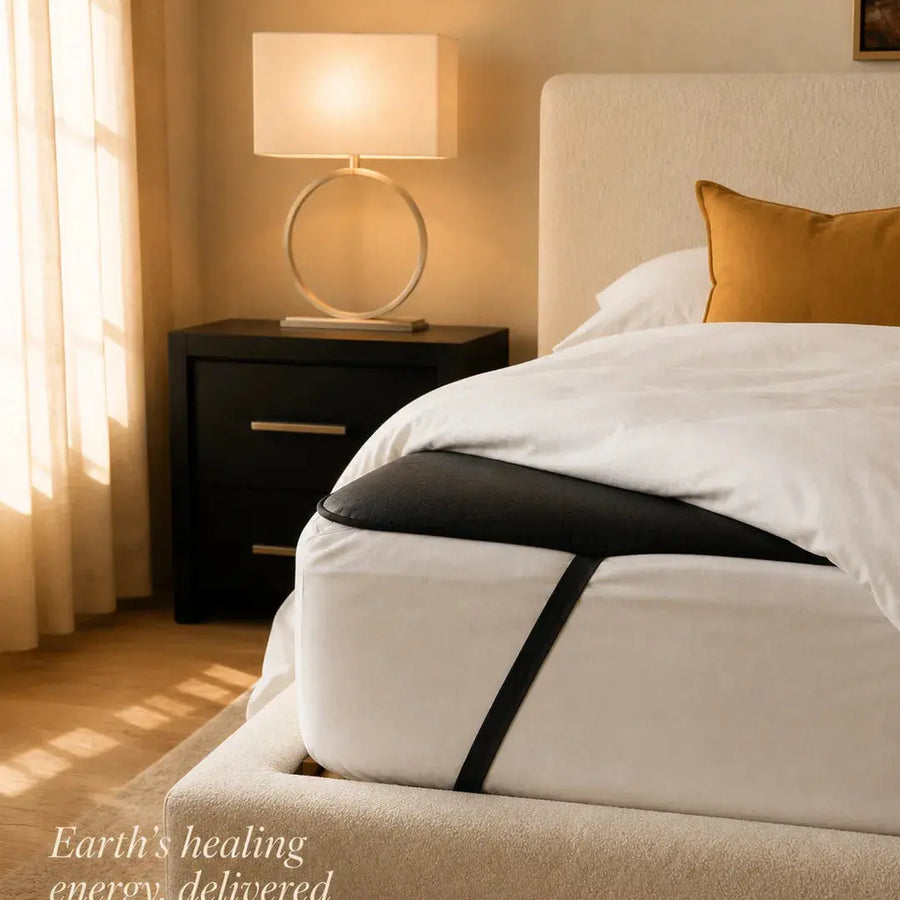
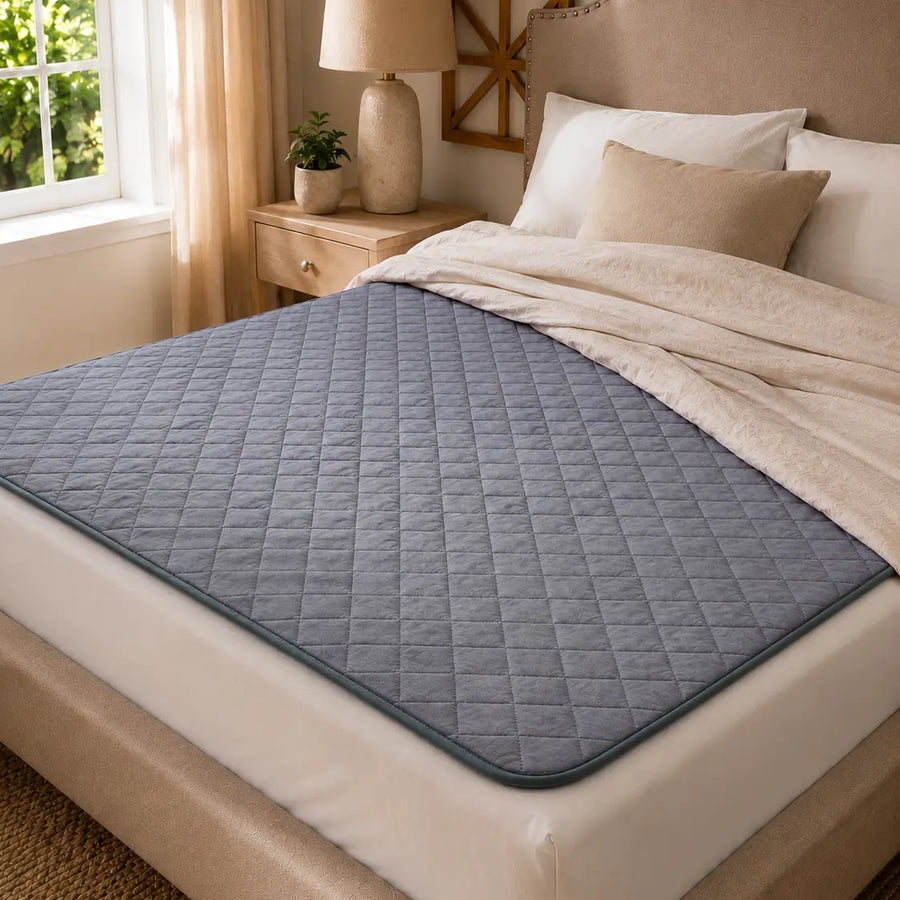
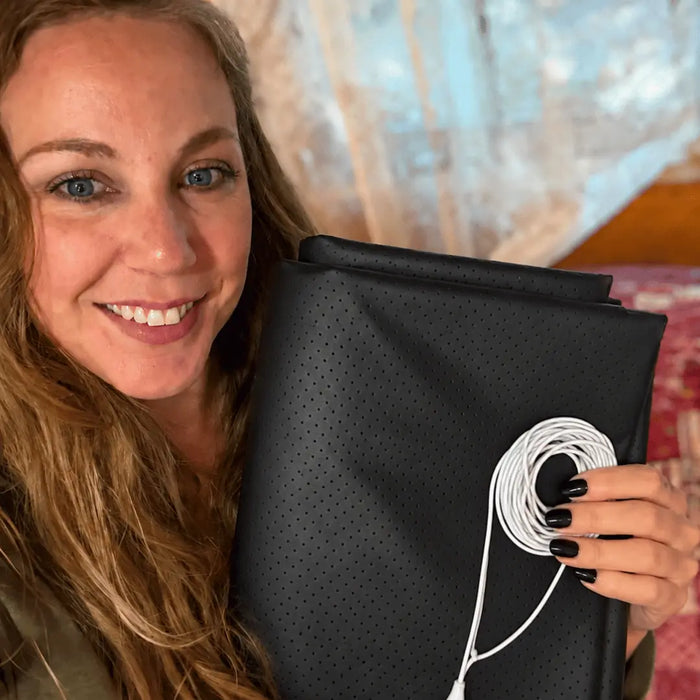
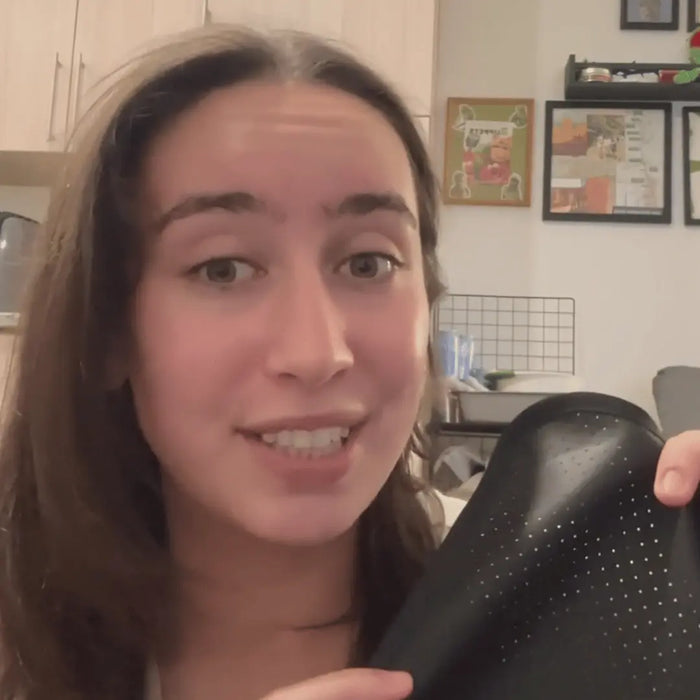
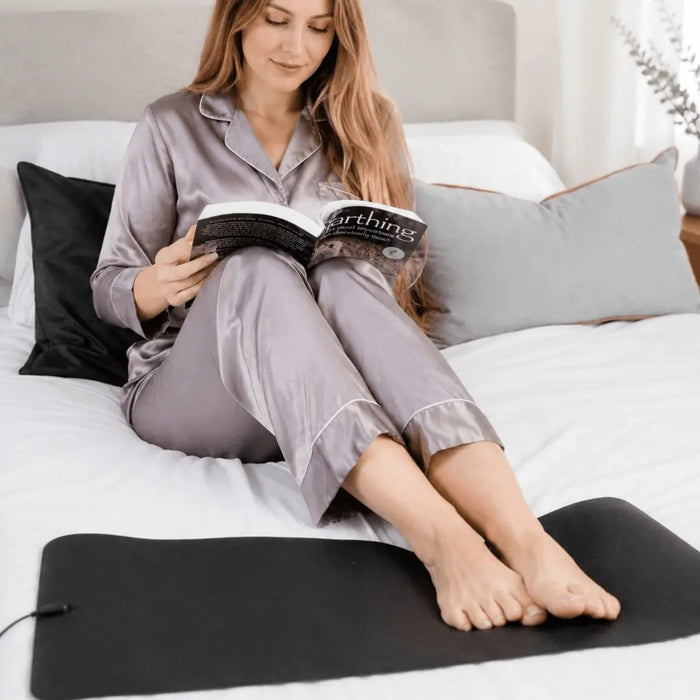
A thin pad — ours is 1.85 mm — with a carbon-infused conductive surface, placed under your fitted sheet. Carbon is chemically inert: it doesn't oxidize, and its conductivity doesn't degrade with cleaning, which is why it's the construction we build. Modern carbon pads, including the Earthbound Grounding Mattress Pad with Near Field™ Earthing, are designed to conduct through a fitted sheet, so you sleep on your normal bedding.
3. Half-bed and targeted mats
A smaller pad positioned across the foot of the bed or on one side. Torso and foot contact is what matters physiologically — edge-to-edge coverage is comfort and coverage preference, not a requirement — so half-bed formats are a legitimate budget-conscious entry point, and the right choice when only one partner wants to ground.
Sizing: measure your mattress, not the size name
The most common purchase mistake in this category is trusting a size name instead of dimensions. Size names are not standardized between brands — a "full" pad from one company may be dimensioned for a smaller bed than you expect. Check the published inches against your actual mattress:
| US mattress | Mattress dimensions | Earthbound pad size | Pad dimensions |
|---|---|---|---|
| Twin / Twin XL / one side of a King | 38 × 75 in | Single / Half-Bed | 28 × 70 in |
| Full / Double | 54 × 75 in | Full / Double | 55 × 70 in |
| Queen | 60 × 80 in | Queen | 60 × 80 in |
| King / Cal King | 76 × 80 / 72 × 84 in | King / Cal King | 72 × 80 in |
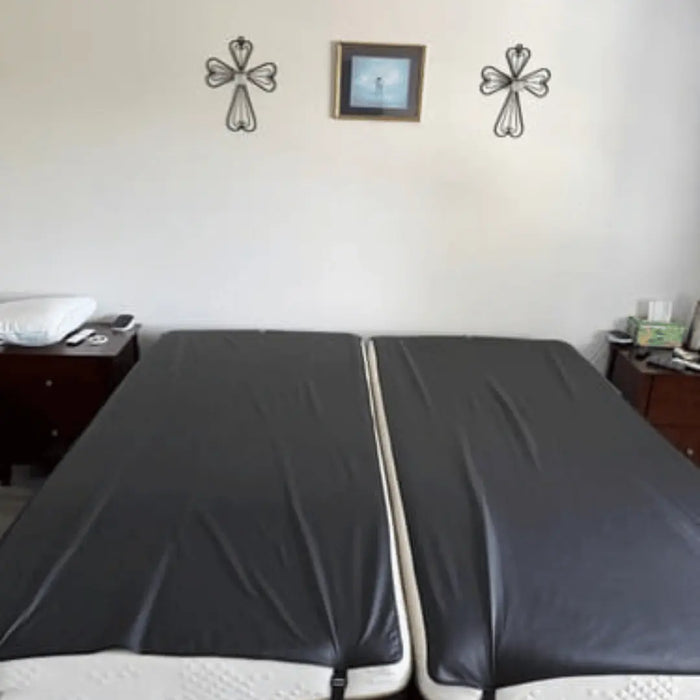
If you share a Queen or King bed and both partners want the benefit, a pad dimensioned for that bed is the correct purchase — a smaller pad stretched across a larger mattress leaves one sleeper partly or fully off the conductive surface. Some brands' ranges stop at Full dimensions; check before assuming your size exists.
Setup, step by step
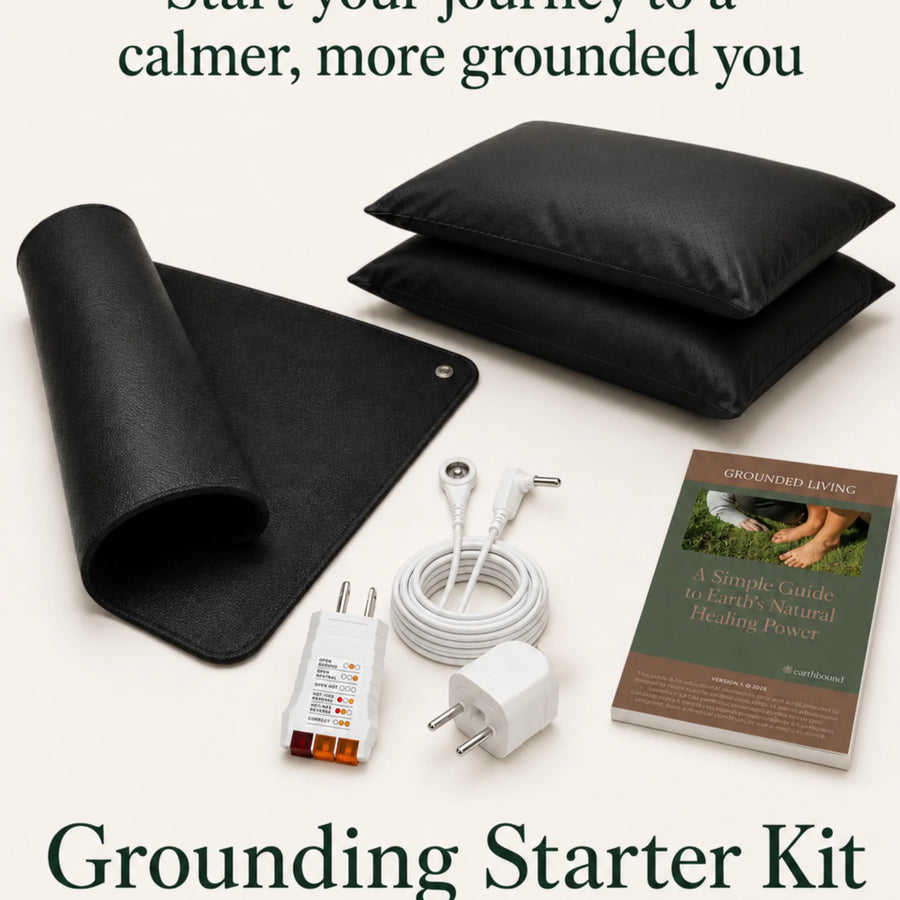
- Verify your outlet is grounded. This is the step most guides skip and the one that matters most. Homes built before the 1960s, and some DIY-renovated rooms, can have three-prong outlets with no functional ground. Use an outlet tester (a free grounding test kit is included with every Earthbound pad) before anything else. If the outlet isn't grounded, no grounding product plugged into it will do anything.
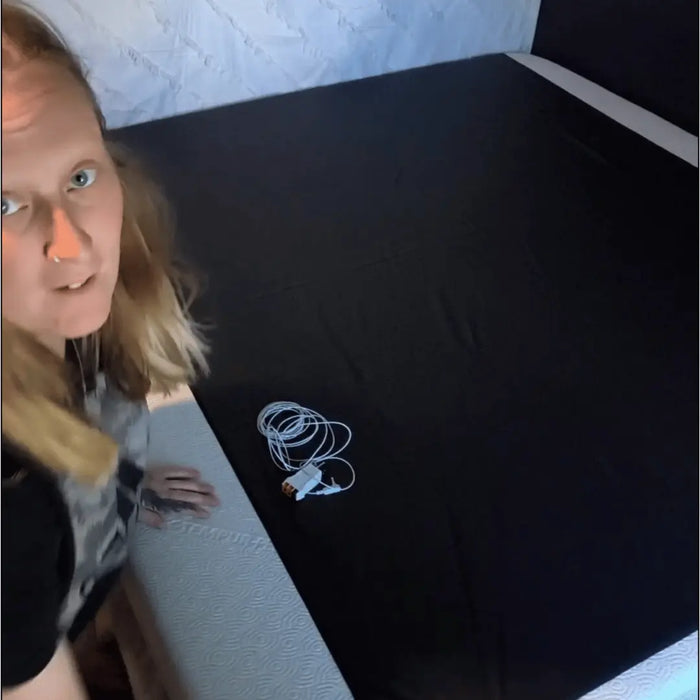
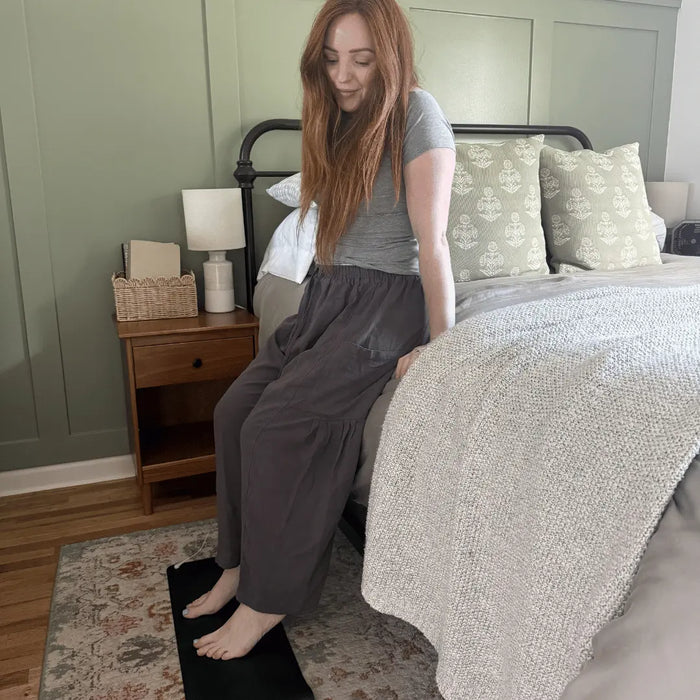
- Position the pad on the mattress, under your fitted sheet, oriented so your torso and legs rest over it. Secure the corner straps.
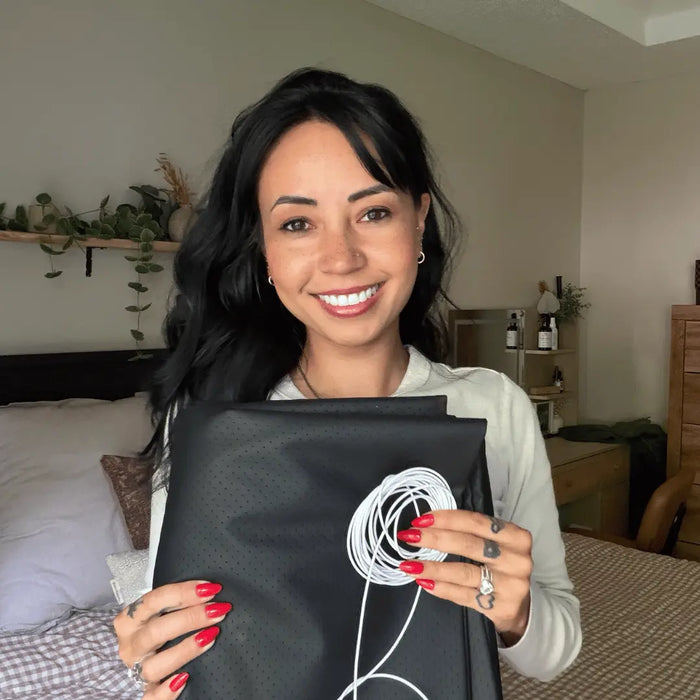
- Connect the cord to the pad's snap and to the ground port of the outlet. A quality cord includes an inline resistor (Earthbound's carries a 100k-ohm resistor) as a safety measure.
- Test the surface. With the included test kit or a multimeter, confirm continuity between the pad surface and ground. This takes under a minute and converts the whole question from faith to measurement. If you'd like the full procedure, we've written it up separately.
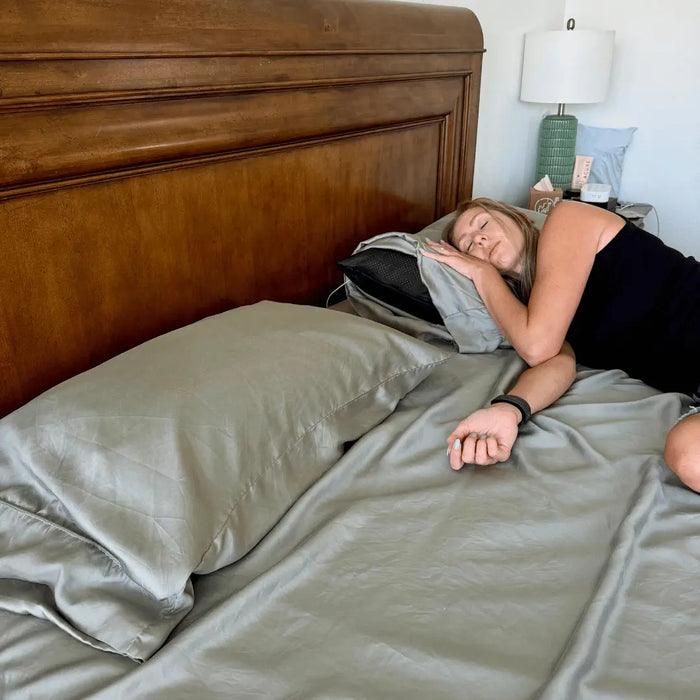
- Sleep normally. With a through-sheet pad, use a natural-fiber fitted sheet (cotton, linen, bamboo); synthetic sheets insulate and reduce conductivity for any brand's product.
What the research shows — stated carefully
The clinical literature on sleep grounding is small but real, and it's better to know exactly what it says than to inflate it. A frequently cited pilot study by Ghaly and Teplitz (Journal of Alternative and Complementary Medicine, 2004) grounded twelve subjects during sleep and reported reduced night-time cortisol levels and subjective improvements in sleep and pain. A 2015 review by Oschman, Chevalier, and Brown (Journal of Inflammation Research) collected evidence suggesting grounding may reduce markers of inflammation, with thermal-imaging observations supporting the pattern. Chevalier and colleagues (2013) reported improved blood viscosity — red blood cells clumping less — after grounding sessions.
The honest caveats: samples are small, blinding is difficult (people often know whether they're grounded), and several researchers in this field have commercial ties to grounding products. That does not make the findings wrong; it makes them preliminary. Our editorial position is that the mechanism is physically plausible, the early evidence is consistent in direction, the risk profile of sleeping on a grounded surface is low, and the definitive large trials have not yet been run. Anyone promising you cures is ahead of the data.
What you can reasonably expect, and when
Reported experiences follow a rough pattern: within the first week, some users notice falling asleep faster and less restlessness; over the first month, morning stiffness and perceived recovery tend to be where changes are reported. Some people notice nothing — that's a real outcome and worth saying out loud. It's the reason we structure our trial around sleep, not unboxing: the 90-night trial exists so you can use the pad for at least a month of real nights and return it for a full refund if your experience doesn't justify keeping it.
Care and longevity
A carbon pad is wipe-clean — a damp cloth monthly maintains hygiene and conductivity, and there's no wash-cycle degradation to manage. Silver-thread sheets require gentler care: no bleach, no fabric softener (it coats the filament), and periodic conductivity testing. Whichever construction you choose, retest conductivity every few months; a product you can't verify is a product you're taking on faith.
The pad this guide is calibrated against
The Earthbound Grounding Mattress Pad: carbon-fiber conductive surface, 1.85 mm profile, four true-to-mattress sizes including Queen (60×80) and King (72×80), Near Field™ through-sheet conduction, grounding cord with 100k-ohm resistor, and a test kit in every box so you can verify it yourself. 90-night trial, lifetime warranty, HSA/FSA eligible.
Frequently asked questions
Does a grounding mat for the bed use electricity?
No. It connects only to the ground port of the outlet, which carries no current to you. Nothing about the pad is powered.
Do I sleep directly on the mat?
Depends on construction. Silver-thread sheets generally want skin contact. A carbon pad with through-sheet conduction, like Earthbound's, goes under your fitted sheet and works through it.
What if my bedroom outlet isn't grounded?
Two options: have an electrician verify or fix the outlet, or use a grounding rod placed in the soil outside a window — a direct earth connection that bypasses house wiring entirely.
Can both partners use one pad?
Yes, if the pad is dimensioned for the shared bed. On a Queen, that means a 60×80 pad; on a King, 72×80. A 55×70 pad on a King grounds roughly one sleeper.
How do I know it's actually working?
Test it. A body-voltage measurement or a continuity test with the included kit gives you an objective answer in under a minute — before any subjective judgment about sleep.
References: Ghaly M, Teplitz D. J Altern Complement Med, 2004. Oschman JL, Chevalier G, Brown R. J Inflammation Research, 2015. Chevalier G, et al. J Altern Complement Med, 2013. These are small pilot and review studies; grounding products are not intended to diagnose, treat, cure, or prevent any disease.