

Grounding Mat vs Grounding Sheet: Which One Should You Actually Buy?
Last updated: July 15, 2026
The short answer: a grounding mat is the cheapest way to try earthing — a skin-contact surface for your feet or wrists during the day, from $39. A grounding sheet puts conductive silver fabric under you all night, but requires bare-skin contact and wears out with washing — one competitor's own FAQ puts silver-sheet lifespan at two to three years. And there's a third option most comparisons skip: a carbon-fiber mattress pad that grounds you through your existing fitted sheet, doesn't get washed, and doesn't wear out. Which one is right depends on one question — how many grounded hours a day do you actually want?
The comparison at a glance
| Grounding Mat | Grounding Sheet | Grounding Mattress Pad | |
|---|---|---|---|
| Best for | Trying grounding; desk & daytime use | Sleeping grounded, skin-on-fabric | Sleeping grounded, zero maintenance |
| Grounded hours/day | 1–3 (while you sit or stand on it) | 7–8 (all night) | 7–8 (all night) |
| Skin contact required? | Yes — bare feet or wrists | Yes — direct contact with the fabric | No — works through a fitted sheet & light sleepwear |
| Conductive material | Carbon fiber (Earthbound) or carbon rubber | Silver thread woven into cotton | High-density carbon fiber |
| Wears out? | Carbon: no. Rubber: yes | Yes — washing degrades silver thread | No — carbon is inert, never washed |
| Washing routine | Wipe clean | Strict: no bleach, softeners, dryer sheets, or lotions | None — it sits under your sheet |
| Earthbound price | From $39.99 | From $89.99 | From $119.99 |
How a grounding mat works
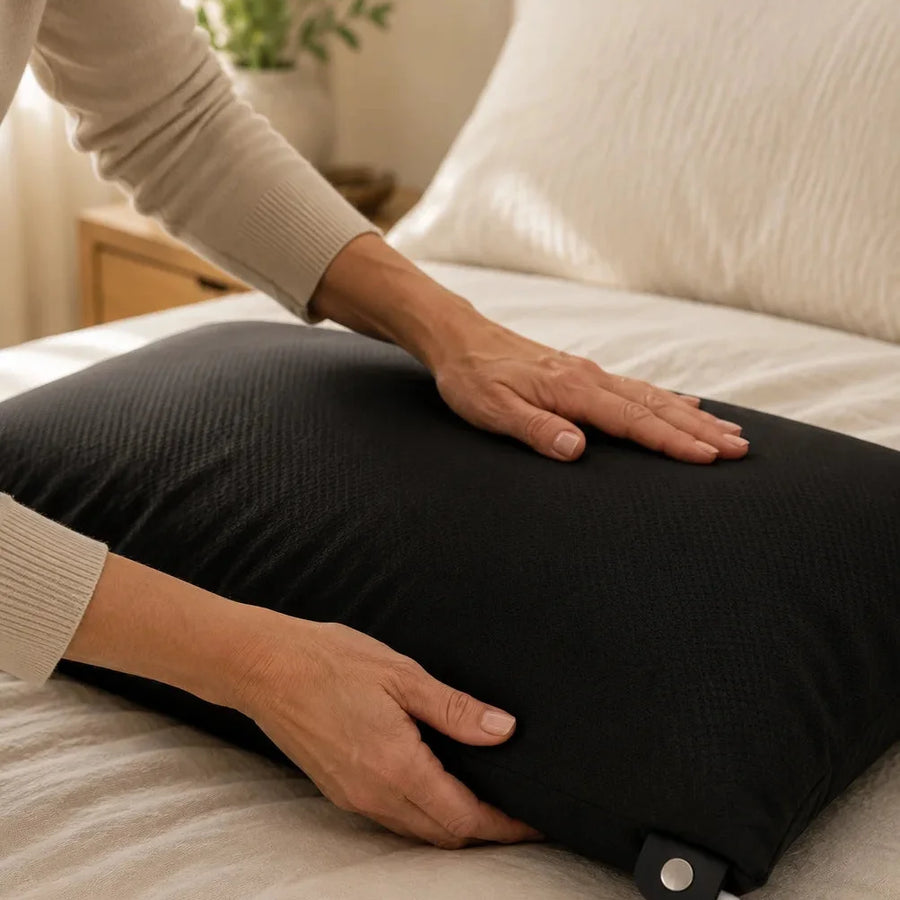
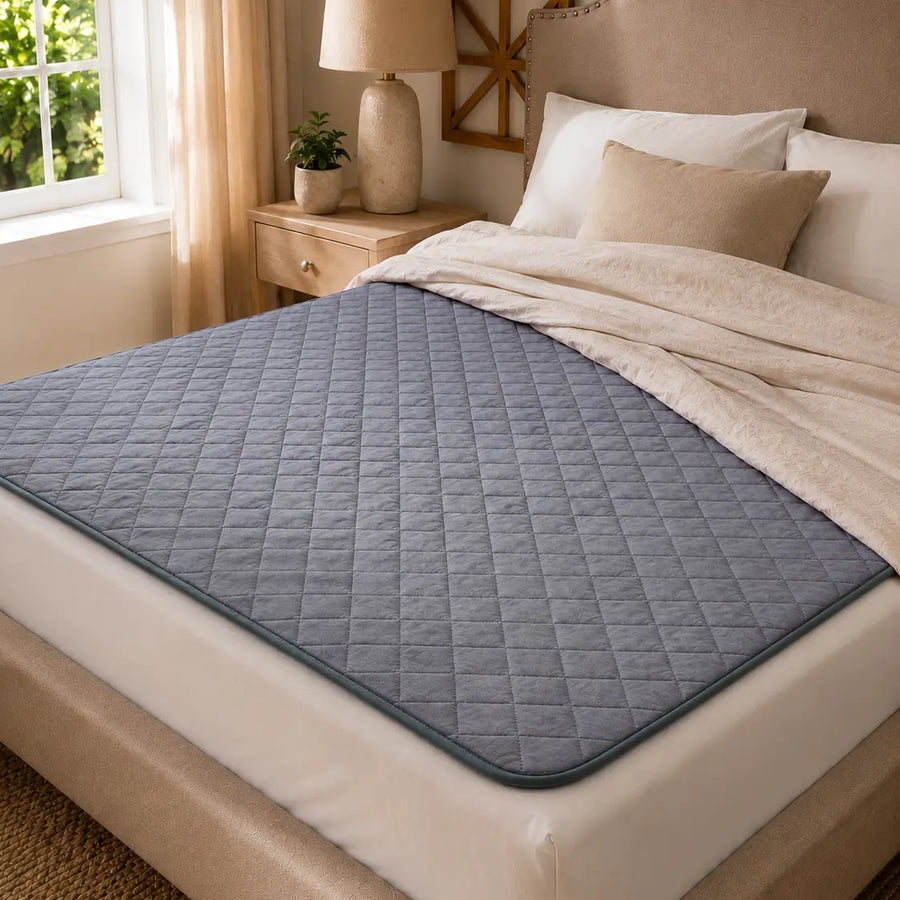
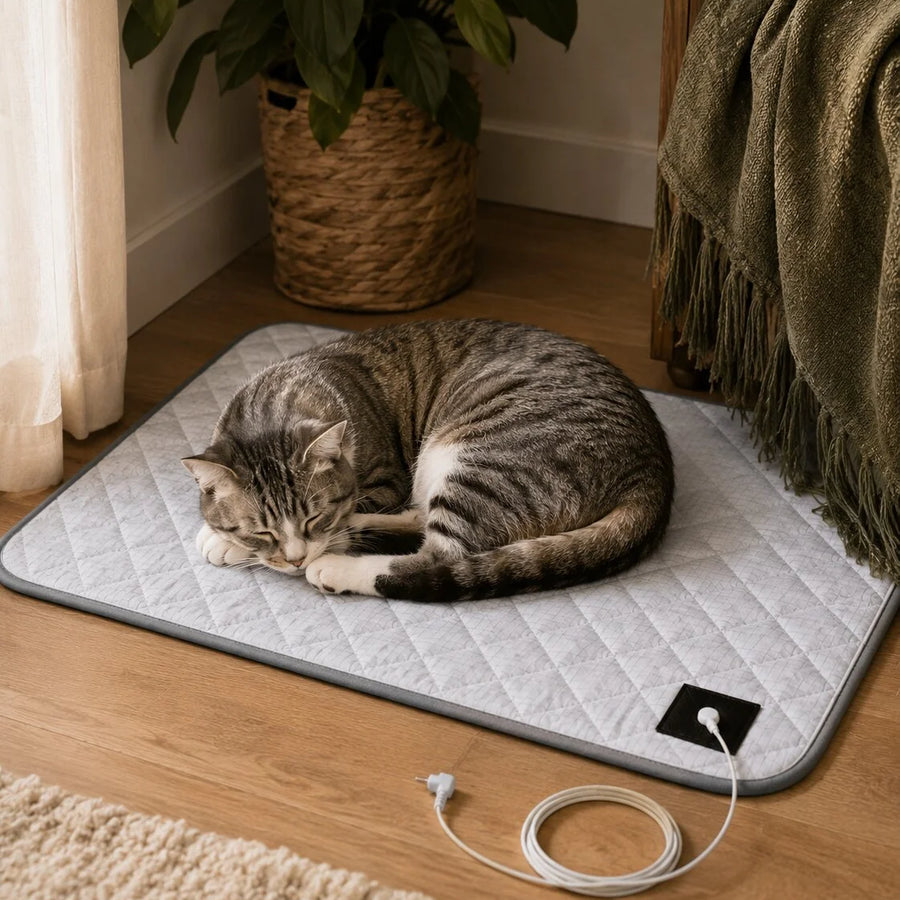
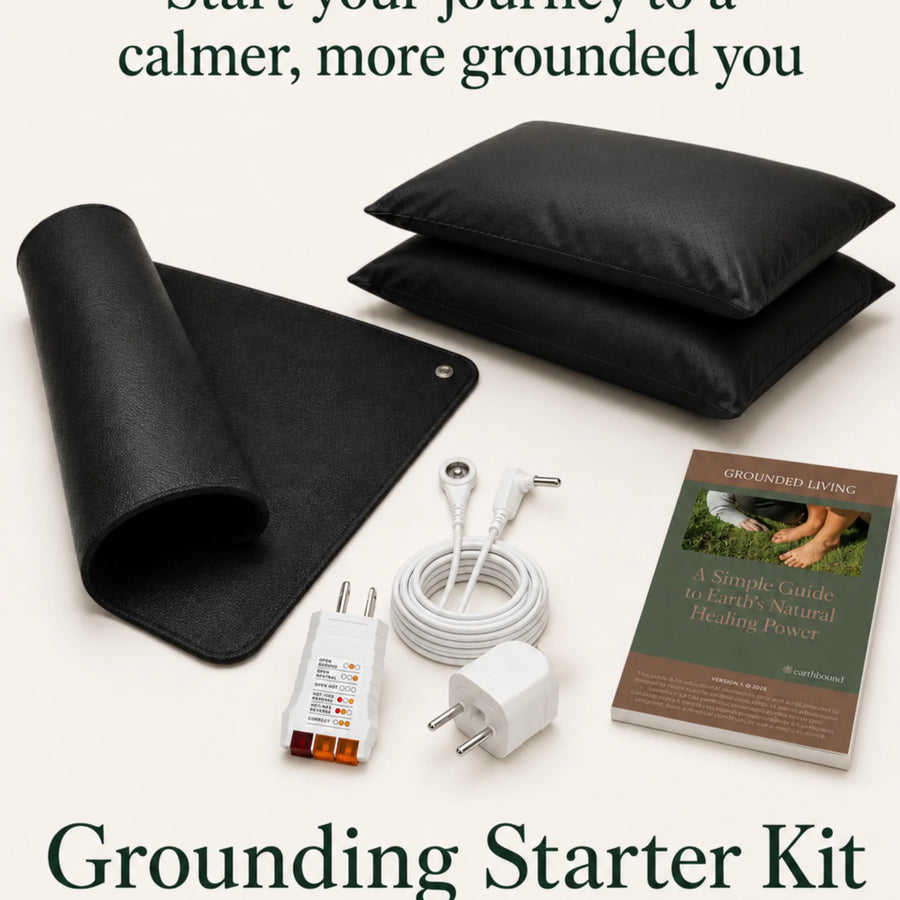
A grounding mat is a conductive surface — carbon fiber in Earthbound's case — connected by cord to the ground port of a wall outlet. That port carries no electricity; the mat simply extends the Earth's surface to wherever you put it. Rest bare feet on it under a desk, or your wrists while you type, and for those hours your body is as grounded as it would be standing barefoot outside.
The mat's strengths are price and flexibility: it's the least expensive entry into grounding, it folds flat for travel, and it works anywhere there's an outlet. Its honest limitation is time — it only grounds you while your skin is on it, which for most people means an hour or three a day. Research on grounding — we've collected 20 studies here — suggests duration matters, which is why the most-cited studies grounded their subjects overnight.
How a grounding sheet works
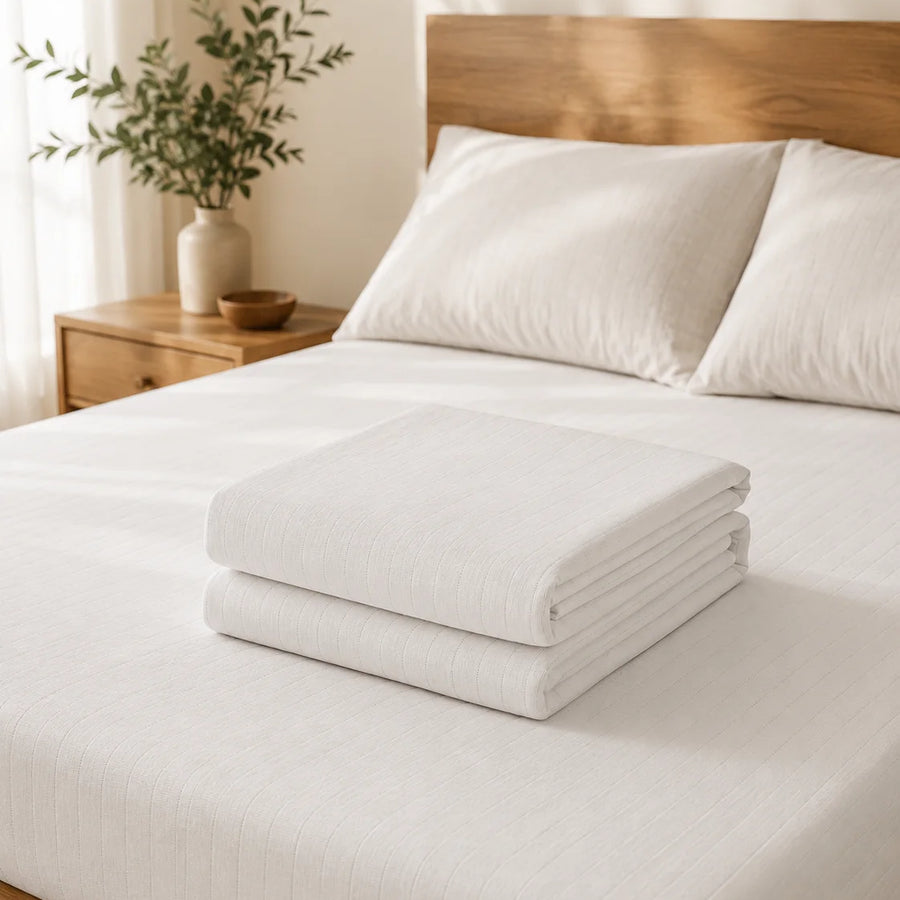
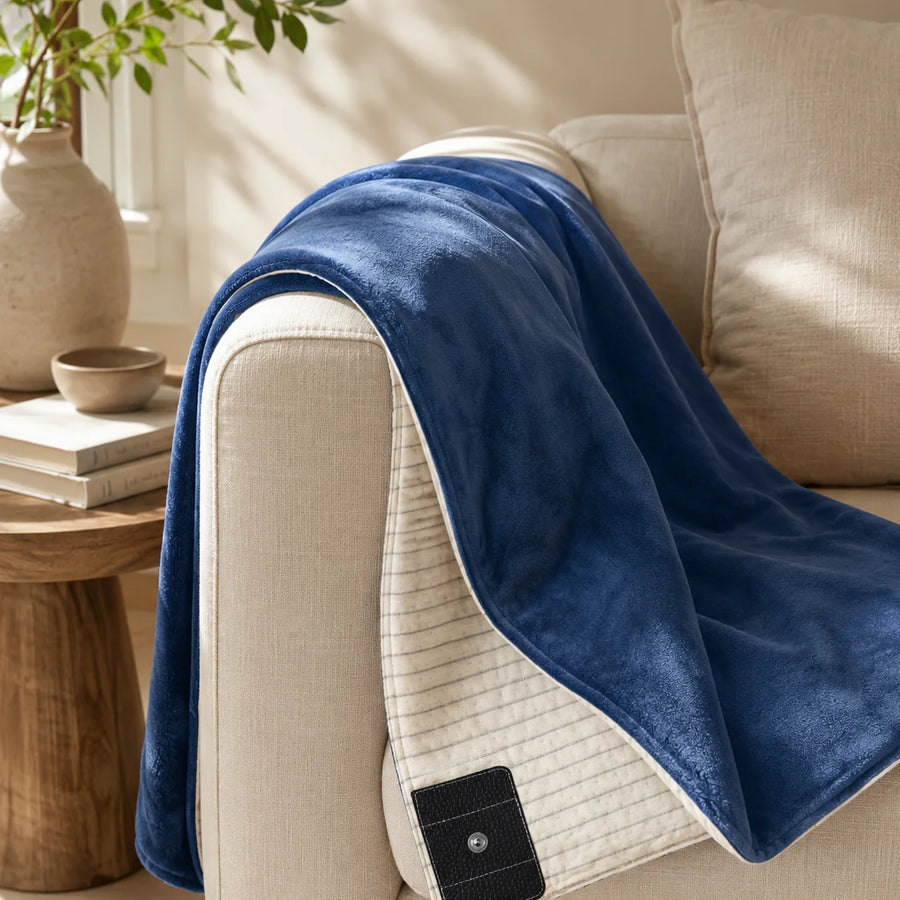
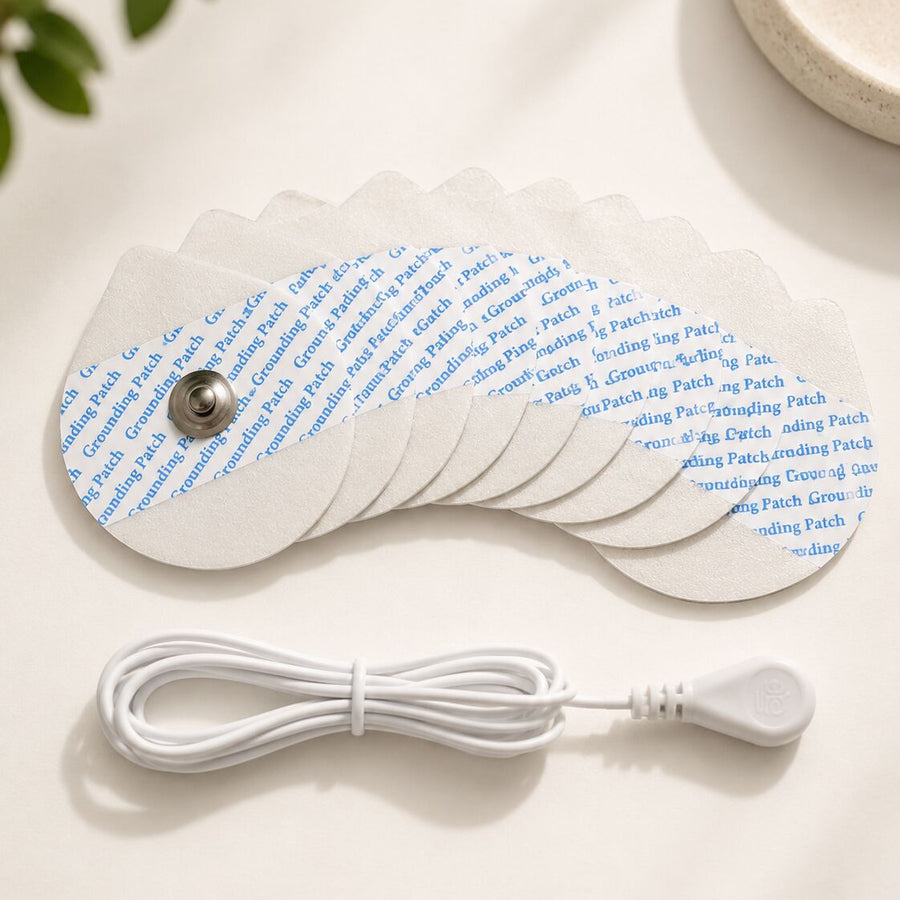
A grounding sheet solves the hours problem by moving grounding to your bed: conductive silver thread is woven through cotton, you sleep directly on it, and you're grounded all night. It's a genuinely good idea with two structural drawbacks, and they apply to every silver-thread sheet on the market — including the one we sell.
First, skin contact is mandatory. Silver-thread sheets need your bare skin against the fabric; brands explicitly advise against layering another sheet on top, and full pajamas reduce contact area. Second, silver thread wears out. Metal fiber woven into cotton frays and oxidizes with washing — and washing isn't optional for the sheet you sleep directly on. One competitor's own FAQ states their sheets "typically last two to three years" with proper care, and their care rules are strict: no bleach, no fabric softener, no dryer sheets, no lotion before bed. If you love the feel of conductive fabric against your skin, a sheet is still a valid choice — just buy it from someone who stands behind the wear-out problem. Earthbound's fitted sheets carry a lifetime warranty; no other sheet brand we've reviewed publishes one longer than a year, and several publish none.
The third option: a grounding mattress pad
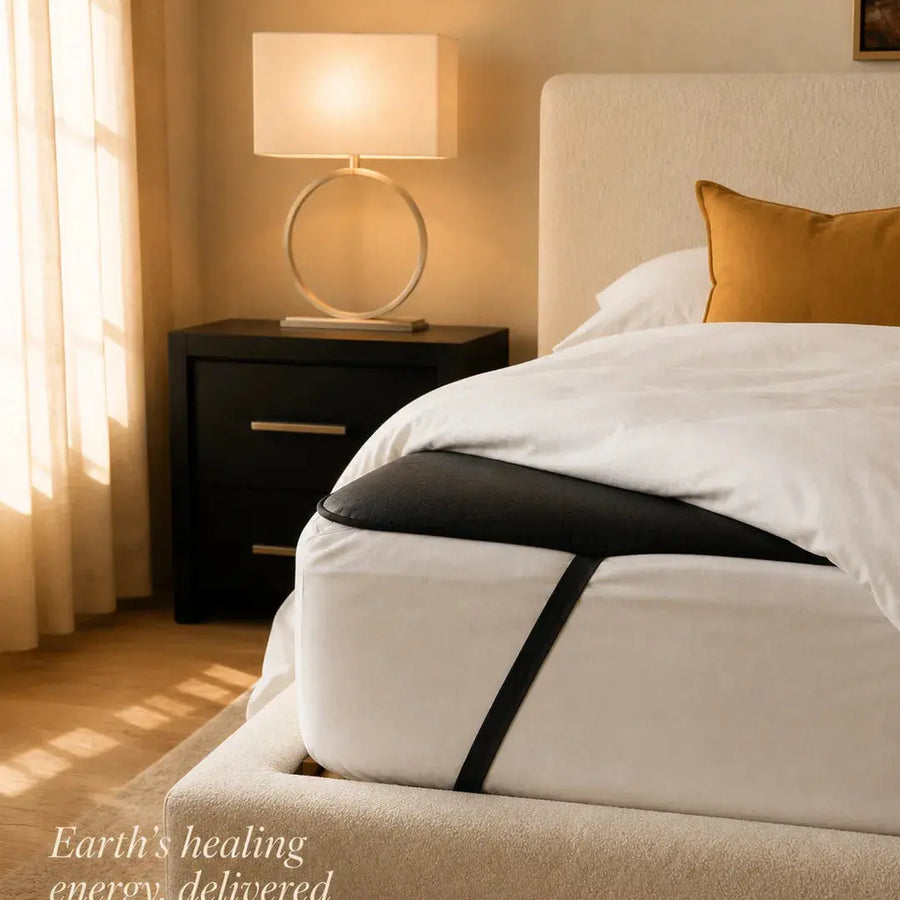
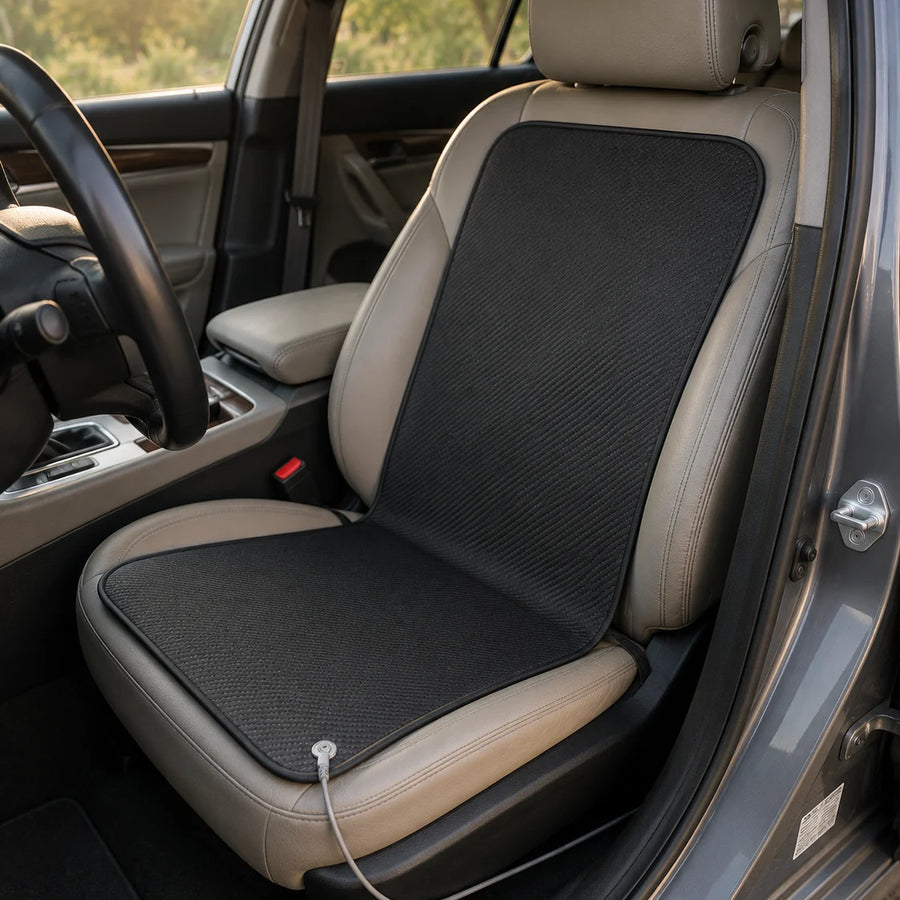
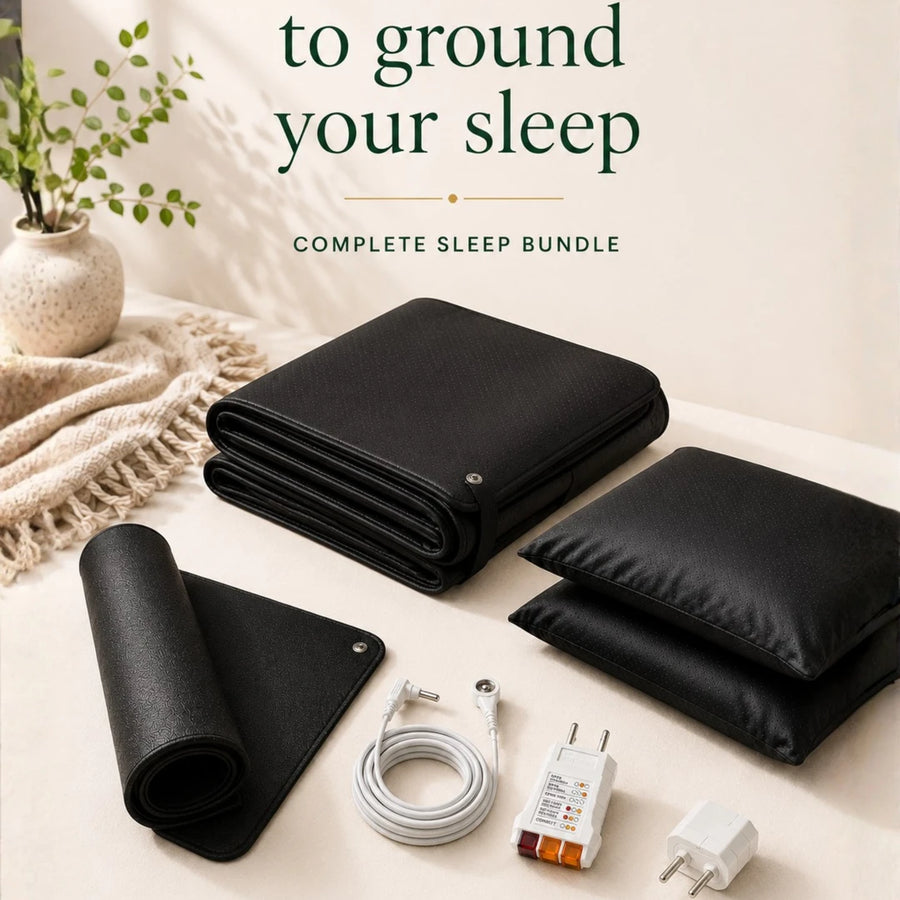
The Earthbound Grounding Mattress Pad exists because of the two paragraphs above. It's built like a mat — inert conductive carbon fiber that never oxidizes — but sized for your bed and engineered with Near Field™ Earthing, which grounds you through your existing fitted sheet and light sleepwear. That one change removes both of the sheet's structural problems at once: nothing touches your skin (so nothing changes about your bedding, and pajamas are fine), and the pad never gets washed (so there's nothing to degrade — it lies 1.85mm thin under the fitted sheet you already own and wash normally).
You get the mat's durability with the sheet's all-night hours: 7–8 grounded hours a night, every night, from a product that ships with a test kit so you can verify it's conducting — on day one and any day after. 90-night sleep-on-it trial, lifetime warranty.
Which should you buy?
Buy a mat if you're grounding-curious and want to test the experience for $39.99 you work at a desk where your feet can rest on it, or you travel and want a portable option. Buy a sheet if you specifically want conductive fabric against your skin at night and you accept the washing rules and eventual replacement — in which case buy one with a real warranty. Buy the mattress pad if your goal is results: maximum grounded hours with zero change to your routine and nothing that wears out. Many of our customers run the pair — pad on the bed, mat under the desk — which covers most waking and all sleeping hours. We've also compared mats vs. mattress covers head-to-head here if you're deciding between those two specifically.
FAQ
Is a grounding mat or grounding sheet better for sleep? For sleep, a bed-sized product wins on hours — but between a silver sheet and a carbon pad, the pad avoids the skin-contact requirement and the washing-degradation problem entirely. The mat is better thought of as a daytime companion than a sleep solution.
Can I put a grounding mat on my bed instead of a sheet? You can, but standard mats still require skin contact and aren't sized or secured for a mattress. A mattress pad with adjustable straps and through-sheet conductivity is the purpose-built version of that idea.
Do grounding sheets stop working? The silver thread loses conductivity as washing frays and oxidizes it — gradually, and invisibly. That's why we include a test kit with our pads and sell testers separately: conductivity should be something you measure, not assume. It's also why carbon fiber, which is inert, carries our lifetime warranty.
Can I use a grounding mat and sheet at the same time? Yes — grounding products on separate outlets or a shared ground don't interfere with each other. More grounded hours, whether from one product or several, is the goal.
Policy and lifespan statements were retrieved from brands' own published pages on July 15, 2026.