


Grounding Mattress Pad vs Walking Barefoot: Do You Actually Need to Buy Anything?
Last updated: July 15, 2026
Disclosure: this guide is published by Earthbound, which sells grounding products. Which makes the next sentence worth reading twice.
The short version: barefoot contact with the Earth is real grounding — free, unlimited, and the original version of everything this category sells. We say so on our own site: there is no perfect replacement for grounding outside with your bare feet on the Earth. So the honest question isn't which is better. It's an arithmetic question: how many grounded minutes will you actually accumulate barefoot, across a real year of your real life — and what would it take to turn minutes into hours?
Barefoot is the real thing — let's start there
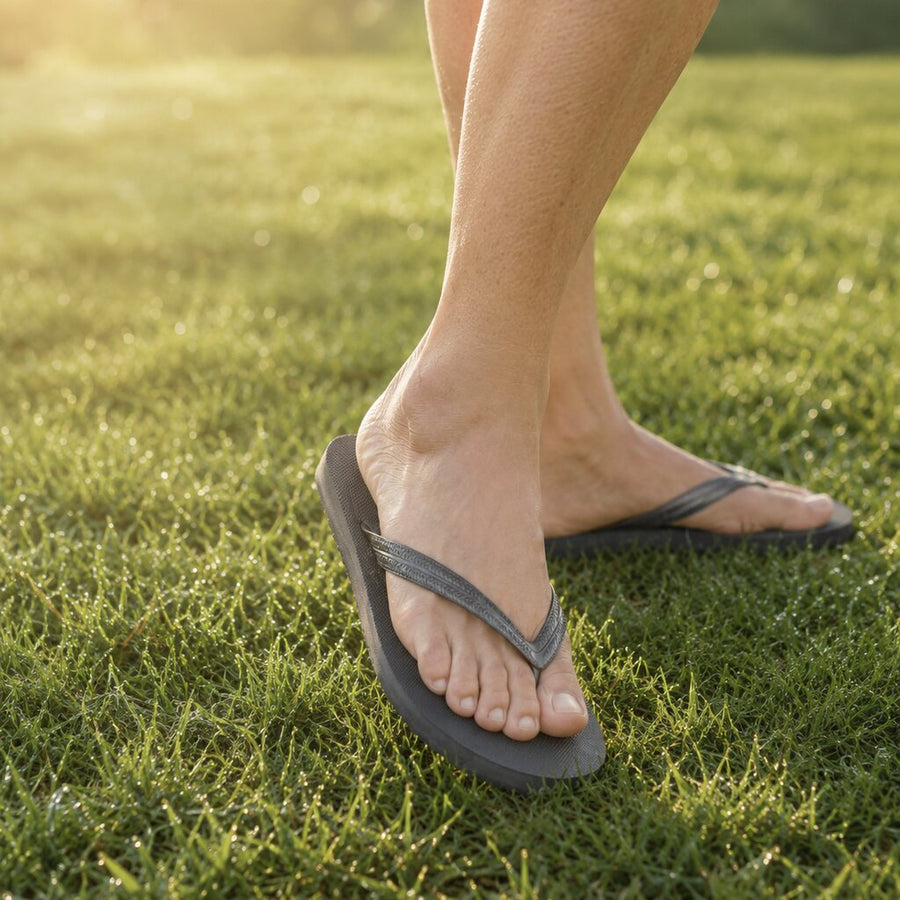
When your skin touches grass, soil, sand, or unsealed concrete, you're grounded, period. No cord, no product, no purchase. If you live somewhere warm, have a yard or beach you use daily, and genuinely spend 30–60+ minutes a day with bare skin on the ground year-round — you may not need anything we sell, and we'd rather tell you that than sell you a pad you didn't need. Grounding isn't a product category; it's a state your body is either in or not. Products exist for one reason: most modern lives make that state rare.
The arithmetic: minutes vs hours
Be honest about your actual number. For most people, barefoot time is a summer-weekend event — ten minutes on the lawn, an afternoon at the beach — maybe two to four hours in a good week, concentrated in four warm months. Now the comparison: a grounding mattress pad delivers seven to eight grounded hours per night, every night, in February as in July, without you thinking about it once. A single week of grounded sleep can exceed an entire summer of casual barefoot time. That's not a knock on barefoot — it's the reason the most-cited grounding studies didn't have subjects stroll on grass; they grounded people overnight, during sleep, because sleep is where the hours are. The research is collected in our library of 20 studies — read what the protocols actually looked like.
What interrupts barefoot grounding (a checklist of ordinary life)
Winter, for a start — roughly half the year across most of the US, bare skin on frozen ground stops being a wellness practice. Cities: asphalt, sealed concrete, and interior floors don't conduct; a park lawn does, if you can get to one with your shoes off and your dignity intact. Weather, work schedules, travel, mosquitoes, HOA lawns treated with who-knows-what, and the simple fact that habits requiring daily willpower have a short half-life. None of these are moral failures. They're the reason "just walk barefoot" works beautifully in an Instagram caption and poorly as a 365-day protocol.
The pad is barefoot time you don't have to remember
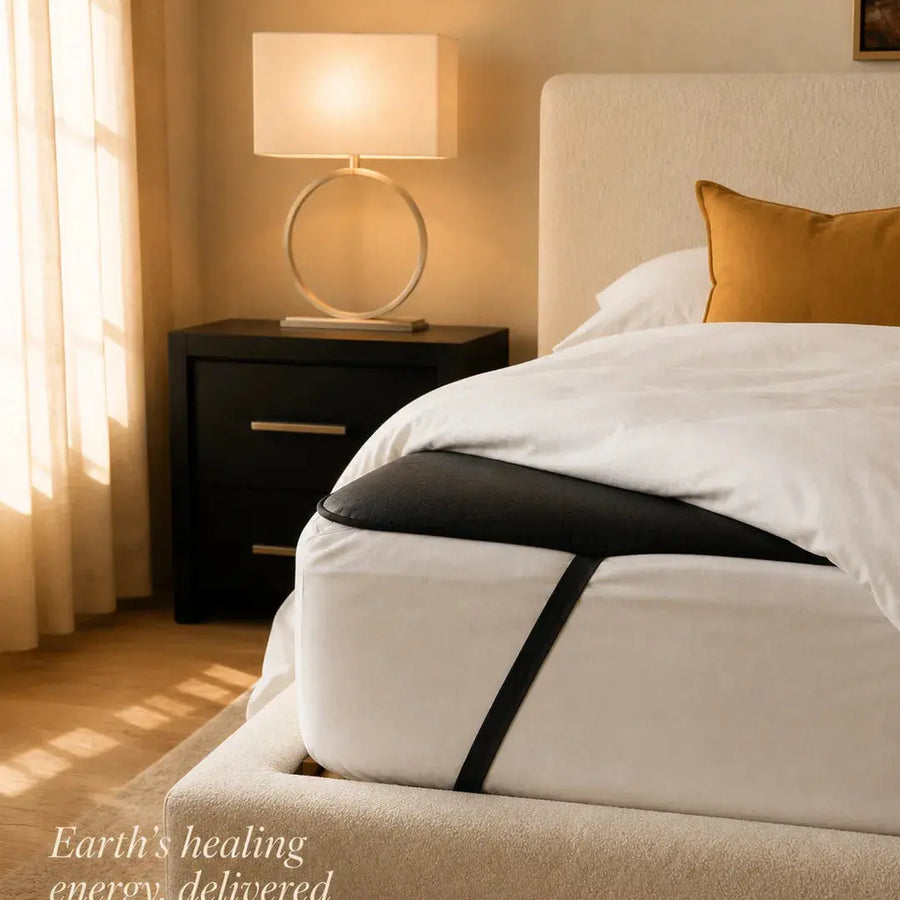
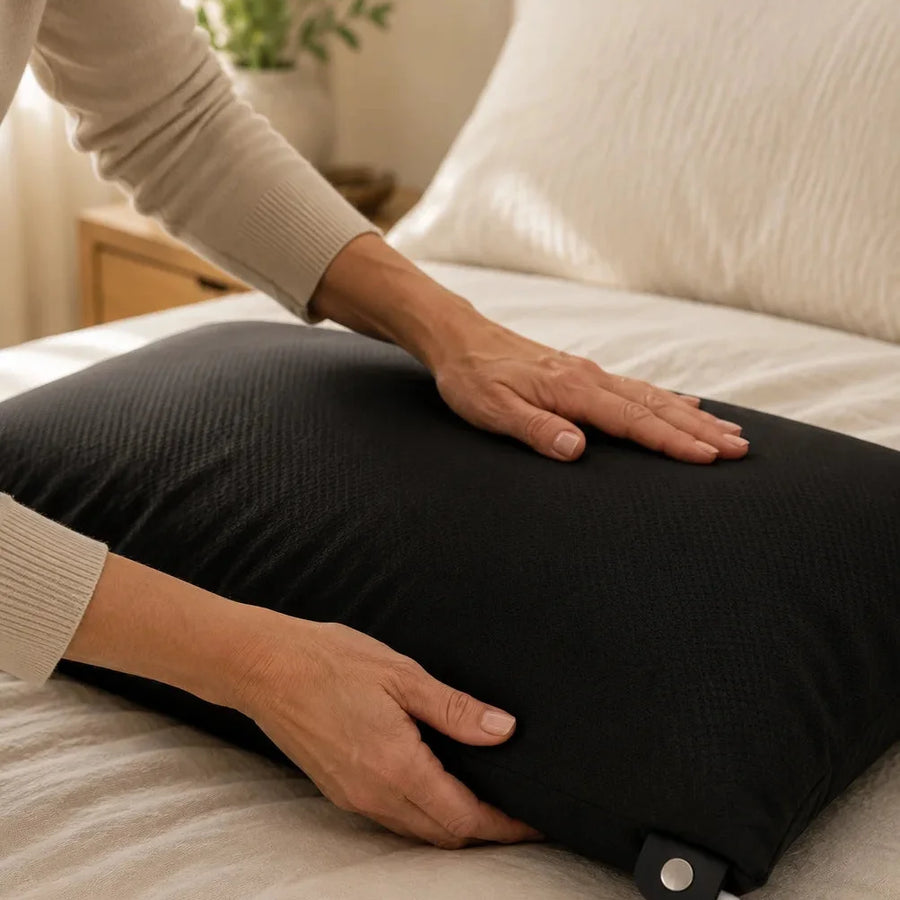
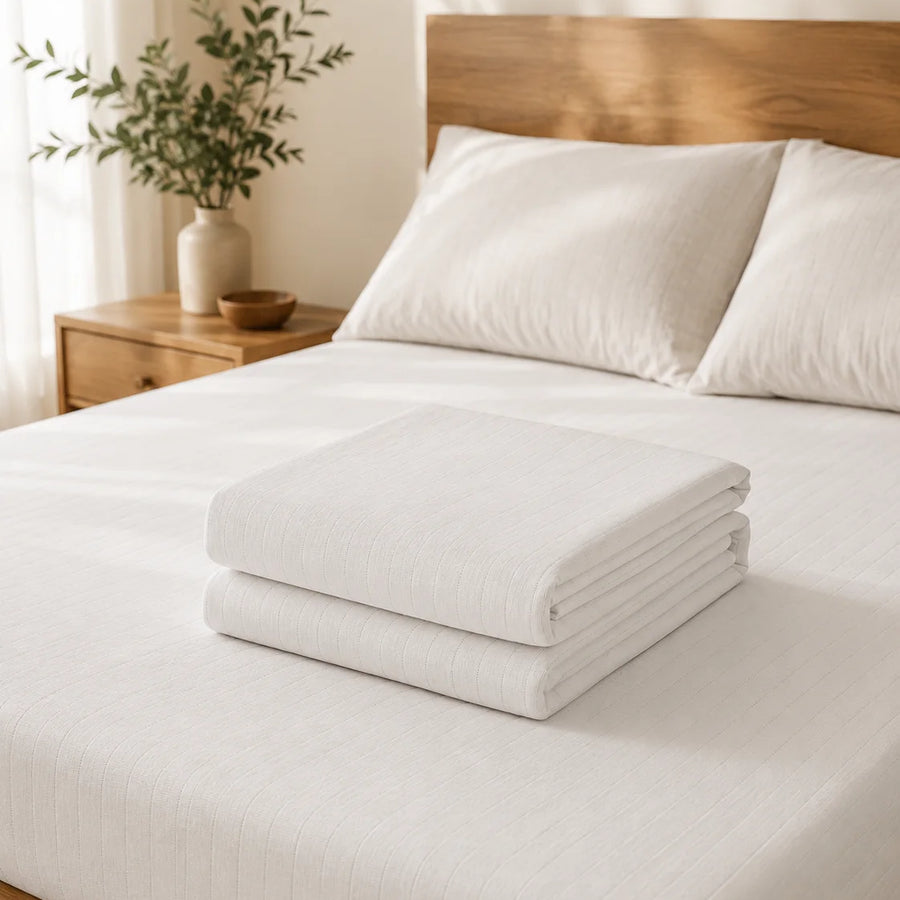
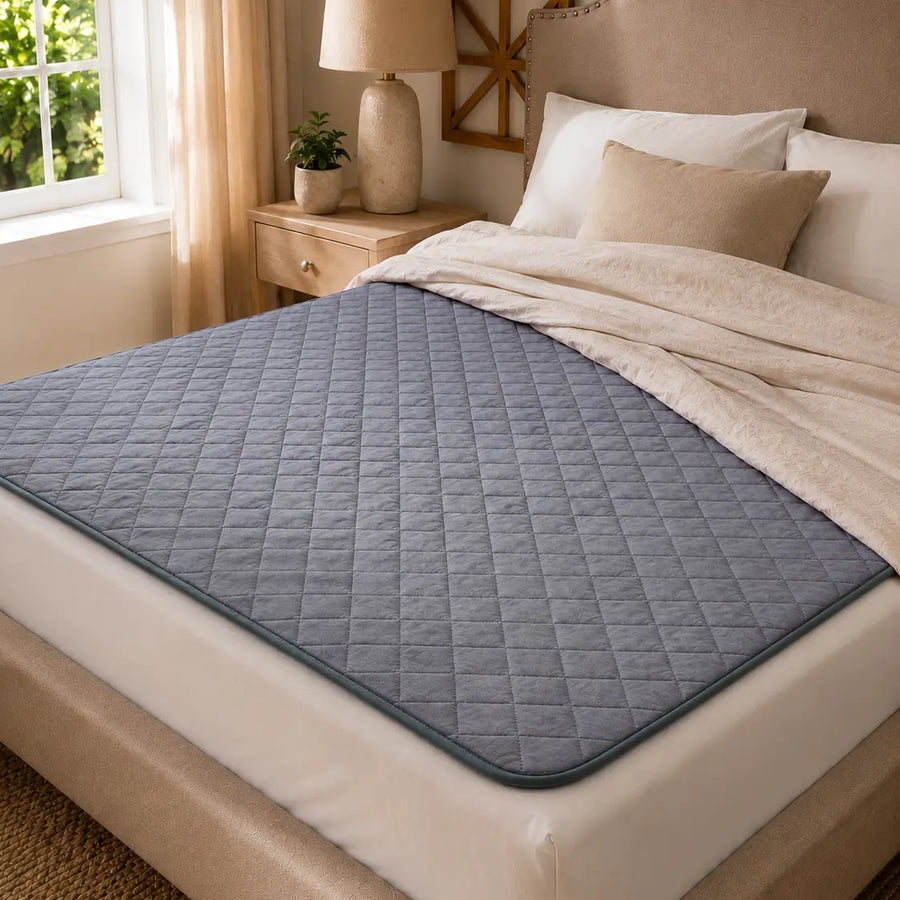
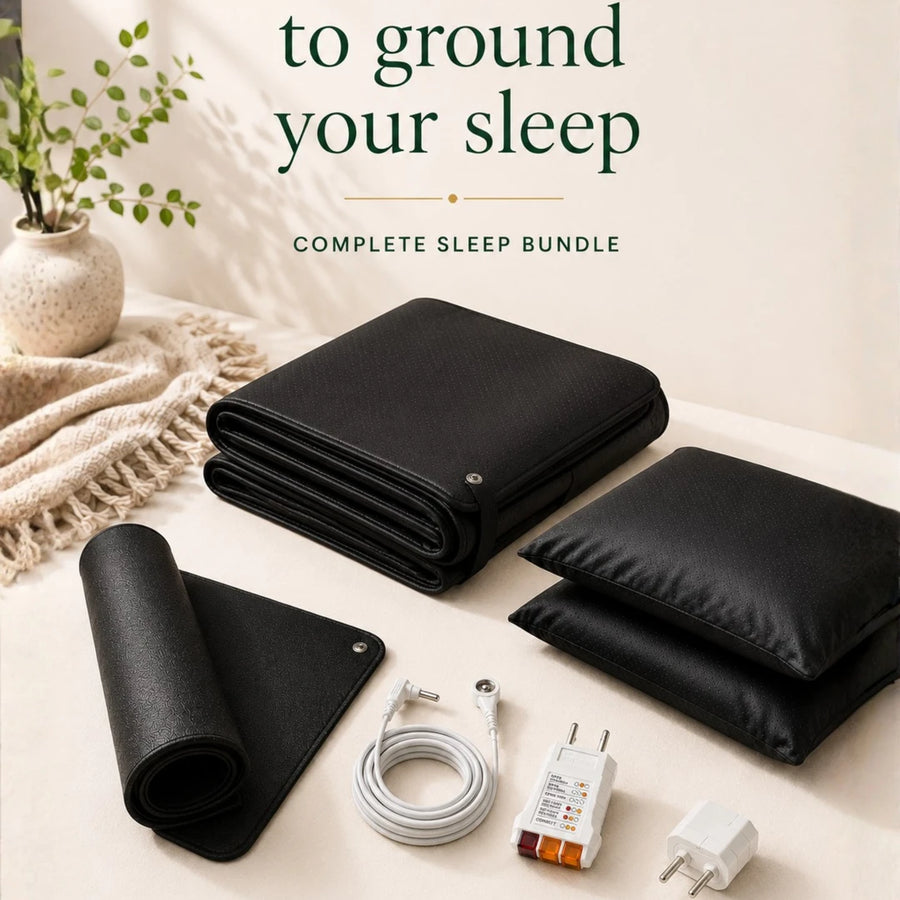
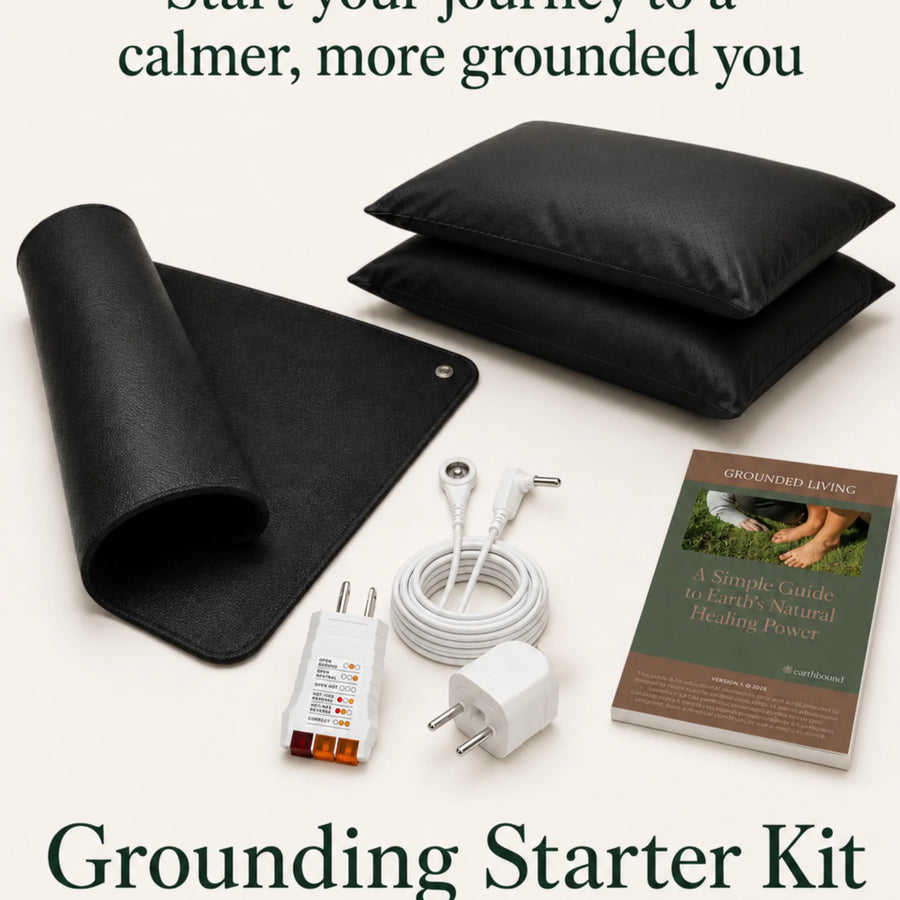
The Earthbound Grounding Mattress Pad (from $119.99) exists to make grounding a default state instead of a daily decision. Conductive carbon fiber straps under your existing fitted sheet — Near Field™ Earthing grounds you through the sheet and light sleepwear, so nothing about your bedding or routine changes. It connects to the ground port of any outlet (no electricity flows; the cord carries a 100k ohm safety resistor), or directly to the actual Earth via a grounding rod if you prefer the literal version. A test kit in every box lets you verify you're as grounded under your sheet as you'd be on the lawn. Sleep on it for 90 nights; if you don't notice a difference, send it back for a full refund. Lifetime warranty, because carbon fiber doesn't wear out.
The honest answer: do both
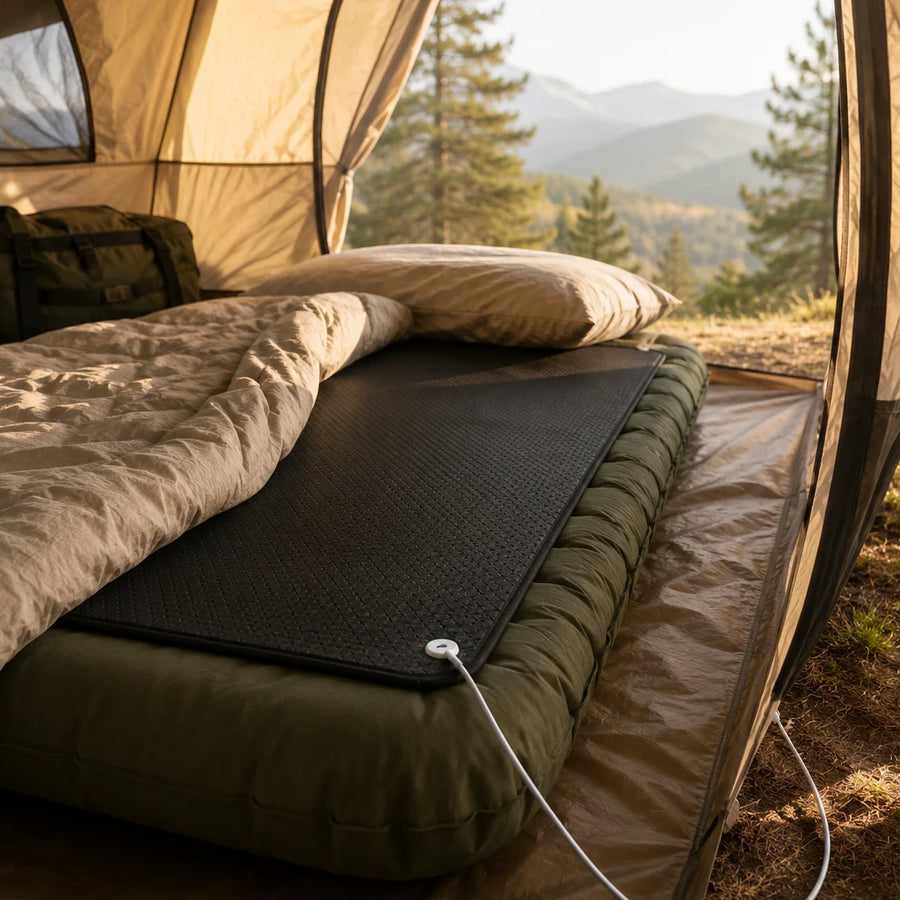
This isn't either/or, and summer is the proof. Warm months: take the free barefoot hours — morning coffee on the grass, beach days, garden time. They're real, they're pleasant, and they cost nothing. All year: let the pad quietly bank seven to eight hours a night so your grounded time doesn't collapse the day the weather turns. Campers and RV travelers can even take the bed version outside — the rod and 40-foot cable ground a pad anywhere there's actual earth to plant it in. Barefoot is the practice; the pad is the consistency. Bodies respond to consistency.
FAQ
Is walking barefoot as good as a grounding pad? Minute for minute, barefoot contact with conductive ground is the real thing — the difference is accumulation. Most people log minutes barefoot and can log hours nightly on a pad. Research protocols overwhelmingly used overnight grounding, which points at hours as the variable that matters.
What surfaces ground you outside? Grass, soil, sand, gravel, and unsealed concrete generally conduct, especially with some moisture. Asphalt, sealed or painted concrete, wood decks, and vinyl don't. Dew-wet morning grass is about as conductive as outdoor surfaces get.
How long do you need to be barefoot to get grounding benefits? There's no certified number — studies measuring acute changes often ran 30–60 minutes or more, and the sleep studies ran all night, nightly, for weeks. Which is the practical problem the pad solves: nobody has to schedule sleep.
Can I ground indoors without buying anything? Not really — standard floors, even concrete slab under flooring, don't reliably connect you to the Earth, and touching a random grounded object isn't a maintained connection. Indoors, a conductive product connected to a grounded outlet or a rod is the mechanism. Outdoors, your feet were always enough.
Statements about grounding research describe published studies and are not intended to diagnose, treat, cure, or prevent any disease. Individual results vary. Study collection and citations at the link above.