



Reviewed for accuracy: July 2026. This article is for general educational purposes and is not medical advice. Earthbound manufactures grounding products, and we believe informed customers deserve a clear explanation of what grounding is, why it is scientifically credible, and how to evaluate its effects for themselves.
Grounding—also called earthing—is the practice of electrically connecting the body to the earth, either through direct contact with the ground or through a properly connected conductive product.
The idea is simple: when the body is connected to the earth, its electrical potential equalizes with the earth’s. This is not a theory or a matter of belief. It is a measurable electrical phenomenon that can be demonstrated with a basic body-voltage meter.
The more important question is what that electrical connection may do for the body. A growing body of research has explored grounding in relation to sleep, stress, circulation, inflammation, discomfort, and recovery. The studies are still developing, but the findings are encouraging—and consistent with the experiences reported by many people who ground regularly.
Why grounding deserves to be taken seriously
1. The electrical effect is real and measurable
When you stand barefoot on the earth, touch conductive ground outdoors, or use a properly connected grounding product, your body moves toward the earth’s electrical potential.
This can be measured in real time. Connect a body-voltage meter, observe the reading while ungrounded, and then make contact with the earth. The voltage typically drops immediately.
That measurable change is the foundation of grounding. The scientific discussion is not about whether the electrical connection occurs—it does. The research is focused on understanding how maintaining that state may influence human physiology.
2. Research has found meaningful physiological changes
Grounding research has examined both subjective experiences and objective biological measurements.
Published studies have reported changes involving:
- Sleep quality and nighttime cortisol patterns
- Markers associated with inflammation and recovery
- Muscle soreness following exercise
- Red-blood-cell electrical properties and blood viscosity
- Thermal patterns associated with circulation and localized discomfort
Some of the earliest studies were designed as exploratory or pilot research, which is common when a field is first developing. Pilot studies help researchers identify potential effects, refine research methods, and determine which outcomes deserve larger trials.
They are not the final word—but they are not meaningless. When multiple studies using different measurements repeatedly point in a similar direction, that pattern is worth investigating and taking seriously.
3. Grounding has been studied with objective measurements
Personal experiences matter, especially when the goal is better sleep, less morning stiffness, or improved recovery. But grounding research is not based exclusively on people saying they feel better.
Researchers have also used measurements such as cortisol testing, blood analysis, heart-rate variability, thermal imaging, and electrical readings.
These objective findings strengthen the case that grounding may create physiological effects beyond expectation alone. More independent, large-scale research would help clarify the magnitude and consistency of those effects, but the existing evidence provides a credible foundation.
4. The proposed mechanism is scientifically plausible
The earth carries an abundant supply of mobile electrons, and direct contact allows the body to equalize electrically with the ground. Researchers have proposed that this connection may influence oxidative stress, inflammatory processes, nervous-system regulation, circulation, and recovery.
The precise cellular mechanisms continue to be studied, as they should be. Many accepted health practices were used and observed before every underlying biological pathway was fully mapped.
What is already clear is that grounding changes the body’s electrical state. The research question is how that state interacts with biological systems over time.
5. Grounding restores a form of contact that modern life has reduced
For most of human history, people routinely walked barefoot, slept close to the ground, and spent substantial time in direct contact with natural surfaces.
Modern life has changed that relationship. Insulated shoes, elevated buildings, synthetic flooring, vehicles, and indoor lifestyles can leave people electrically separated from the earth for nearly the entire day.
Grounding products offer a practical way to restore that connection while sleeping, working, or relaxing indoors. They do not create an artificial electrical signal. They provide a conductive path to the same grounding system used throughout modern electrical infrastructure.
What the evidence means for you
Science rarely advances through one perfect study. It develops through repeated observation, improved methods, larger trials, and findings that either strengthen or challenge earlier results.
The current grounding literature provides several reasons for confidence:
- The underlying electrical effect is established and easily measured.
- Research has reported changes across several different physiological endpoints.
- Study results have been directionally encouraging across sleep, stress, circulation, soreness, and recovery.
- Grounding is non-invasive and can be incorporated into an existing routine with very little effort.
- Its effects can be evaluated personally through consistent use and basic tracking.
You do not need to view grounding as a cure or a replacement for medical care to recognize its value. It can be approached as a foundational wellness practice—similar to improving your sleep environment, spending more time outdoors, getting morning light, or developing a consistent nighttime routine.
The most useful question is not whether grounding can solve every health problem. It is whether regularly reconnecting your body to the earth may help you sleep, recover, and feel better.
For many people, the answer appears to be yes.
How to evaluate grounding for yourself
Individual responses can vary, which is why consistency and measurement matter.
Before beginning, choose a few outcomes that are meaningful to you:
- How long it takes you to fall asleep
- How often you wake during the night
- How rested you feel in the morning
- Morning stiffness or discomfort on a 1–10 scale
- Workout soreness and recovery time
- Wearable measurements such as resting heart rate or HRV
Track your normal baseline for one or two weeks. Then begin grounding consistently, ideally while sleeping, and continue for at least four to eight weeks.
Some people notice changes quickly. For others, the benefits are more gradual and become apparent only after several weeks of regular use.
Try to keep the rest of your routine reasonably consistent so that you can make a meaningful comparison. Our step-by-step personal tracking protocol explains how to conduct a simple N-of-1 experiment using sleep, recovery, and wearable data.
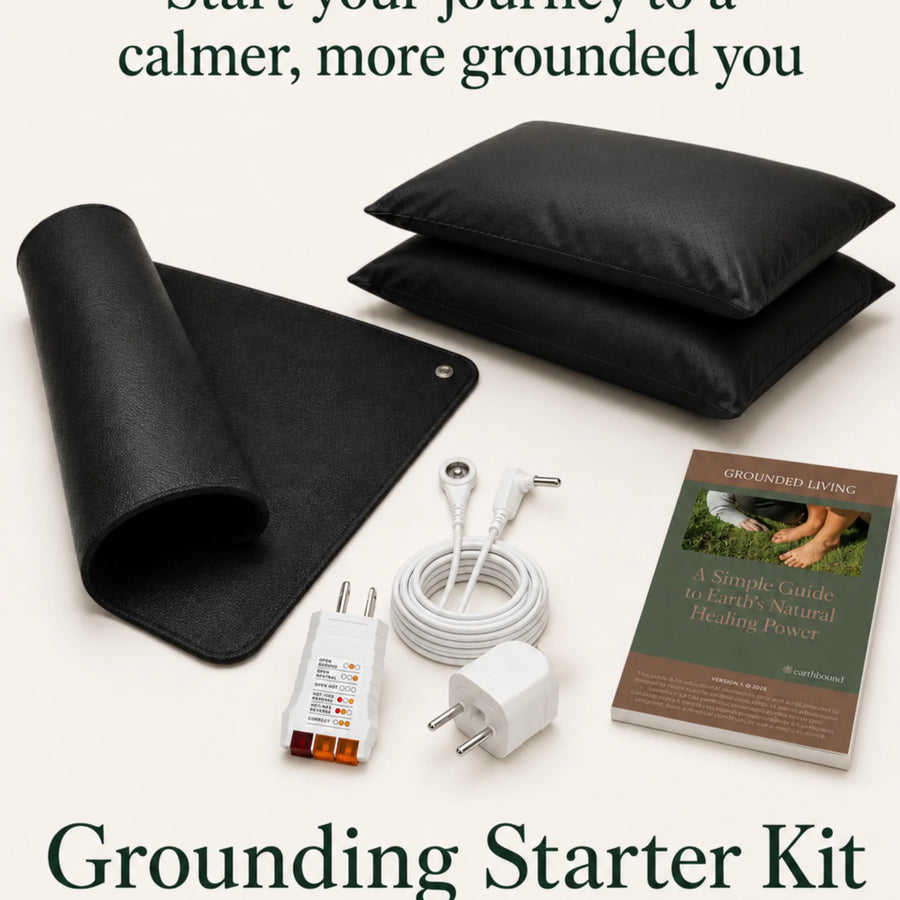
Every Earthbound system also includes testing tools so you can confirm that your outlet is properly grounded and that your product is functioning as intended. That removes uncertainty and lets you evaluate grounding with confidence.
Experience grounding consistently for 90 nights
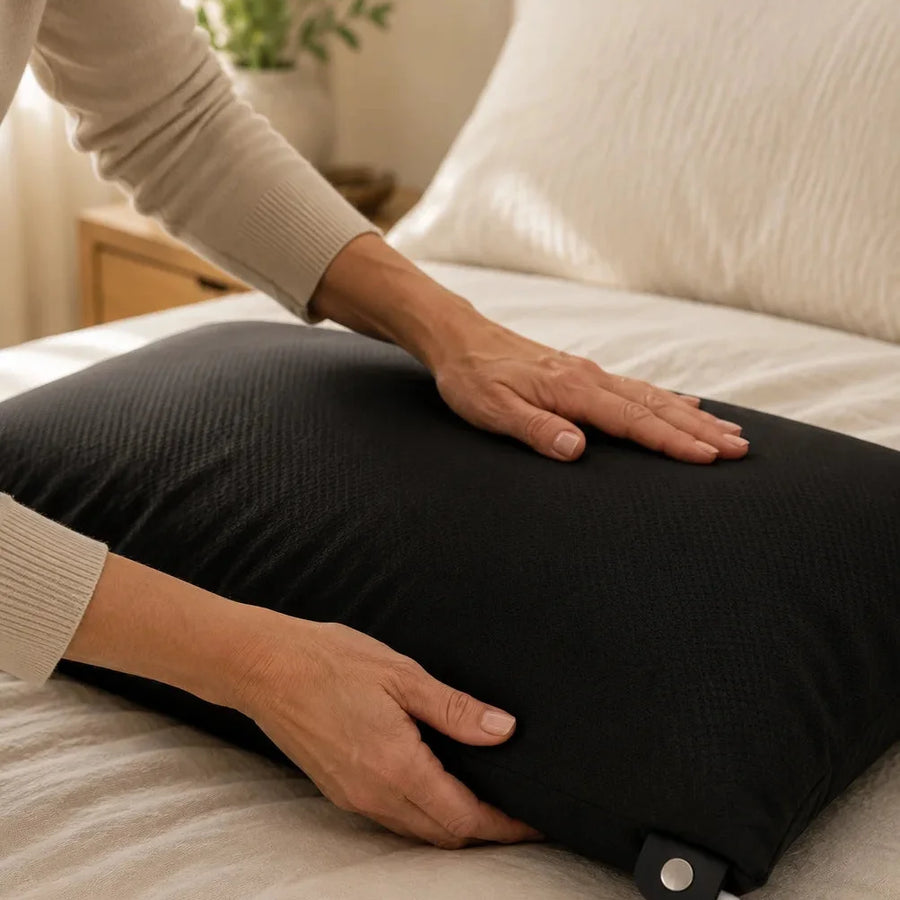
The Earthbound Grounding Mattress Pad makes it easy to remain grounded while you sleep. Each system is verifiable with the included test kit, protected by a lifetime warranty, and backed by a 90-night sleep trial. Give your body enough time to experience the difference—and decide based on your own results.
Frequently asked questions
Has earthing been scientifically debunked?
No. Grounding has not been scientifically debunked. The electrical connection between the body and the earth is measurable, and published research has reported promising effects involving sleep, stress, circulation, inflammation, soreness, and recovery.
As with many developing areas of wellness research, larger independent studies would strengthen the evidence and help researchers understand which people benefit most.
Is grounding pseudoscience?
No. Grounding is based on a real and measurable electrical phenomenon: when the body is conductively connected to the earth, its electrical potential equalizes with the ground.
Researchers are continuing to study how this state may affect biological processes. Responsible grounding education should distinguish between legitimate wellness benefits and unsupported claims that grounding treats or cures disease.
Does grounding really work?
Published studies and user experiences suggest that consistent grounding may support better sleep, relaxation, recovery, circulation, and overall well-being.
Because individual responses differ, the best way to assess grounding is to use a properly tested system consistently and track the outcomes that matter to you over several weeks.
How long does grounding take to work?
Some people report feeling calmer or sleeping differently within the first few nights. Others notice more gradual changes in morning stiffness, sleep consistency, or recovery after several weeks.
For a meaningful evaluation, we recommend using grounding consistently for at least four to eight weeks rather than judging it after one or two nights.
Why has grounding not become standard medical care?
Medical guidelines generally require multiple large, independently replicated clinical trials before recommending a practice as a treatment for a specific condition.
Grounding research is still developing and is better understood as a complementary wellness practice—not a replacement for medical diagnosis or treatment.
Is grounding safe?
Grounding is generally considered a low-risk, non-invasive wellness practice when used with properly designed equipment and a correctly grounded outlet.
Always follow the product instructions, test the outlet before use, and speak with a qualified healthcare professional when you have questions about a medical condition or medical device.
References: Ghaly & Teplitz 2004; Brown, Chevalier & Hill 2010; Chevalier et al. 2012; Chevalier, Sinatra et al. 2013; Oschman, Chevalier & Brown 2015. Grounding products are intended to support general wellness and are not intended to diagnose, treat, cure, or prevent any disease.