


As colder weather makes outdoor grounding less practical, there is another place you already spend six to eight hours every night.
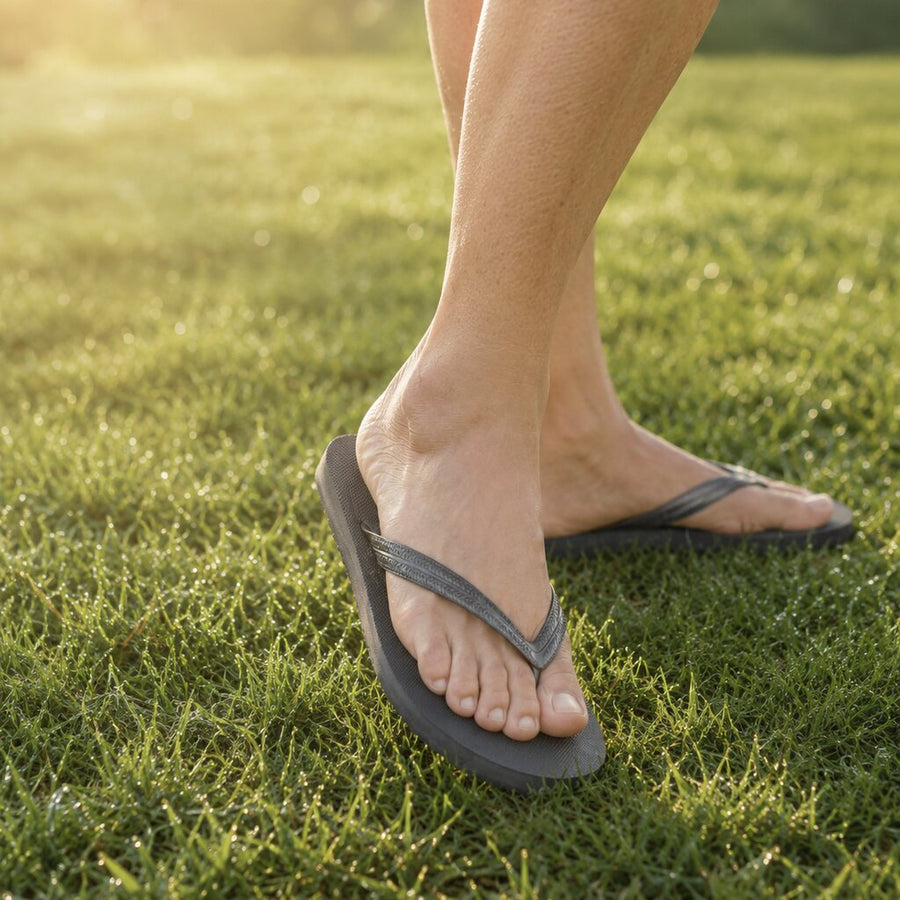
Somewhere in the next few weeks, you may take your shoes off outside for the last time this year.
You probably will not know it is the last time when it happens. The mornings simply get colder. Daylight disappears earlier. The ground stays damp. Shoes go on when you leave the house and stay on for most of the day.
And before long, months can pass before bare feet touch grass, soil, or sand again.
For people who enjoy grounding outdoors, that creates a simple seasonal problem: the easiest way to do it suddenly becomes the least practical.
But grounding does not necessarily have to disappear from your routine when barefoot weather does.
There Are Six to Eight Hours You Are Already Not Using
Most people already spend roughly a third of every day in one place: their bed.
That makes nighttime particularly interesting for grounding because it does not require another walk, another wellness ritual, or another item on your schedule.
Instead of trying to find time to stand barefoot outside, nighttime grounding allows researchers to study what happens when contact is maintained for hours at a time while a person is already resting.
And sleep is where some of the earliest grounding research began.
THE 2004 SLEEP STUDY
What Happened When Adults Slept Grounded for Eight Weeks?
In 2004, researchers Maurice Ghaly and Dale Teplitz studied 12 adults who reported problems with sleep, pain, and stress.
Participants slept grounded in their own beds for eight weeks using a conductive mattress pad. Researchers collected saliva samples throughout a 24-hour period to examine cortisol patterns and repeated the testing during the study.
Cortisol normally follows a daily rhythm, generally changing between daytime and nighttime rather than remaining constant around the clock.
After grounding during sleep, the researchers reported significantly lower nighttime cortisol levels and a trend toward a more normalized 24-hour cortisol pattern.
Participants also reported improvements in sleep-related complaints, pain, and stress during the study.
- Lower nighttime cortisol levels
- A trend toward a more typical 24-hour cortisol pattern
- Improvement in self-reported sleep complaints
- Reductions in self-reported pain and stress
There is an important limitation: this was a very small pilot study with only 12 participants and no sham-grounded control group.
It is interesting evidence, but it is not proof that grounding will improve sleep for everyone.
More Than 20 Years Later, Researchers Tested the Idea Again
A much newer study published in 2025 used a stronger experimental design.
Researchers conducted a randomized, double-blind, placebo-controlled study comparing a real earthing mat with a non-grounding control mat. Participants were instructed to use their assigned mat for at least six hours per day for 31 days.
The researchers evaluated sleep using several established questionnaires, including the Pittsburgh Sleep Quality Index and Insomnia Severity Index, along with actigraphy to estimate total sleep time.
They reported improvements in several sleep and stress measures in the grounding group. Importantly, total sleep time increased significantly compared with the control group.
At the follow-up assessment, insomnia severity scores also showed a significant improvement in the grounding group compared with the control group.
The authors still described the findings as preliminary. The study was relatively small and lasted only about a month, so larger and longer trials are still needed.
ANOTHER CONTROLLED PILOT
A Separate Study Also Looked at Sleep Quality
A 2022 placebo-controlled pilot study examined grounding in people with mild Alzheimer's disease who were experiencing sleep disturbances.
Twenty-two participants entered the study and 15 completed the full 12-week intervention.
Researchers used the Pittsburgh Sleep Quality Index to evaluate sleep. At the end of the study, sleep-quality scores were significantly better in the grounding group than in the sham-grounding group.
This study should not be generalized to everyone. It involved a very small number of participants and a highly specific population.
But taken alongside the earlier cortisol study and the newer randomized sleep study, it adds another piece to a still-developing body of research examining grounding during rest and sleep.
What These Studies Do and Do Not Tell Us
Grounding research is still early.
The studies above do not prove that grounding treats insomnia or any other medical condition. They also do not tell us that every person will experience the same result.
What they do show is that nighttime grounding has been studied in humans, that researchers have reported measurable and subjective changes related to sleep, and that the question has progressed beyond anecdotes alone.
There are now controlled studies worth paying attention to, while there is also plenty left for researchers to learn.
And This Is Where the Colder Months Become Interesting
In summer, grounding can happen almost accidentally.
You walk through the yard barefoot. You spend an afternoon at the beach. You sit outside with your feet in the grass.
By late fall, those opportunities can disappear almost overnight.
But your bedtime does not.
You are still going to spend hours in bed tonight. And tomorrow night. And the night after that.
That is what makes nighttime grounding so practical: it turns something you are already doing every day into the opportunity to remain grounded, without walking barefoot through cold grass or adding another ritual to your schedule.
A SIMPLE WAY TO TRY IT
Ground Your Bed, Then See How You Feel
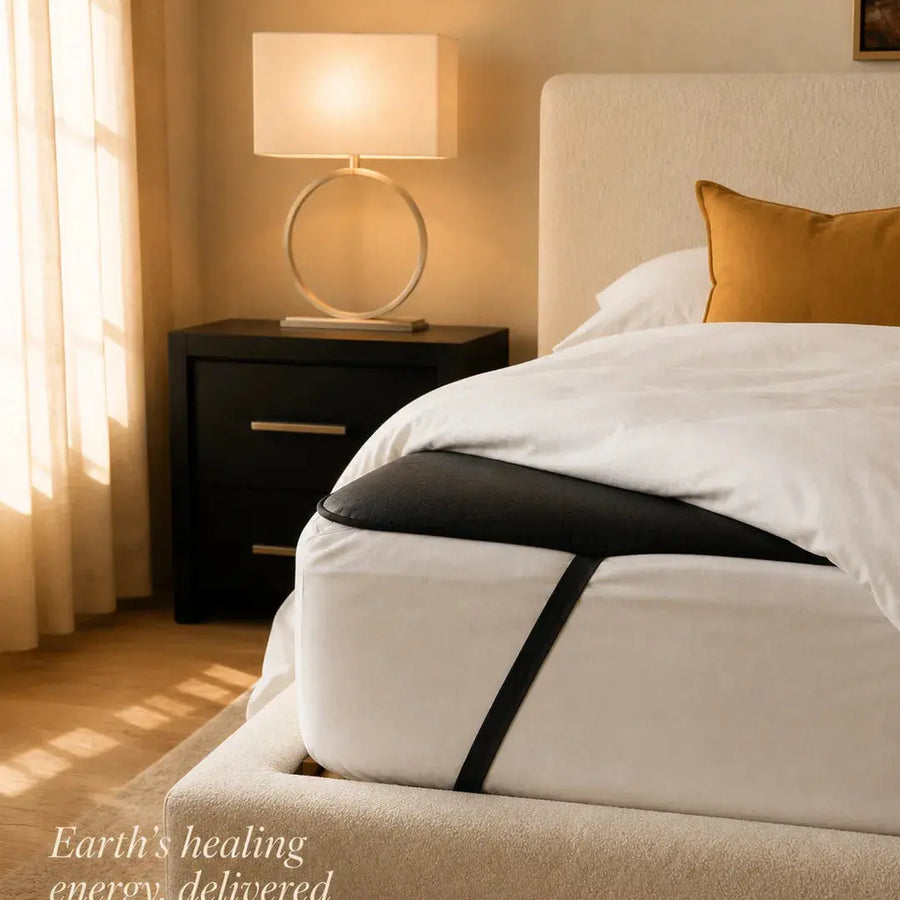
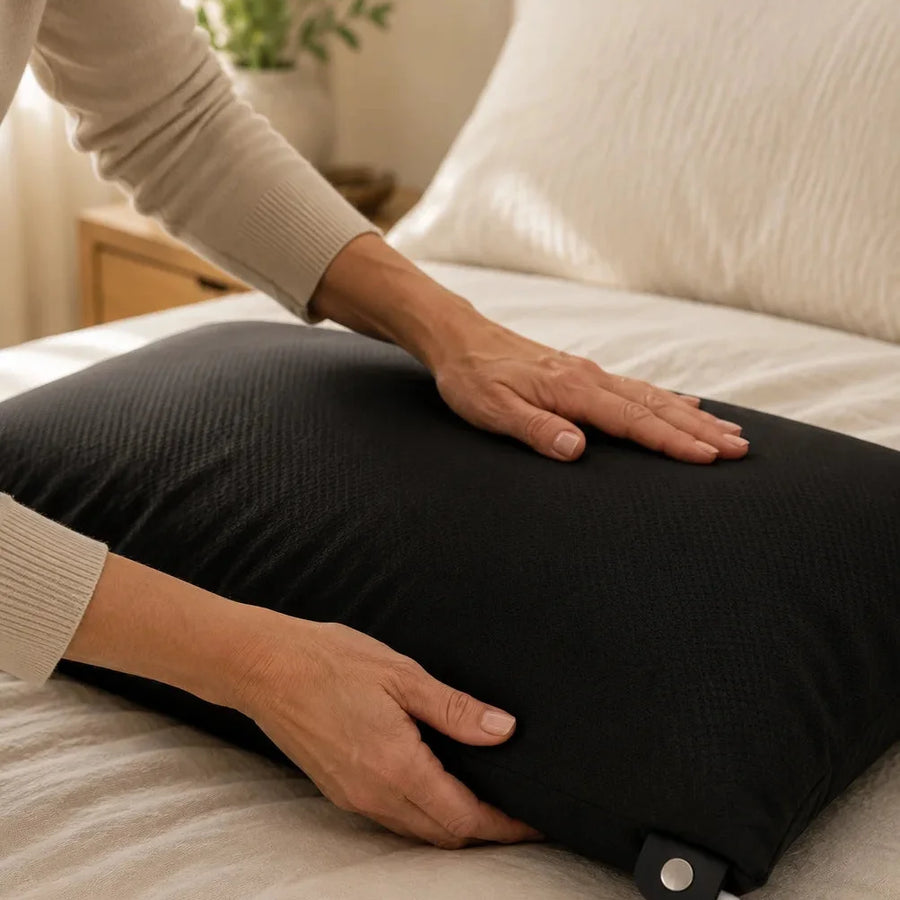
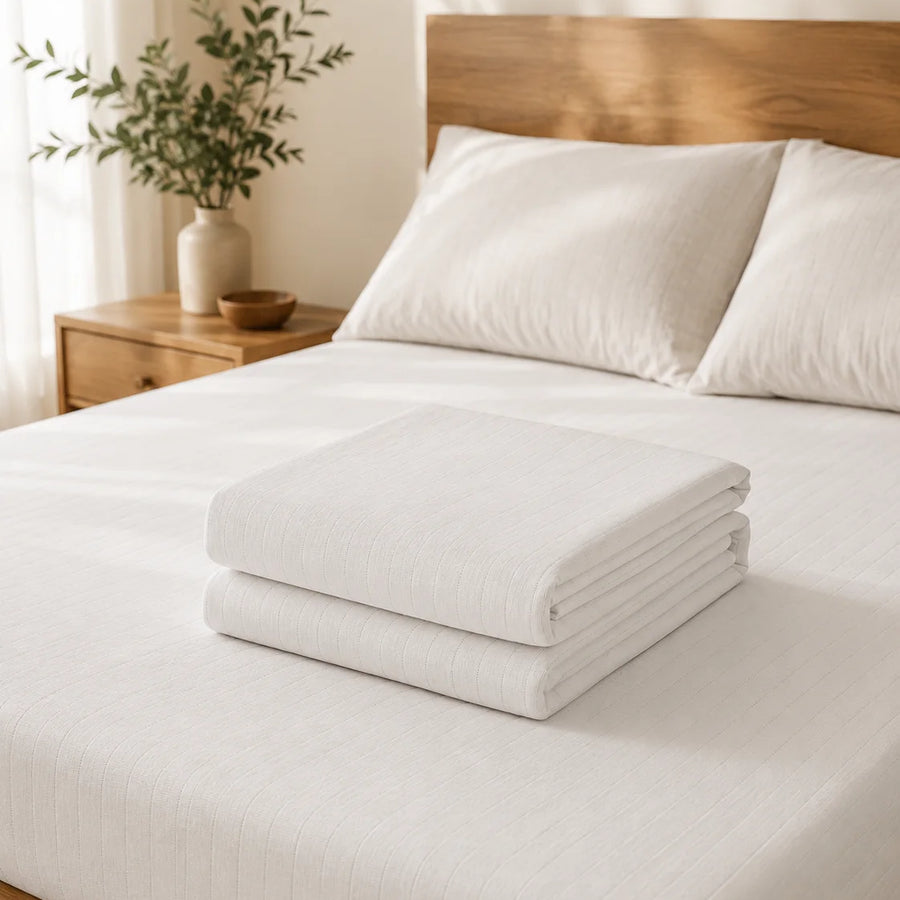
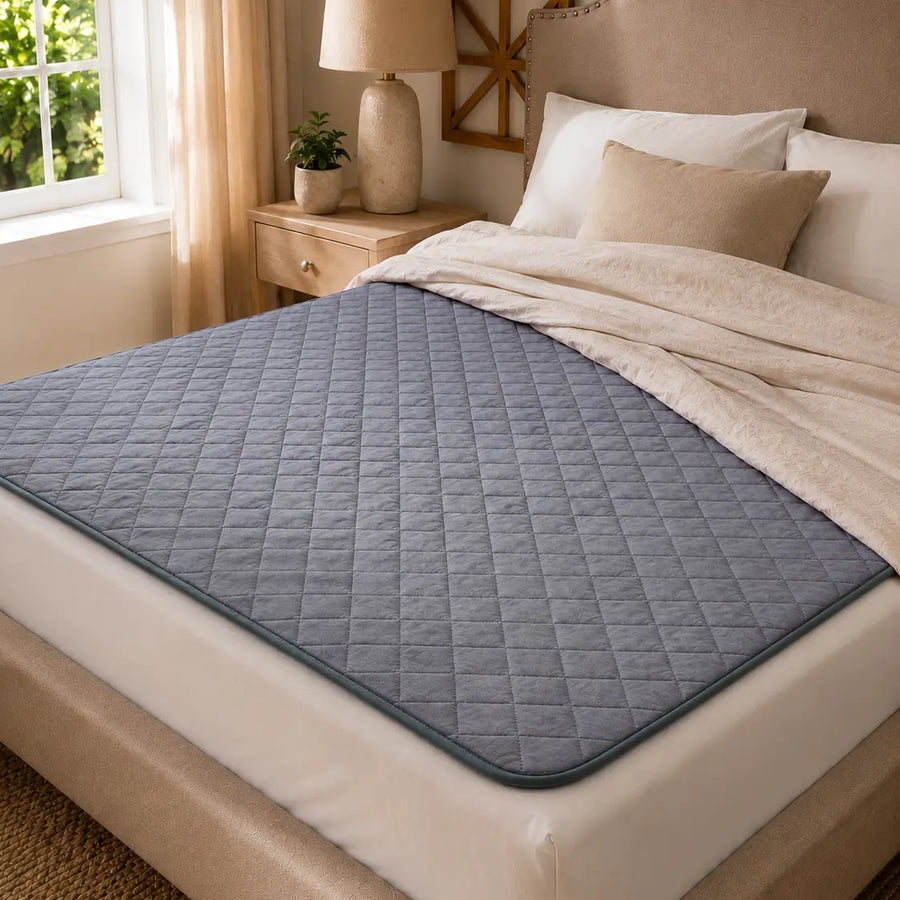
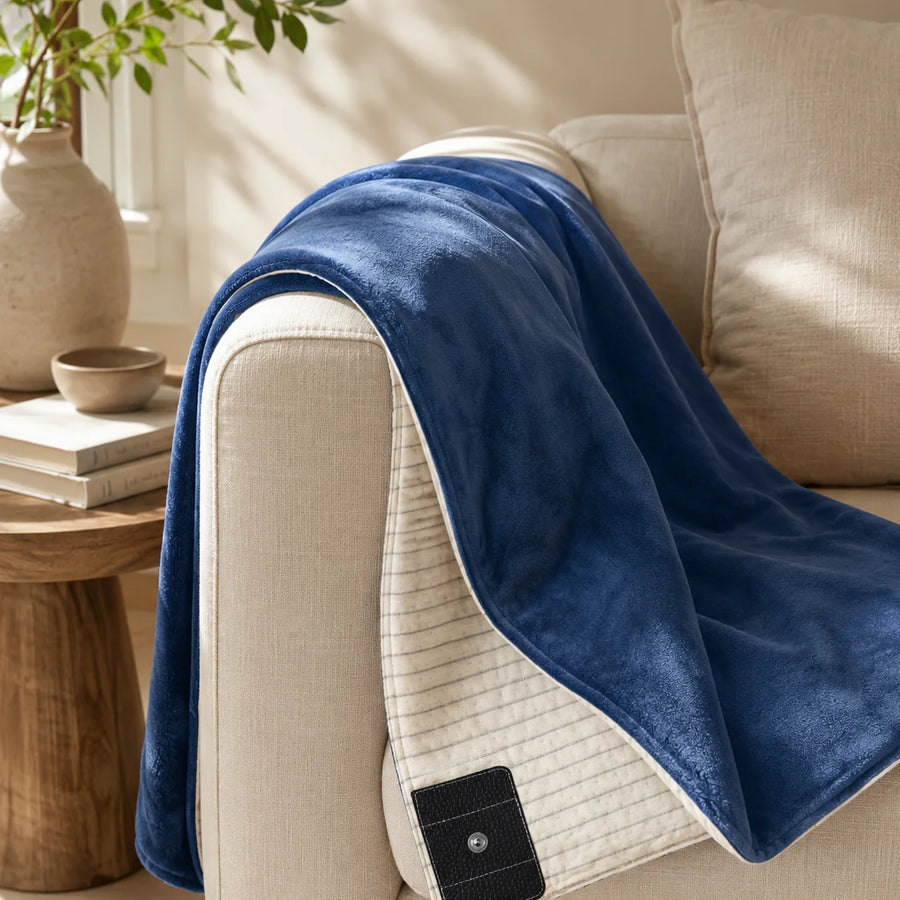
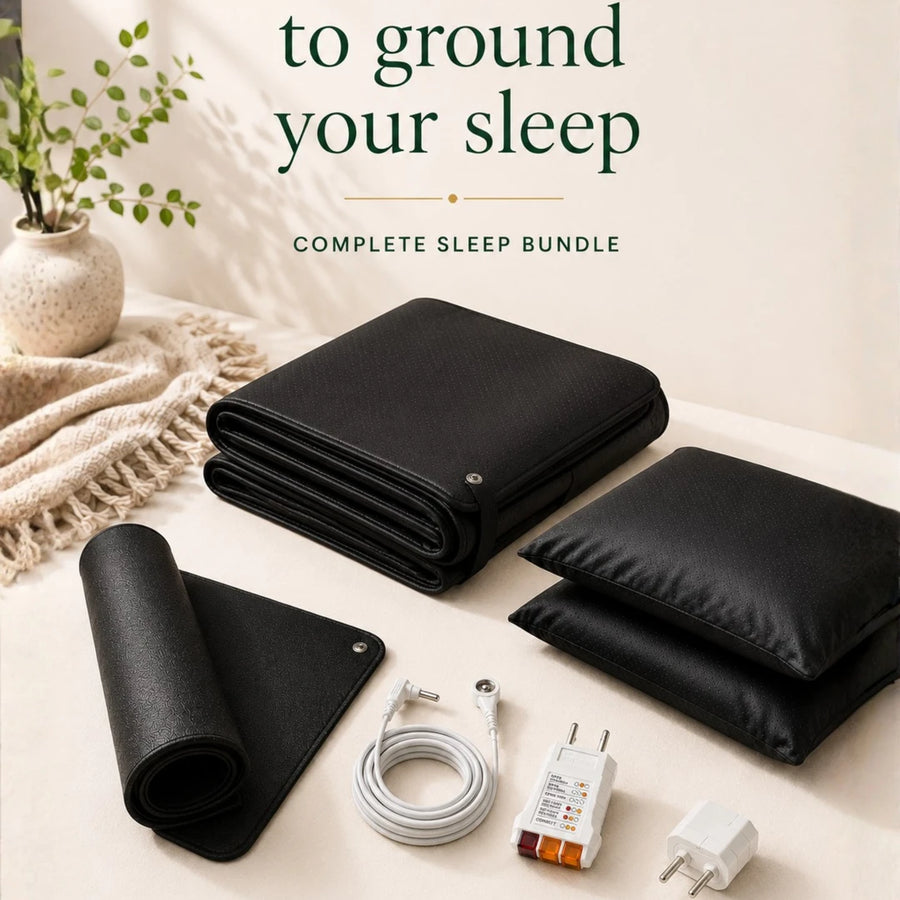
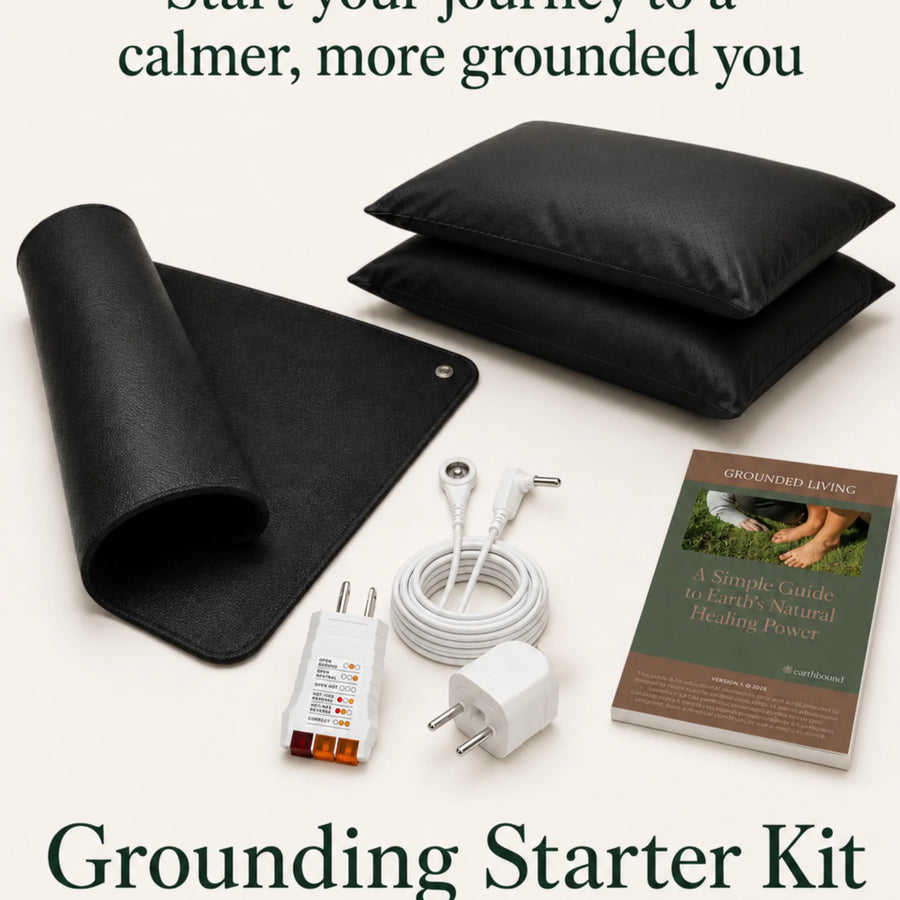
The Earthbound Grounding Mattress Pad was designed to make nighttime grounding simple.
The ultra-thin conductive pad sits beneath your fitted sheet and connects to ground, allowing grounding to become part of the hours you are already spending in bed.
There is no complicated routine to remember each night.
Make your bed. Go to sleep. Stay grounded while you rest.
And rather than asking you to decide whether grounding is right for you after a night or two, Earthbound gives you 90 nights to experience it in your own routine.
Try Nighttime Grounding for 90 Nights
Sleep on the Earthbound Mattress Pad through the colder months and decide based on your own experience.
Give yourself enough time to notice whether your nights, mornings, or overall sleep routine feel different.
If Earthbound is not right for you, you are protected by our 90-night trial.
The research is still developing.
Your own experience does not have to be theoretical.
Experience grounding from the comfort of your own bed.
Research Referenced
- Ghaly M, Teplitz D. The biologic effects of grounding the human body during sleep as measured by cortisol levels and subjective reporting of sleep, pain, and stress. Journal of Alternative and Complementary Medicine. 2004;10(5):767-776. DOI: 10.1089/acm.2004.10.767.
- Park HJ, Lee GR, Kim Y, et al. A randomized, double-blind, placebo-controlled study on the improvement of sleep quality with Earthing mat. Advances in Integrative Medicine. 2025;12(3):100458. DOI: 10.1016/j.aimed.2025.01.005.
- Lin CH, Tseng ST, Chuang YC, Kuo CE, Chen NC. Grounding the Body Improves Sleep Quality in Patients with Mild Alzheimer's Disease: A Pilot Study. Healthcare. 2022;10(3):581. DOI: 10.3390/healthcare10030581.
Grounding research remains preliminary and the results of individual studies should not be interpreted as proof that grounding will produce the same effects for every person. Earthbound products are wellness products and are not intended to diagnose, treat, cure, or prevent any disease. Persistent sleep problems should be discussed with a qualified healthcare professional.