



Reviewed for accuracy: July 2026. General information, not medical advice. Individual experiences vary, and "nothing yet" at week one is a normal data point, not a verdict.
This question has two honest answers on two different clocks, and most of the frustration around grounding comes from confusing them. The electrical effect happens in seconds and you can watch it on a meter. The physiological outcomes people actually care about — sleep, morning stiffness, recovery — were measured in studies over sessions to weeks. Here is the timeline as the research and reported experience actually lay it out, so you can set expectations you won't have to argue with later.
Instantly: the part you can measure
The moment your skin contacts a connected grounding surface, your body equalizes to the earth's electrical potential. Induced body voltage — typically a volt to several volts near household electronics — drops to near zero within seconds. This isn't a claimed benefit; it's electrostatics, and it's the first thing to check on night one with the test kit or a multimeter (our testing guide walks through it). Verifying this immediately does something valuable for the rest of the timeline: it removes "maybe it was never even connected" from the list of explanations for whatever you do or don't feel later.
Within a session (hours): the fastest studied effects
The shortest exposure with a published physiological finding is two hours: Chevalier and colleagues (2013) measured red blood cell zeta potential in ten subjects after a two-hour grounding session and found cells repelling each other substantially more — less clumping, lower viscosity. Ten people is a pilot, and you won't feel your zeta potential. But it establishes that in the research record, measurable change did not require weeks of accumulation — single sessions registered on instruments.
Nights 1–7: adjustment, not judgment
The first week is where reported experience is most scattered, and honesty requires reporting the whole spread. Some users notice falling asleep faster or sleeping more deeply within the first few nights. Some notice mild oddness — tingling, vivid dreams, a night or two of lighter sleep — which typically resolves (we cover it in the side-effects guide). And some notice nothing at all, which the first-week marketing of this category rarely admits and which predicts very little about week six. Treat week one as setup and adjustment; the studied outcomes were never measured this early.
Weeks 2–4: where reported changes cluster
Across user reports and the direction of the pilot literature, the second through fourth weeks are where the commonly cited experiences concentrate: easier sleep onset, fewer night wakings, less morning stiffness, and — among people who track it — movement in wearable metrics like resting heart rate or HRV. This is also the window where a self-trial starts producing interpretable data if you logged a baseline first: two weeks of grounded nights against two weeks of ungrounded baseline is the minimum comparison worth making.
Weeks 4–8: the research window
The study most of this category's sleep claims trace to — Ghaly & Teplitz, 2004 — ran eight weeks. That duration wasn't arbitrary: the endpoint was night-time cortisol rhythm, and hormonal rhythms re-pattern slowly. Over those eight weeks, the twelve grounded subjects showed cortisol profiles normalizing toward a healthy day-night curve, alongside self-reported improvements in sleep and morning fatigue. If you take one expectation from this article: the flagship evidence for sleep grounding is an eight-week protocol. Judging the practice at day five is testing something the research never claimed.
Beyond: the honest long-term picture
Long-term controlled data doesn't exist yet — the trials haven't been run, and we won't invent them. What long-term users report is continuity rather than escalation: the changes that appeared in the first two months persisting with consistent use. Consistency appears to be the operative variable throughout the literature — which favors formats you don't have to think about. It's the practical argument for grounding during sleep over grounding during a daily 20-minute session: eight unbroken hours, every night, with zero adherence effort.
Setting up a timeline you can trust
- Day 1: verify outlet and product with the test kit. Note your baseline: recent sleep-onset time, morning stiffness 1–10, wearable numbers if you track.
- Week 1: expect nothing, welcome anything. Adjustment sensations are normal and usually transient.
- Weeks 2–4: compare against baseline weekly. This is where reported changes cluster.
- Week 8: the research-anchored evaluation point. Judge on your logged data, not on memory or mood.
- Week 12: if your data says it isn't for you, that's a legitimate result — and it's why the Earthbound pad's trial runs 90 nights with a full refund: the honest evaluation window and the return window should be the same window.
Built around the eight-week reality
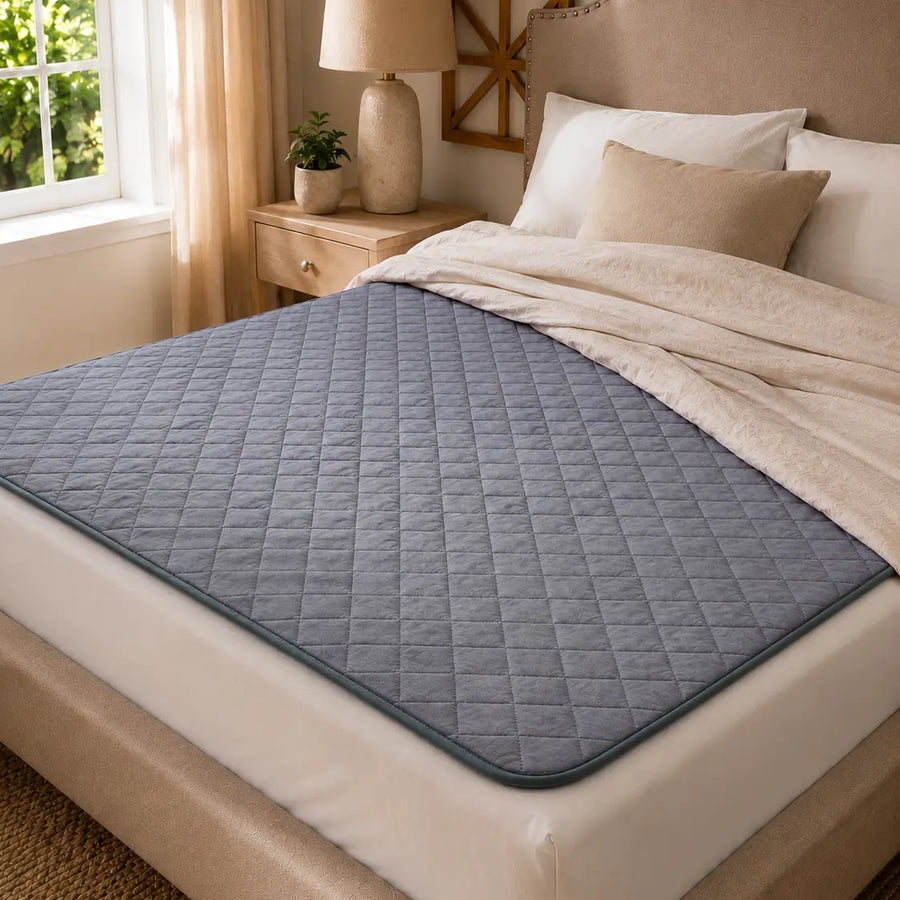
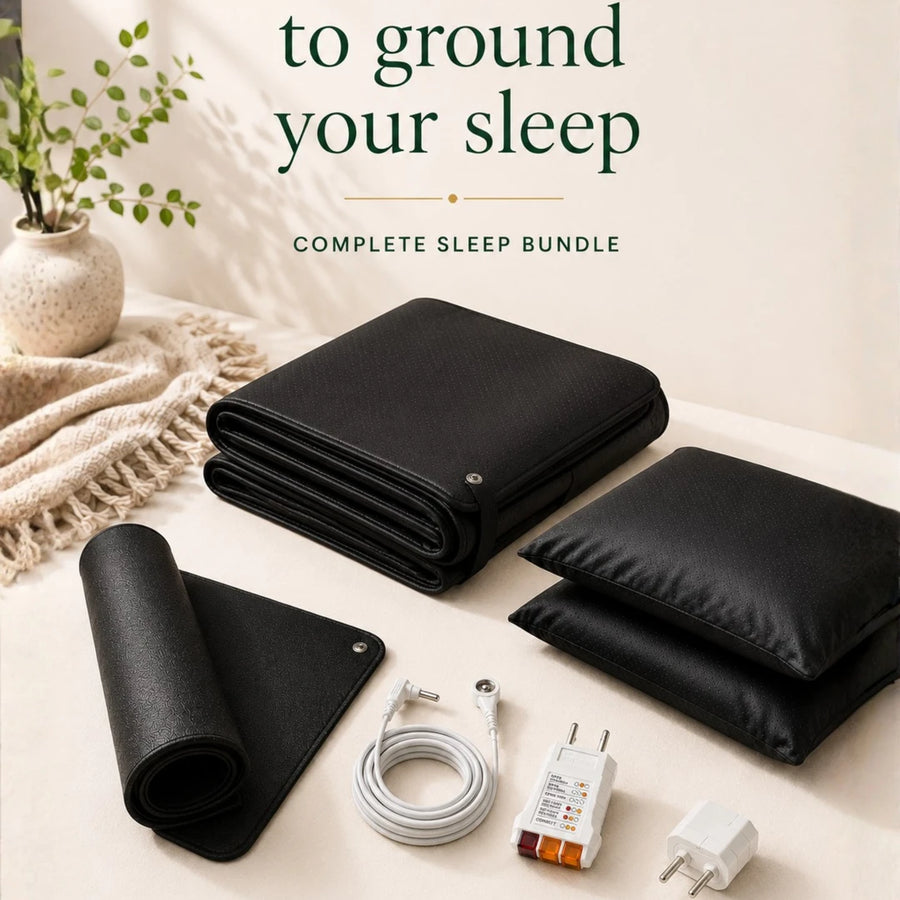
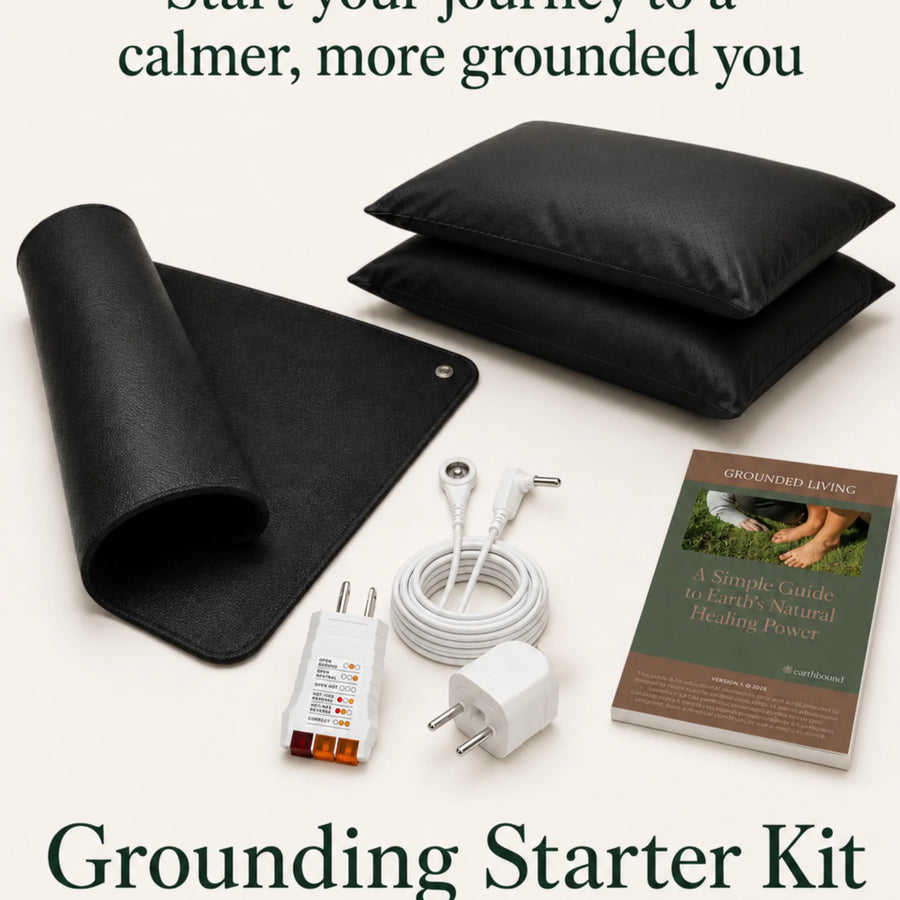
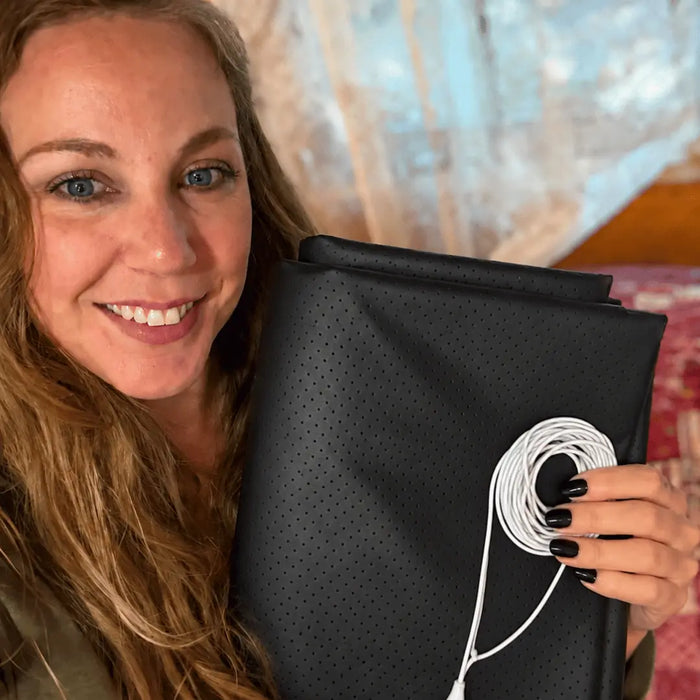
The Grounding Mattress Pad grounds every hour you sleep with zero effort — the consistency the research window demands — and the 90-night trial means the full timeline above is refundable. Test kit included for the day-one verification.
Frequently asked questions
How quickly does grounding work?
Electrically, in seconds — body voltage drops to near zero on contact, verifiable with a meter. Studied physiological outcomes range from two-hour sessions (blood viscosity) to eight weeks (cortisol rhythm). Commonly reported experiential changes cluster in weeks two through four.
How many hours a day should you ground?
Research protocols used all-night sleep; the shortest studied effect used two hours. Practically, sleep grounding delivers the most hours with the least effort — consistency matters more than any single session.
Why don't I feel anything from grounding yet?
Feeling nothing in week one is common and predicts little; the flagship sleep study ran eight weeks. Verify the connection with a meter, log a baseline, and evaluate at the four-to-eight-week mark against your own data.
Does grounding work the first night?
The electrical connection works immediately. Some users report better sleep within nights; the studied outcomes were measured over weeks. Both statements are true and about different things.
References: Ghaly & Teplitz 2004; Chevalier, Sinatra et al. 2013; Oschman, Chevalier & Brown 2015. Grounding products are not intended to diagnose, treat, cure, or prevent any disease.