

Reviewed for accuracy: July 2026. General information, not medical advice. Earthbound was founded by an industrial engineer, and this article approaches the question the way engineering does: measure first.
"Hoax" is a specific accusation. It doesn't mean "overhyped" or "unproven" — it means the product does nothing at all and the seller knows it. That's a testable claim, which makes this one of the few wellness controversies you can partially settle on your own kitchen table with a $20 instrument. So let's separate the question into its three real parts: Does a grounding mat do anything electrically? Does that electrical state do anything biologically? And is the marketing honest about the difference? The answers are: yes, maybe, and — across the industry — not always.
Part 1: The electrical claim — settled, and you can settle it yourself
A grounding mat claims to place your body at the earth's electrical potential. This is not exotic; it's the same thing the third prong on every appliance does, and it's verifiable two ways.
The continuity test: a multimeter set to resistance, one probe on the mat surface, one on the outlet's ground port. A functioning mat reads low resistance — a conductive path exists. A hoax product would fail this in ten seconds, which is presumably why hoax products in this category are rare: the fraud is too easy to catch.
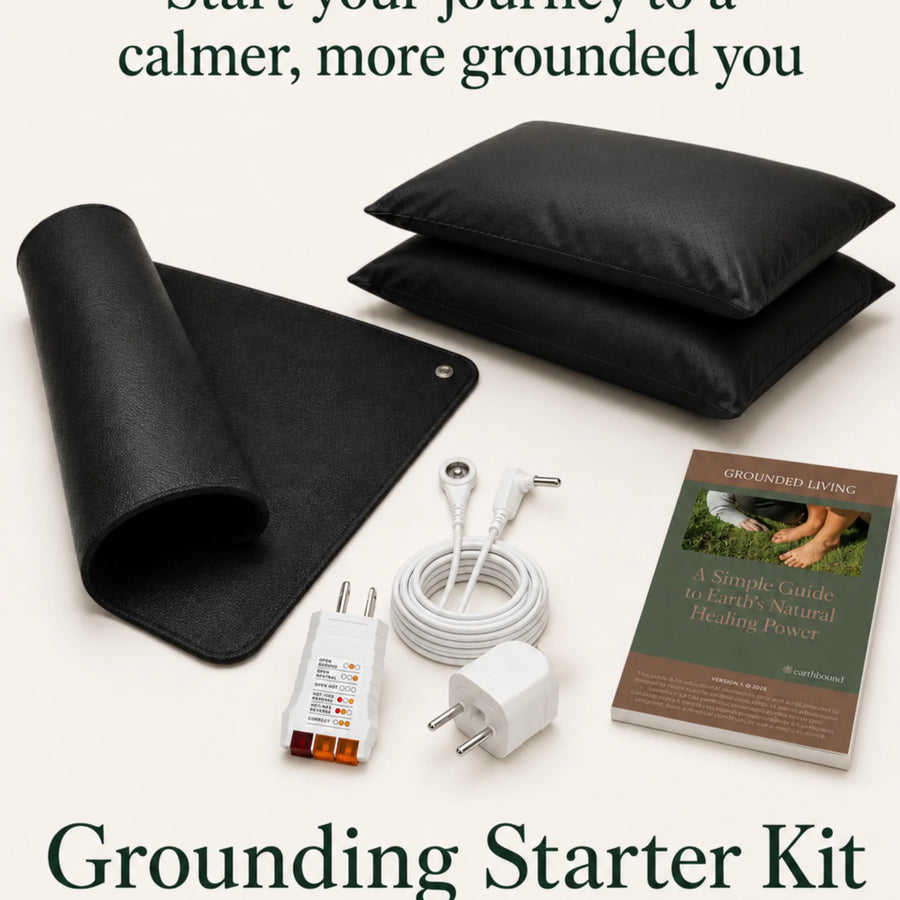
The body-voltage test: the more interesting one. Sit near ordinary electronics, ungrounded, and measure the AC voltage between your body and ground — typically you'll read somewhere in the range of a volt to several volts, induced by the wiring and devices around you. Put your feet on a connected grounding mat and watch the reading collapse to near zero. That drop is the product's entire electrical function, happening in real time on your own meter. We publish the full procedure in our multimeter testing guide, and we include a test kit with every product because a category this easy to verify has no excuse for asking to be taken on faith.
So: a grounding mat measurably changes your body's electrical state. Whatever else is true, "does nothing at all" is off the table.
Part 2: The biological claim — genuinely open
Here's where honest uncertainty lives, and where an engineering mindset means stating error bars. The pilot literature — twelve subjects on sleep cortisol (Ghaly & Teplitz, 2004), ten on blood viscosity (Chevalier et al., 2013), eight on muscle soreness (Brown et al., 2010), plus the 2015 inflammation review — points consistently in a favorable direction across different endpoints and teams. That consistency is worth something. The sample sizes are worth skepticism. Both things are true simultaneously, and we walk through every study, including the conflicts of interest, in our evidence review and our fair hearing for the skeptics.
The engineering summary: the input is real and measurable; the biological output has promising, underpowered evidence. That is a different epistemic category from homeopathy or magnetic bracelets, where the claimed input itself is undetectable. It's also a different category from proven medicine. It sits where a lot of genuinely interesting things sit early on: plausible mechanism, pilot signal, awaiting definitive trials.
Part 3: Where "hoax" accusations are actually earned
Some of the skepticism this category attracts is well-earned, and naming the failure modes helps you shop around them:
- Disease-cure claims. No study supports claims that grounding treats or cures any disease. Marketing that says otherwise is the single biggest generator of "hoax" sentiment — deservedly.
- Unverifiable products. A conductive product sold with no way to test it, no stated material, and no published resistance behavior is asking for faith in a category where measurement is trivial. Walk away.
- Products that quietly stop working. Silver-thread sheets lose conductivity as the filament oxidizes and frays through wash cycles. A product that worked in January and doesn't in October — with no way for the owner to notice — does more damage to the category's credibility than any skeptic. It's the engineering reason we build with inert carbon instead, and the reason "can I re-test it myself" belongs on your checklist regardless of brand.
- Perpetual fake urgency. Eternal countdown timers and permanent "85% sold" banners aren't evidence about the product, but they tell you how the seller thinks — and this category has plenty of them.
The rational buyer's protocol
- Verify the outlet, then verify the product, with a test kit or multimeter — day one, before any opinions form.
- Baseline yourself for two weeks: sleep-onset time, morning stiffness, wearable metrics if you have them.
- Ground consistently for four to eight weeks — the window the research protocols actually used — and compare against your baseline, not against testimonials.
- Let the trial terms carry the risk. A seller confident the experiment tends to go well can afford to refund the ones that don't. Earthbound's is 90 nights of real use with a full refund, plus a lifetime warranty on the conductivity itself.
Built to be tested, not believed
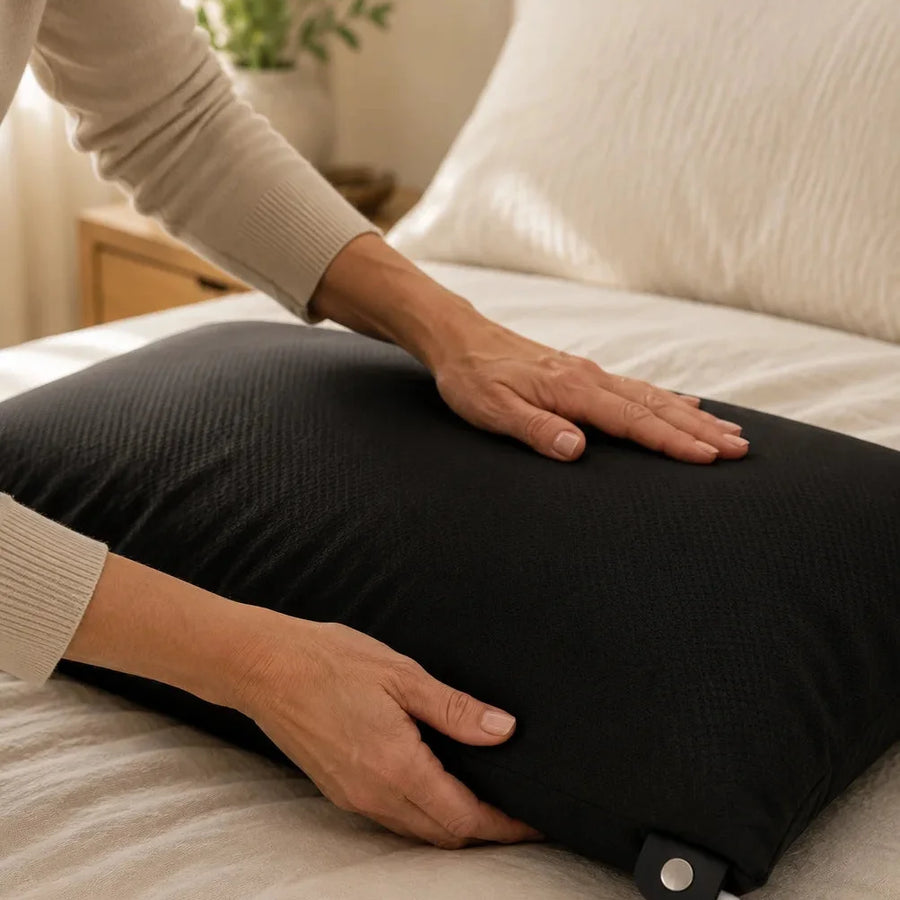
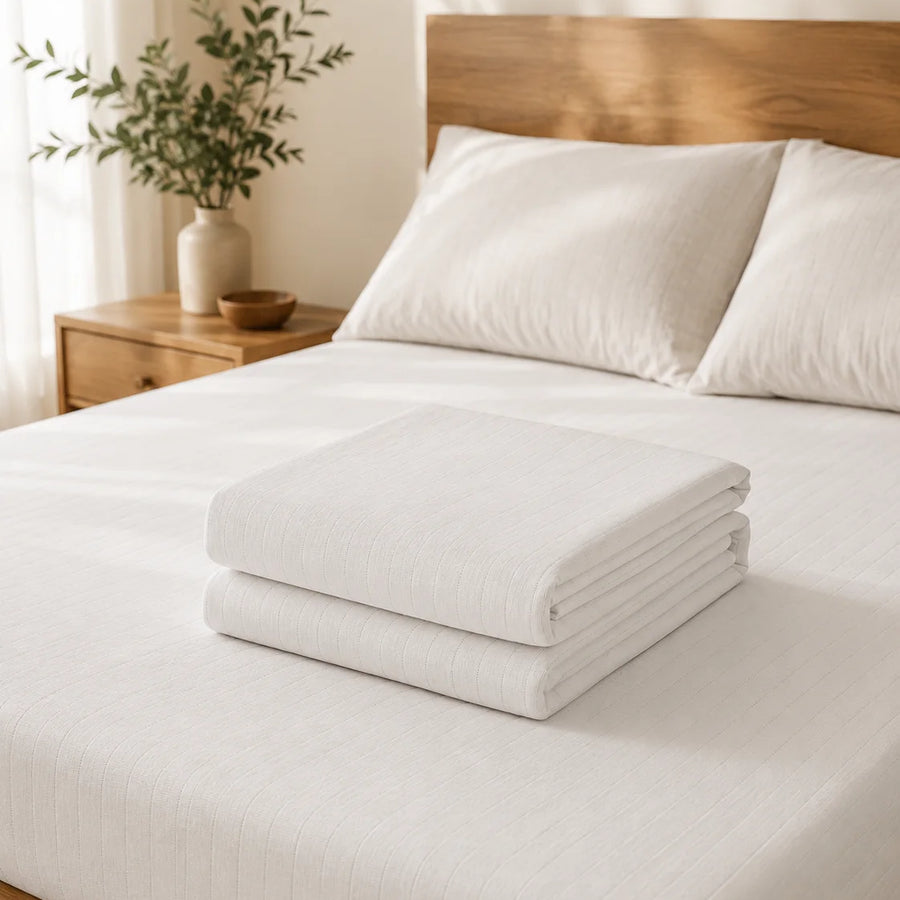
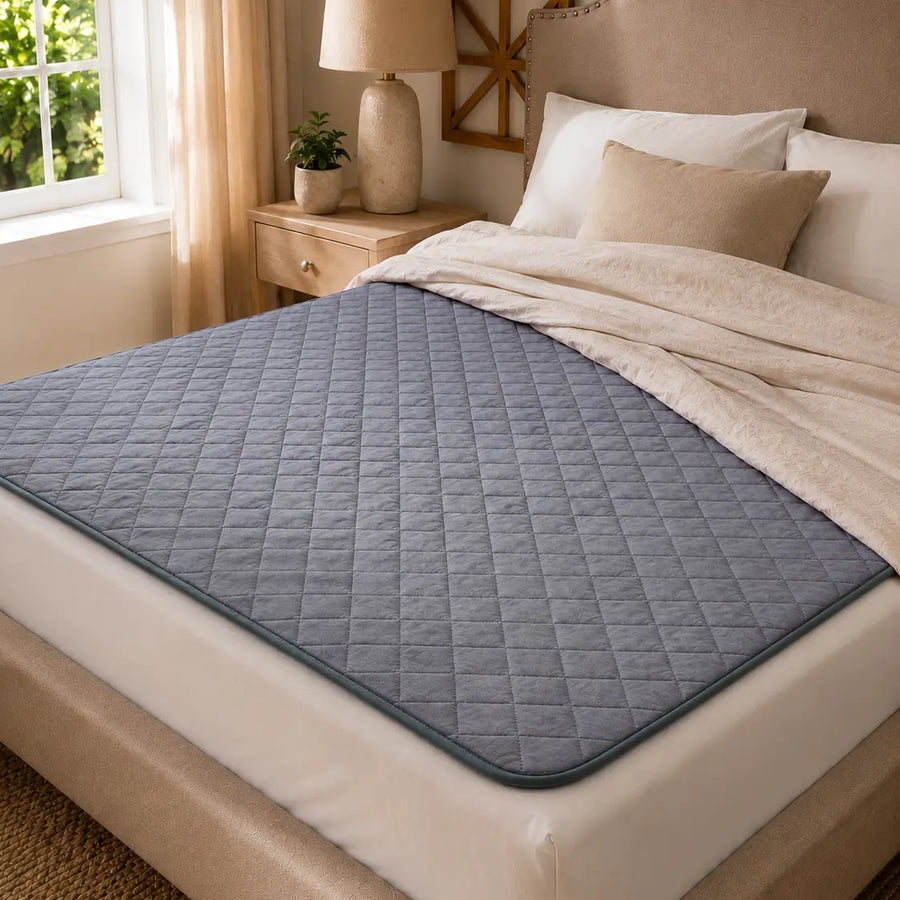
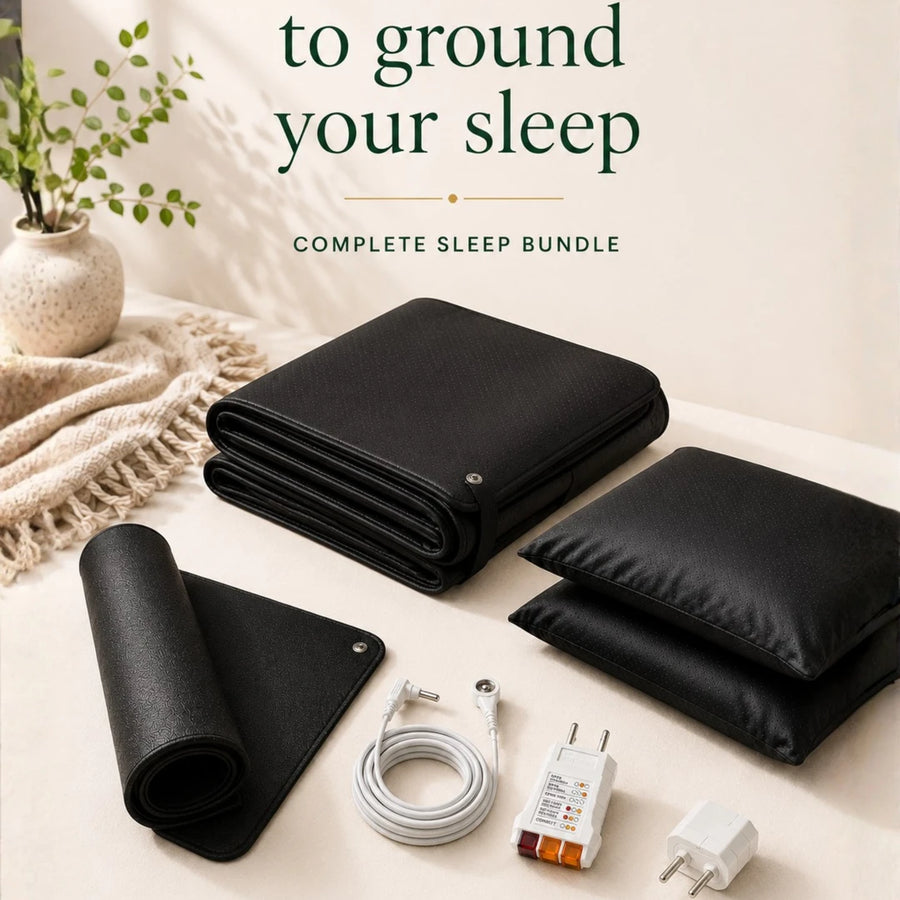
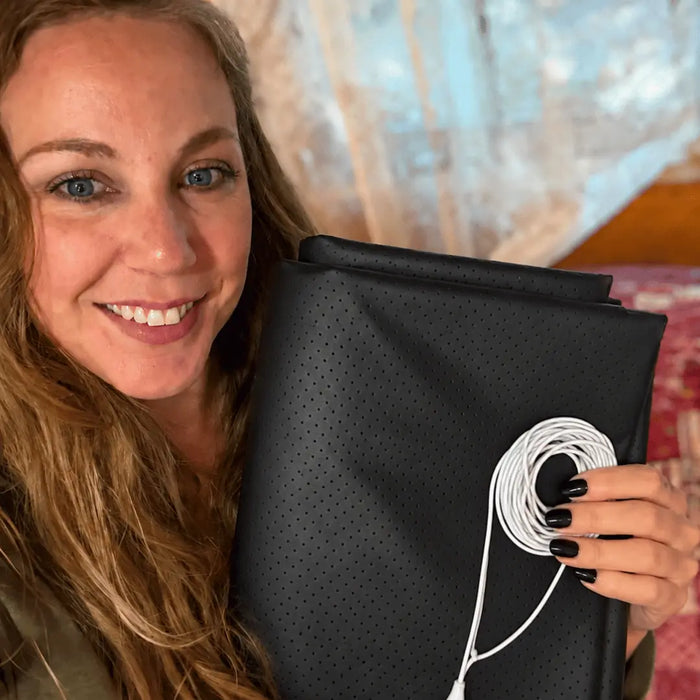
The Earthbound Grounding Mat and Grounding Mattress Pad ship with a free test kit, use inert carbon that you can re-verify years from now, and carry a 90-night trial. Put a meter on it — that's the whole pitch.
Frequently asked questions
Do grounding mats actually do anything?
Electrically, yes — measurably. A connected mat drops your body's induced AC voltage to near zero, verifiable with a multimeter at home. The open question is the size of the biological effects, where pilot studies are promising but small.
How can I tell if a grounding mat is fake?
Test it: continuity between the surface and the outlet's ground port, or a before/after body-voltage reading. A product that fails, or a seller that provides no way to test, answers the question for you.
Is there any science behind grounding mats?
Yes — small pilot studies on sleep cortisol, inflammation markers, blood viscosity, and muscle recovery, consistently favorable in direction and consistently underpowered. Promising is the accurate word; proven is not.
Why are grounding mats criticized?
Mostly because some marketing makes disease claims the evidence doesn't support, and because some products degrade without the owner knowing. Both criticisms are fair, and both are avoidable with a verifiable, inert-material product.
References: Ghaly & Teplitz 2004; Chevalier, Sinatra et al. 2013; Oschman, Chevalier & Brown 2015; Brown, Chevalier & Hill 2010. Grounding products are not intended to diagnose, treat, cure, or prevent any disease.