


Reviewed for accuracy: July 2026. General information, not medical advice.
Short answer, then the interesting part: yes — bare concrete that sits on the earth generally conducts well enough to ground you, which makes the basement floor, the patio slab, and the sidewalk legitimate grounding surfaces, and makes concrete the most useful answer in this whole topic for anyone whose access to a lawn is theoretical. The longer answer is a tour of which surfaces work and why — because the deciding physics is simple enough to fit in one sentence, and once you have it, you can classify any surface yourself.
The one-sentence physics
A surface grounds you if it conducts — and it conducts if it contains moisture and connects continuously to the earth beneath it. Moisture is the conductor in almost every natural material; earth contact is the circuit. Every entry in the table below is just those two questions asked twice.
The surface guide
| Surface | Grounds you? | Why |
|---|---|---|
| Grass, soil, mud | Yes — gold standard | Moist, mineral-rich, continuous with the earth. Damp beats dry; morning dew is prime time. |
| Sand / beach | Yes, especially wet | Wet sand near the waterline is superb; dry loose dune sand conducts noticeably less. |
| Bare concrete on grade | Yes | Concrete is porous and perpetually holds moisture wicked from the ground beneath — a slab on soil is a damp mineral sponge in continuous earth contact. Basements, patios, sidewalks qualify. |
| Sealed, painted, or epoxy-coated concrete | Mostly no | The coating is an insulating film — the garage floor with the glossy epoxy finish is off the list. |
| Concrete on upper floors | No | Conductive material, but no continuous path to earth — a slab in the sky is just a mineral floor. |
| Asphalt | No | Petroleum-based binder — effectively an insulator regardless of what's beneath it. The driveway doesn't count. |
| Wood, cork, vinyl, carpet | No | Dry insulators; a wood deck insulates you from the perfectly good earth below it. |
| Stone, brick, unglazed tile on earth | Often partially | Depends on moisture and mortar; damp natural stone on grade can conduct reasonably. Test if it matters. |
| Living water (lake, ocean, river) | Yes — excellent | Standing in natural water in contact with the earth is about as grounded as biology gets. |
Concrete, the underrated urban answer
The practical payoff of the table is for city dwellers: a barefoot half hour on the basement floor, the building's ground-level courtyard slab, or the sidewalk grounds you without a park in sight. Two caveats keep it honest. Sealants: if water beads on the surface rather than darkening it, it's coated and insulating — the darkening-drop test takes five seconds. And winter: frozen surfaces still conduct (ice is not a great insulator), but barefoot-on-January-concrete is a comfort problem before it's a physics problem, which is the honest limit of all outdoor grounding in cold climates.
Verifying a surface instead of trusting a table
Every row above is a generalization; your specific slab is an empirical question, and it's testable with the same body-voltage method from our body voltage guide: measure your induced voltage standing on the surface in question versus standing on known earth. A surface that drops your reading the way soil does is grounding you; one that doesn't, isn't. It's a genuinely fun experiment to run around your own property, and it settles the stone-patio and old-concrete arguments permanently.
When no surface works: the indoor path
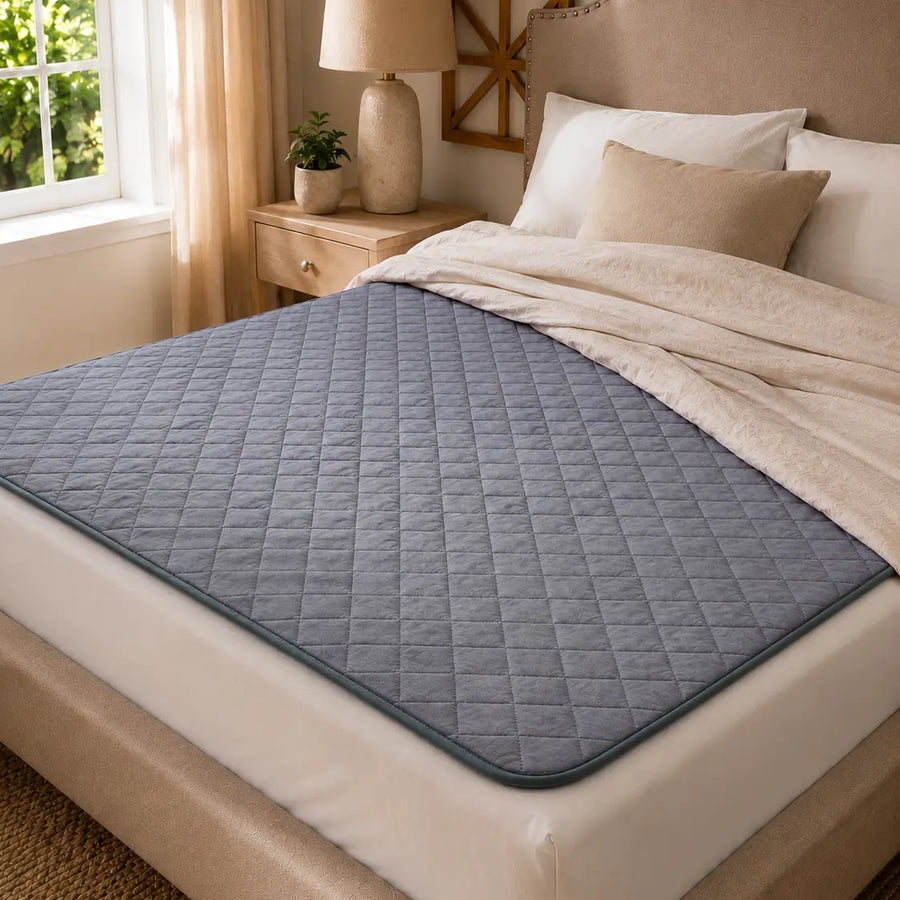
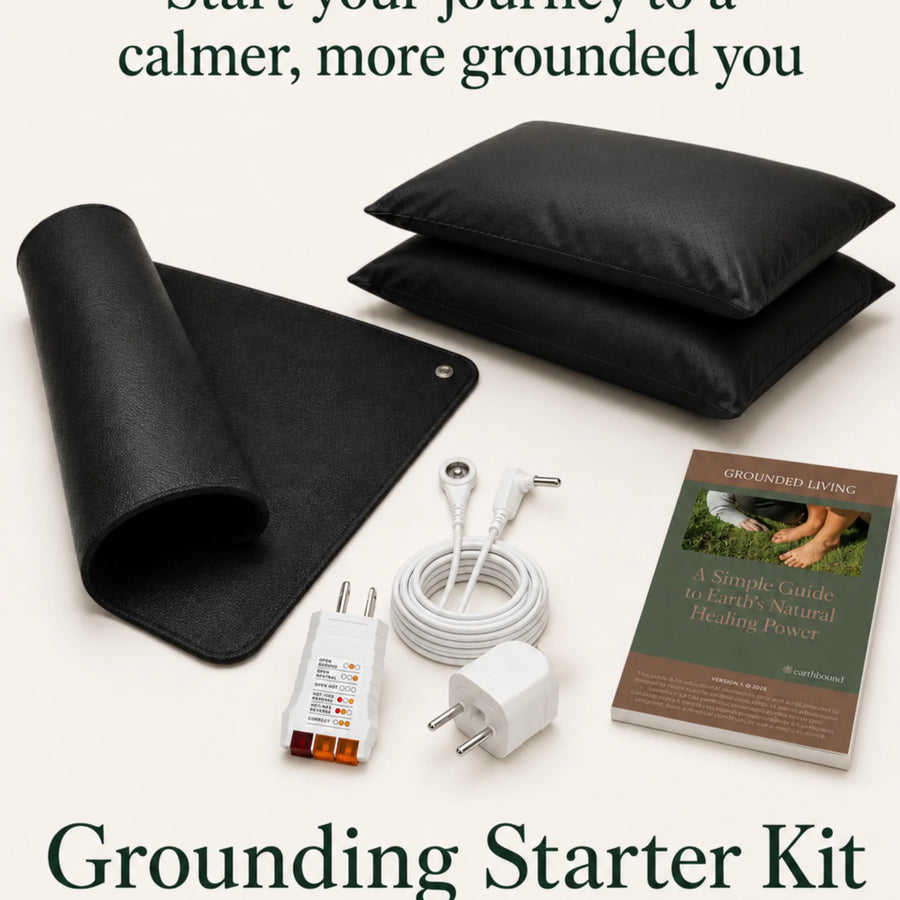
The realistic constraint isn't finding a conductive surface — it's time and season. Thirty barefoot minutes on the patio is excellent and free; it's also weather-dependent, winter-hostile, and a rounding error next to the eight hours you spend asleep. That arithmetic is the entire case for indoor grounding: a grounding mattress pad connected to a verified outlet delivers earth potential all night, every night, January included — the exposure profile the research protocols actually used. Concrete for the afternoon; the pad for the other two-thirds of your life.
For the hours concrete can't cover
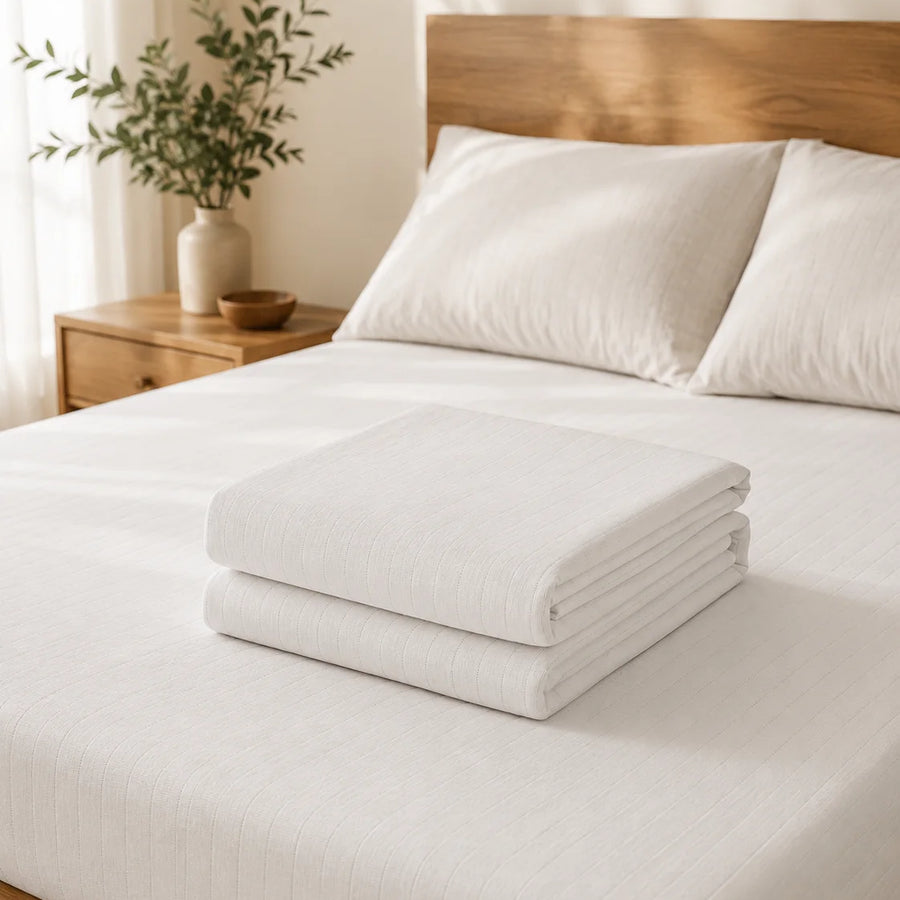
The Earthbound Grounding Mattress Pad grounds every sleeping hour through your own fitted sheet — verified by the included test kit, in any season. 90-night trial, lifetime warranty.
Frequently asked questions
Does standing on concrete ground you?
Bare, unsealed concrete resting on the earth — basements, patios, sidewalks — generally yes: it retains moisture and maintains earth contact. Sealed or painted concrete and elevated slabs don't.
Can you ground through asphalt?
No — the petroleum binder makes asphalt an insulator regardless of the ground beneath it.
How long should you stand on concrete to ground?
Equalization is immediate; the research protocols involved extended exposure (two hours to nightly sleep). Treat outdoor sessions as a supplement and sleep as the main event if you want research-comparable hours.
Does grounding work through shoes on concrete?
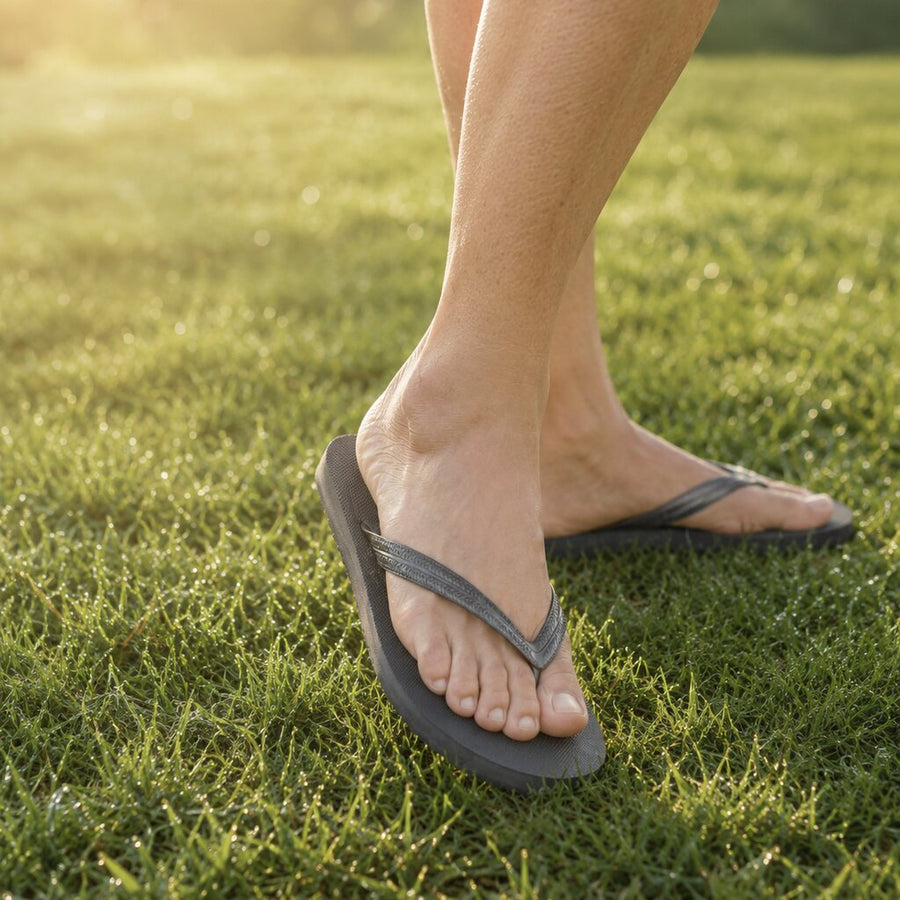
Standard rubber-soled shoes insulate on any surface. Bare feet, or thin natural-fiber socks at a discount — the same fabric rules as our socks-and-sheets guide.
How can I test whether a surface grounds me?
Compare your body-voltage reading standing on the surface versus on known earth with a multimeter. A conducting surface collapses the reading the same way soil does.
Grounding products are not intended to diagnose, treat, cure, or prevent any disease.